

The issue of the border with Turkey has taken on a dual role in Pashinyan's election campaign.
As reported by the "Caucasian Knot," Armenia's land borders with Turkey and Azerbaijan will open after the elections and constitutional referendum, when territorial claims against neighbors are removed from the country's constitution, an Azerbaijani diplomat stated on May 18. On May 24, Nikol Pashinyan announced that Armenia had gained the ability to export and import products via the railway between Georgia and Turkey, and Turkey's special envoy called this a step toward establishing direct trade between Turkey and Armenia.
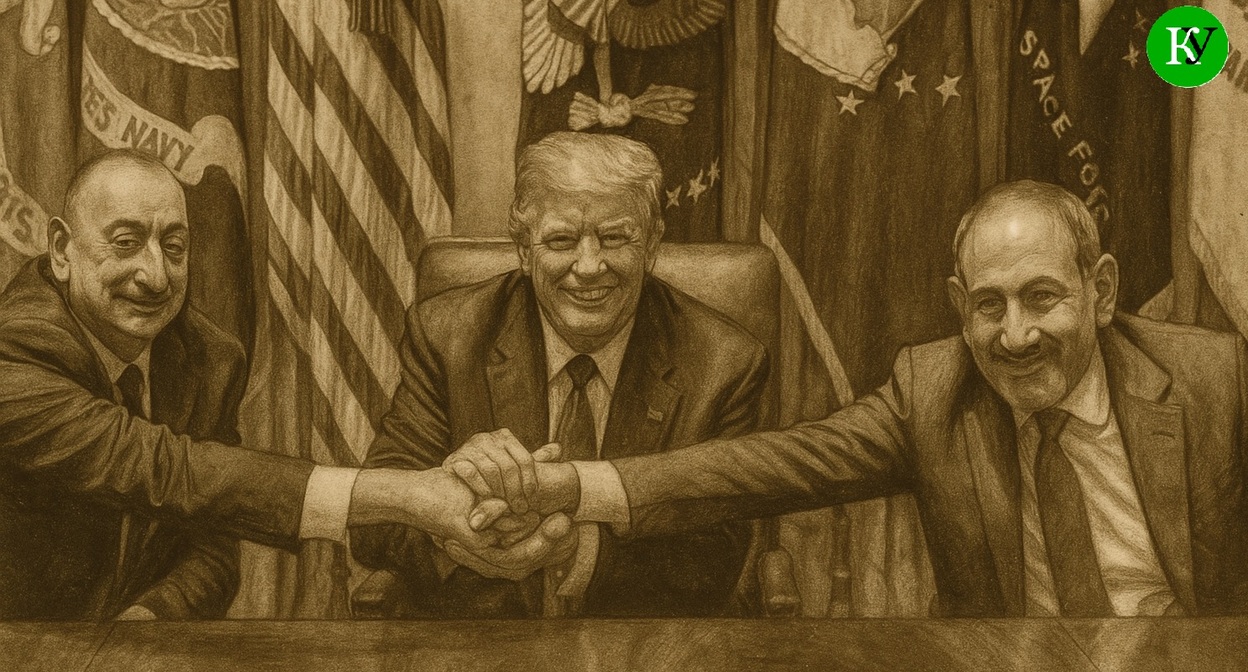
The current Constitution of Armenia references the Declaration of Independence of the NKR, which stipulates the unification of Nagorno-Karabakh and Armenia. In August 2025, the leaders of Armenia and Azerbaijan agreed in Washington to end hostilities and agreed that the parties would not make territorial claims against each other. "No international treaty can be ratified if it contradicts the current Constitution," Ara Papyan, head of the Modus Vivendi center, explained to the Caucasian Knot earlier.
The idea of opening the borders with Turkey and Azerbaijan is popular only among some Armenians, so Nikol Pashinyan's use of this topic in his election campaign meets the needs of his voters, but also provides arguments for his rivals, according to Armenian political scientists interviewed by the Caucasian Knot.
"Armenian society is deeply divided over the issue of opening the borders with Turkey and Azerbaijan. Among Pashinyan's electorate—young people, IT specialists, and the urbanized middle class—the idea enjoys support, as they see economic benefits in it: trade, tourism, transit, reduced logistics costs, and integration into regional markets. For them, opening the borders is a pragmatic step toward normalization and an end to isolation. However, a significant portion of the population, especially the older generation, refugees from Karabakh, and patriotic citizens, view this with deep mistrust and fear. They see opening the borders not as an economic opportunity, but as a security threat," political scientist Arman Badalyan told the Caucasian Knot. According to him, progress in opening the borders does give Pashinyan an advantage among his base of voters. "But at the same time, it mobilizes the opposition against him and those who perceive his course as a surrender of national interests. Concerns stem from the fact that opening the borders could lead to economic expansion by Turkey and Azerbaijan, price dumping on goods, the displacement of Armenian producers, and, most importantly, geopolitical vulnerability. Many fear that Turkey and Azerbaijan are using open borders to strengthen their influence in Armenia, which could ultimately threaten the country's independence. Pashinyan is trying to sell this as "peace and development," but the opposition is successfully playing on fears, calling him a "capitulator" and a "traitor," he concluded.
During the election campaign, Pashinyan is trying to avoid mentioning the referendum on constitutional amendments, noted political scientist Edgar Arakelyan.
“He understands that this is a sensitive topic. In 2025, when he first voiced this idea, it sparked a storm of criticism. The opposition and a significant part of society perceived this as a willingness to comply with Baku’s demands to renounce territorial claims against Azerbaijan, as enshrined in the Constitution and the Declaration of Independence. Now the topic of a referendum is being discussed in society in a mixed manner: Pashinyan’s supporters perceive it as a necessary step for the final normalization of relations with neighbors and an end to the conflict, while opponents see it as Yerevan’s willingness to fulfill yet another of Baku’s conditions,” he told the Caucasian Knot.
Official Baku has repeatedly reminded that a condition for signing a peace treaty with Armenia is amending its Constitution, which currently contains territorial claims against Azerbaijan. In February 2025, Armenian Prime Minister Nikol Pashinyan He stated that Armenia needs to change its basic law through a referendum. The new Constitution, he said, would enshrine the ideology of "Real Armenia," which equates the homeland with an internationally recognized state. The Armenian Prime Minister's proposal has drawn sharp criticism in society.
According to him, the impact of this topic on Pashinyan's electoral results is twofold. "For supporters of the Civil Contract, this issue is often presented as a necessary element for achieving a final peace, which for them is an acceptable compromise. However, for the opposition-minded part of society, this story has become a symbol of concessions to Azerbaijan, which mobilizes the protest electorate," he explained.
Pashinyan's rivals are actively using the topic of the referendum and constitutional amendments as a central element of their election campaigns, according to political scientist Tatev Kazaryan.
"Robert Kocharyan and his Armenia bloc openly declare that they will never change the Constitution under pressure from Baku, calling it 'betrayal' and 'capitulation.' They promise that if they come to power, the referendum will not take place, and Armenia will return to a tough stance in negotiations with Azerbaijan. Samvel Karapetyan and Strong Armenia also criticize Pashinyan for his willingness to sell out national interests, promising to protect Armenia's sovereignty and territorial integrity within its constitutional borders. They are using emotional rhetoric," she told the Caucasian Knot.
According to her, the opposition is exploiting voters' fears and national sentiments, positioning themselves as defenders of national interests against Pashinyan.
"They promise that they will not comply with Baku's demands, but instead will restore relations with Russia, receive military support, and "They will regain lost ground. This appeals to some voters, but it runs up against reality: Russia failed to help Armenia in 2020 and 2023, Karabakh is lost, and a return to confrontation with Azerbaijan could lead to a new war. Pashinyan, in turn, is trying to portray the opposition as irresponsible adventurers who propose unrealistic scenarios and could drag the country into a new conflict," she explained.
Turkey and Armenia do not maintain diplomatic relations; the border between the two republics has been closed since 1993 at Ankara's initiative. The disagreements between the countries stem from the Karabakh conflict, in which Turkey supported Azerbaijan, and the historical assessment of the 1915 massacres of Armenians in the Ottoman Empire, which Yerevan considers the Armenian Genocide, a view the Turkish authorities disagree with.
Turkish diplomat and first Secretary General of the Organization of Turkic States, Halil Akinci expressed the opinion that Turkey could "open the border before the elections and thereby support Pashinyan," Golos Armenii reported on May 22.
The June parliamentary elections in Armenia will effectively become a referendum on the future of Nikol Pashinyan's government and the country's foreign policy. At stake is the current team's retention of power or its transition to the opposition, which promises to reconsider the key decisions of recent years, according to the Caucasian Knot report "2026 Elections to the National Assembly (Parliament) of Armenia." According to analysts, the parties of Samvel Karapetyan, Prime Minister Nikol Pashinyan, and second President of Armenia Robert Kocharyan will become key competitors in the elections.
Translated automatically via OpenAI from https://www.kavkaz-uzel.eu/articles/423552



![Tumso Abdurakhmanov. Screenshot from video posted by Abu-Saddam Shishani [LIVE] http://www.youtube.com/watch?v=mIR3s7AB0Uw](/system/uploads/article_image/image/0001/18460/main_image_Tumso.jpg "Tumso Abdurakhmanov. Screenshot from video posted by Abu-Saddam Shishani [LIVE] http://www.youtube.com/watch?v=mIR3s7AB0Uw")