


Residents of emergency dormitories in Nalchik have asked for their relocation to be expedited.
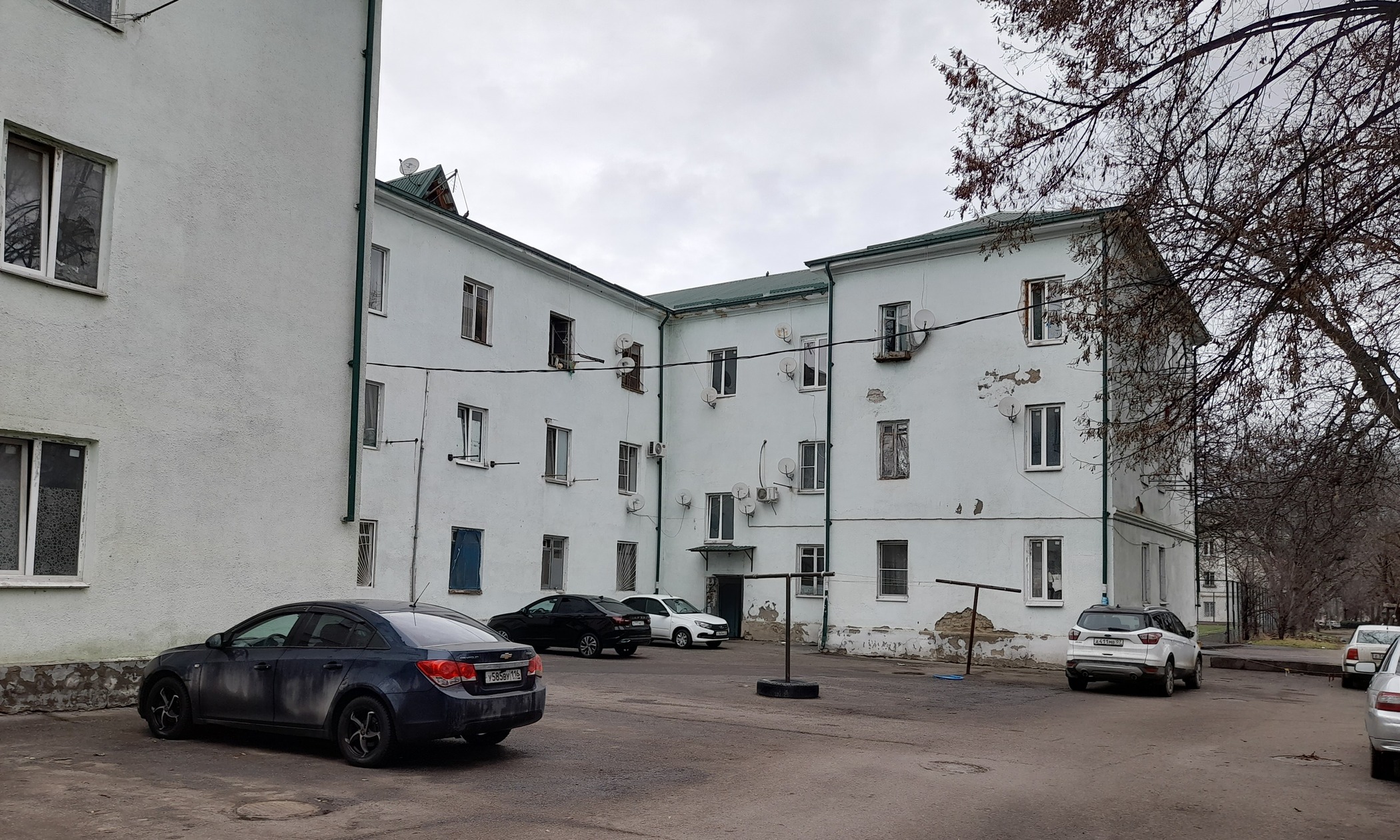
The dilapidated dormitories on Musukaeva and Ingushskaya Streets in Nalchik have been included in the municipal target resettlement program since 2022, but it has been unfunded for a year. Residents of these buildings are asking officials to expedite the resettlement, complaining of dire living conditions.
As reported by "Caucasian Knot," on January 30, the head of Kabardino-Balkaria reported on the issuance of certificates for new apartments in Nalchik to 124 families relocated from dilapidated housing. Social media users reacted to his report with questions about the resettlement timeline for other dilapidated buildings, including several on Ingushskaya Street.
Before receiving new apartments, 125 families (375 people, including more than 60 children) lived in a dilapidated dormitory on Kadyrov Street, where the ceiling and walls were crumbling. Authorities promised to relocate them in 2024, but they began relocating another building that wasn't included in the program.
In Nalchik, residents of a number of dilapidated dormitories are still awaiting relocation. One of them, at 10 Musukaeva Street, was built in 1964 for workers at the Iskozh plant as temporary housing. Today, the building is completely worn out and has been declared unsafe. Fifty-two families (173 people) have lived in this dormitory since the collapse of the USSR and the closure of the plant, residents told a "Caucasian Knot" correspondent.
"The pipes are rusted and rotted, and the sewage system leaks from the third floor to the first. The three-story building has one shower, and you can see its condition for yourself, along with one toilet and one kitchen per floor. The ceilings are leaking everywhere, and the plaster is peeling," said dormitory resident Maya Chechenova.
According to the residents, they are unable to solve their housing problems on their own, as they are all low-income. 75-year-old Khasan Ivanov worked at the Iskozh plant for over 30 years, serving as a shift supervisor. He has lived in the dormitory since 1997, currently with his two adult children. The family occupies one room of 16 square meters.
“They tell us they’ll give us as many square meters as we have now, and even less. Is this legal? I’m a Group 2 disabled person, I need my own room,” the pensioner complains.
Another dormitory, also in disrepair, is located at 12 Ingushskaya Street. Some of the dormitory's residents have been relocated to new apartments in the "Valley of the Caucasus" microdistrict, but 44 families continue to live in unacceptable conditions.
Although the dormitory was built later than the previous one, in 1976, its common areas are in the same disrepair: plaster has peeled off due to damp and mildew, and exposed wiring regularly causes short circuits and power outages.
Dormitory resident Natasha Kanukova told a "Caucasian Knot" correspondent that the room was given to her parents, who are no longer alive. According to her, her mother died of tuberculosis, which she contracted due to the living conditions in the building. Natasha has three children; her youngest is often ill, which she also attributes to her living conditions.
“I appeal to the authorities, to our president, please do something, help us. We also want to live like everyone else, in normal conditions. Please help us,” Kanukova said, addressing the republic’s leadership.
Mukhamed Khashev is disabled; one of his legs was amputated. He has no relatives; his wife is deceased. Khashev also appealed to officials to resolve the issue of his resettlement. "I use a wheelchair and have difficulty getting around without assistance. Living in these conditions is especially difficult for me," he said.
The resettlement program remains unfunded
Both dormitories are included in the municipal target program "Improving the Living Conditions of Citizens Living in Communal Apartment Buildings," approved by a decree of the head of the Nalchik local administration on April 29, 2022, a source in the Nalchik administration told Kavkazsky Knot.
According to the program's text, funding for 2024 was only 905,800 rubles, and in 2025, the program was not funded at all. No one at the mayor's office can say for sure when these dormitories, like other dilapidated communal housing, will be resettled.
At the end of 2025, the Kabardino-Balkarian parliament discussed the progress of the resettlement program for residents from dilapidated housing. First Deputy Head of the local administration, Anatoly Tonkonog, spoke about the situation in Nalchik. According to the official, "the main challenge is the 31 communal dormitories."
"The problem is exacerbated by the constant aging of the city's housing stock - since 2022, nine more buildings have been declared dilapidated in the municipality and require inclusion in the resettlement program," he stated.
The republic's Minister of Construction and Housing and Public Utilities, Andrei Zhuravlev, reported that from 2017 to 2022, approximately 13,500 square meters of housing were declared dilapidated, of which only 7,800 square meters are planned for resettlement in the coming years. The total area of uninhabitable housing in the republic exceeds 35,000 square meters. A complete solution to the problem will require two billion rubles, but, as the minister noted, "funding is declining."
Translated automatically via OpenAI from https://www.kavkaz-uzel.eu/articles/420496



![Tumso Abdurakhmanov. Screenshot from video posted by Abu-Saddam Shishani [LIVE] http://www.youtube.com/watch?v=mIR3s7AB0Uw](/system/uploads/article_image/image/0001/18460/main_image_Tumso.jpg "Tumso Abdurakhmanov. Screenshot from video posted by Abu-Saddam Shishani [LIVE] http://www.youtube.com/watch?v=mIR3s7AB0Uw")