


The liquidation of the Russian House was a step taken by Baku as part of its demands on Moscow in connection with the crash of the AZAL plane.
The liquidation of the Russian House in Baku was the result of Russia's failure to pay compensation for the AZAL plane crash and the termination of the Russian Investigative Committee's investigation into the causes of the disaster, Azerbaijani analysts noted. The political crisis in relations between the two countries continues, including Russia's declining role in the Caucasus, but economic cooperation continues, according to Russian political scientists.
As reported by "Caucasian Knot," in early February, the name of the Russian House in Russian was removed from the façade of the building housing the Russian House. The organization announced the suspension of its activities due to a demand from the Azerbaijani Foreign Ministry. On December 26, Azerbaijani Foreign Minister Jeyhun Bayramov announced that the liquidation of the Russian House was fully completed.
On February 7, Azerbaijani and Russian analysts stated that Baku's demand to close the Russian House was a way to put pressure on Moscow, seeking Russia's admission of guilt in the AZAL plane crash and payment of compensation, as well as to demonstrate Baku's independence without damaging relations with the Kremlin.
The liquidation of the "Russian House" in Baku was the result of the unresolved crisis with the plane crash.
According to Togrul, a member of the Azerbaijan National Public Committee for European Integration Juvarly, the Azerbaijani side's statement regarding the completion of the liquidation process of the Russian House is not simply a statement about some procedural action.
"This is a political message that Baku has closed the issue with the Russian House and no longer intends to return to discussing the Russian side's proposals to take certain measures to comply with the conditions of Azerbaijani legislation for the resumption of the activities of this structure," Juvarly told a "Caucasian Knot" correspondent.
This message also reflects the unresolved crisis in bilateral relations caused by the crash of the Azerbaijani passenger plane flying from Baku to Grozny.

Moscow's actions, in his opinion, are not helping to overcome the crisis.
"It would seem that at the October meeting of the presidents of Azerbaijan and Russia, Vladimir Putin demonstrated the Kremlin's intention to ease tensions in bilateral relations. He acknowledged that the plane crash, although not directly, was indirectly caused by the actions of Russian air defense systems. Recalling his apologies immediately after the tragedy for the fact that "the incident occurred in Russian airspace," Putin promised to ensure an investigation, bringing those responsible to justice, and paying compensation. However, this was not followed by concrete actions," Juvarli continued.
On December 28, 2024, Vladimir Putin called Azerbaijani President Ilham Aliyev and apologized "due to the fact that the tragic incident" with the AZAL (Azerbaijan Airlines) plane "occurred in Russian airspace." On December 29, Aliyev publicly demanded that Russia admit responsibility for the plane crash, and on January 6, he criticized the Russian authorities for refusing to admit guilt and demanded that those responsible for the plane crash be punished. The first meeting in a long time between the heads of Russia and Azerbaijan, Vladimir Putin and Ilham Aliyev, took place on October 9 in Dushanbe. Two missiles fired by the Russian air defense system did not directly hit the AZAL plane, but exploded several meters away, Putin stated during this meeting.
Furthermore, Juvarly added, Azerbaijani Foreign Minister Jeyhun Bayramov reported that the Azerbaijani side received a letter from Bastrykin's Russian Investigative Committee on the closure of the criminal case in connection with the crash of the Azerbaijani plane," Juvarly continued.
The analyst believes that it was precisely because of the lack of progress in the investigation of the plane crash and the payment of compensation that Azerbaijani President Ilham Aliyev refused to participate in the informal summit of the heads of state of the CIS in St. Petersburg on December 23, although this was officially explained by Ilham's "busy work schedule" Aliyeva.
The Russian side has still not held anyone accountable for the deaths of two Azerbaijanis during a brutal security forces raid in Yekaterinburg.
"Moscow clearly shows no desire to satisfy the legitimate demands of the Azerbaijani side in connection with the plane crash. Baku's demands are consistent with international practice. Since the plane was destroyed, and 38 people died due to the fault of the Russian military, then Moscow should acknowledge this, officially apologize, identify and punish those responsible, pay compensation to the families of the victims, the injured, and for the airliner itself. However, the Kremlin is trying in every possible way to disavow the responsibility of the Russian side. And this is not only a matter of the ambitions of the Russian political leadership, which does not want to see Azerbaijan as an equal partner. Moscow has created another problem in bilateral relations: pressure on the leaders of the Azerbaijani "diaspora," Juvarly continued.

Following the meeting of the leaders of Azerbaijan and Russia in Dushanbe, the issue of the release of ethnic Azerbaijanis and Russian citizens arrested in Russia in Baku was only partially resolved.
The Azerbaijani side released two executives of the Sputnik-Azerbaijan agency and allowed them to leave for Russia. The Russian side released two representatives of the diaspora. However, the Azerbaijanis arrested in the high-profile case in Yekaterinburg, including the leader of the regional diaspora organization, Shahin Shykhlinski, and his son, remain in custody, and their arrests were extended after the Dushanbe meeting. At the same time, the Russian side has not held anyone accountable for the deaths. Two Azerbaijanis were killed during a brutal security forces raid in Yekaterinburg. In turn, Baku is not releasing about a dozen Russians arrested, apparently in a "symmetrical response" to the actions of Russian security forces," Juvarly believes.
In his opinion, the persecution of representatives of the Azerbaijani diaspora reflects the Kremlin's irritation with Baku's actions to generate regional formats without Russia's participation.

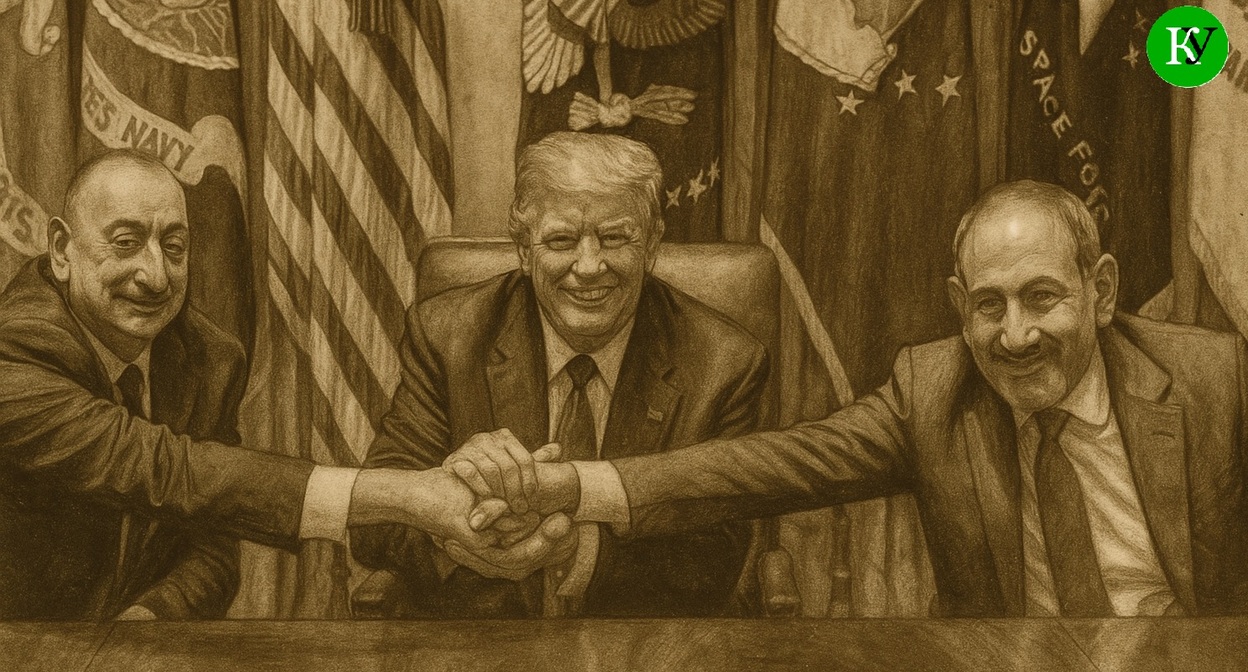
"Azerbaijan is an active initiator of strengthening cooperation within the Organization of Turkic States, which also includes Turkey, Kazakhstan, Uzbekistan, and Kyrgyzstan, with Turkmenistan as an observer. This format is already taking shape not only as an economic but also as a political organization with elements of establishing and multilateral military cooperation. In addition, Azerbaijan has become a member of the 5+1 format, meaning it has been accepted into the club of five Central Asian countries. Azerbaijan, together with the Central Asian countries, is developing a transport route – the "Middle Corridor" – from China to Europe, bypassing Russia. An important link in this route will be the Zangezur Corridor, dubbed the "Trump Route" thanks to US support. This project effectively changes the geopolitical landscape of the region, pushing Russia away from moderating "The conflict between Azerbaijan and Armenia is being resolved, and control over Armenia's transport links along its border with Iran is also at stake," Juvarly continued.
Europe desperately needs energy resources from Azerbaijan amid declining supplies from Russia. All of this makes Azerbaijan an important player in the region.
He is confident that Baku is capable of withstanding Moscow's pressure, as it has secured international defense mechanisms through diplomatic maneuvering.
"Azerbaijan has a strong agreement with Turkey; it is essentially a collective defense agreement, similar to Article 5 of the NATO Charter. Over the past year, Azerbaijan has reached a strategic partnership agreement with China and is close to signing a similar document with the United States, with which it has already signed a corresponding memorandum, and working groups are now drafting a Charter on Strategic Partnership. In August of this year, Azerbaijan elevated its relations with the United Kingdom to the level of strategic partnership. Within the CIS, Azerbaijan has strengthened its position through multilateral agreements with Central Asian countries. Azerbaijan has achieved a high level of political and economic cooperation with the Arab monarchies of the Middle East. Azerbaijan has a strategic partnership with Israel, which allows Baku to count on the support of a strong Jewish lobby in Western countries. Finally, over the past year, Baku has significantly improved relations with the European Union, while actively developing a partnership with Germany, one of its main driving forces. Azerbaijan has even managed to ease tensions with France. This is because Europe desperately needs energy resources from Azerbaijan amid declining supplies from Russia. All this makes Azerbaijan an important actor in the region,” Juvarly continued.
On the other hand, he added, Russia cannot take openly hostile actions against Azerbaijan, since it needs Baku to implement transport and energy cooperation projects with Iran and, through it, with other Eastern countries.
Baku analyst Tofig Turkel believes that relations between Baku and Moscow will never be the same.
“Over the past few years, much has changed in the world and the region. After Azerbaijan restored its integrity, with Baku’s implementation of global transport and energy projects, the country’s voice on the international arena began to sound more confident. Now, global and regional power centers take Azerbaijan’s factor into account,
Until the Russian side makes an official apology, punishes the perpetrators, and pays compensation, the situation in bilateral relations will remain in limbo.
In his opinion, due to Moscow’s failure to fulfill Baku’s demands in connection with the AZAL plane crash, bilateral relations are actually in a state of “unfinished crisis.”
“Obviously, until the Russian side makes an official apology, punishes the perpetrators, and pays compensation, the situation in bilateral relations will remain in limbo. Naturally, any resumption of such structures for promoting Russian influence as the "Russian House" and "Sputnik-Azerbaijan" is no longer possible. Any attempts to disavow the existence of problems or to talk about "normalizing" relations will be nothing more than declarative statements. However, open confrontation and escalation that could put relations on the brink of collapse are also not worth expecting. Political and economic relations will take place on two different planes," Turkel believes.
The liquidation of the "Russian House" confirmed the deepening crisis in political relations
Specialist in the Southern Caucasus Alexander Karavaev believes that nothing special has happened with the closure of the "Russian House" in Baku.
"The Russian House for Baku has ended up on the list of elements from the architecture of bilateral interaction that can be sacrificed. This became both a way of responding to the actions of Russian law enforcement agencies in relation to the diaspora, and a way to emphasize the new foreign policy trajectory of Azerbaijan,” he told a “Caucasian Knot” correspondent.
A paradox arose - an increase in trade turnover and the normalization of interdepartmental dialogue, with the simultaneous curtailment of the Russian House, the Sputnik office, and other events.
But at the same time, in his opinion,during the year, a certain separation, the removal of conflict situations that have become political issues into one block, and everyday economic interaction into another.
"This is where the paradox arose - the growth of trade turnover and the normalization of interdepartmental dialogue, with the simultaneous curtailment of the Russian House, the Sputnik office, and other events," Karavaev pointed out.
As for the humanitarian sphere in general, it, too, according to him, will be preserved, will change.
"Educational programs will develop through cooperation between universities, while cultural and entertainment programs will operate in the sphere of production centers and concert promotion structures," Karavaev believes..
Political scientist and member of the Adam Smith Center Council, political scientist Sergey Boyko in turn believes that the Russian Investigative Committee's closure of the AZAL plane crash has damaged the seemingly improving relations between Moscow and Baku.
"Therefore, this is more of a retaliatory measure on the part of Azerbaijan. "Aliyev knows perfectly well how to interact with Russia, reacting harshly to every confrontational step," he explained to a "Caucasian Knot" correspondent.
The fundamental basis for improving relations has been undermined, and this will last for a long time. Moreover, today's Azerbaijan does not need Putin and is insensitive to the Kremlin's "soft power"
At the same time, political scientist Andrei Kolesnikov (included in the register of foreign agents)believes that relations between Baku and Moscowand not "Only the Kremlin could believe in the effectiveness of the conversation between Putin and Aliyev. I think the fundamental basis for improving relations has been undermined and this will last for a long time. Moreover, today's Azerbaijan does not need Putin and is insensitive to the Kremlin's "soft power," he told a "Caucasian Knot" correspondent.
According to the political scientist, the Kremlin's strategic mistake is the habit of evaluating any post-Soviet country as a younger brother.
"So, for various reasons, the entire South Caucasus has been lost to Moscow as a zone of influence," Kolesnikov summarized*.
Translated automatically via OpenAI from https://www.kavkaz-uzel.eu/articles/419520

![Tumso Abdurakhmanov. Screenshot from video posted by Abu-Saddam Shishani [LIVE] http://www.youtube.com/watch?v=mIR3s7AB0Uw](/system/uploads/article_image/image/0001/18460/main_image_Tumso.jpg "Tumso Abdurakhmanov. Screenshot from video posted by Abu-Saddam Shishani [LIVE] http://www.youtube.com/watch?v=mIR3s7AB0Uw")