

Residents of South Ossetia will have their SIM cards blocked upon entry into Russia.
A 24-hour "cooling-off period" will apply to mobile devices entering Russia from South Ossetia. The restrictions will apply to both South Ossetian-issued and Russian SIM cards.
A new system of temporary blocking of mobile devices introduced in Russia will affect residents of South Ossetia, reported Zarina Bezhanova, public relations specialist at Ostelecom.
A citizen of South Ossetia arriving in Vladikavkaz with a Russian SIM card may also face a temporary block of their number.
The Ministry of Digital Development, Communications, and Mass Media of the Russian Federation officially announced the introduction of a new system of temporary blocking of mobile devices. This measure, aimed at improving cybersecurity and combating threats from unmanned aerial vehicles, came into effect in November. If you arrive in Russia with a foreign SIM card, including from South Ossetia, your mobile internet and SMS service will be temporarily disabled for up to 24 hours.
"The temporary restrictions will apply to both Russian numbers and any foreign SIM cards used in Russia. This means that a citizen of South Ossetia arriving in Vladikavkaz with a Russian SIM card may also face a temporary block on their number," Bezhanova said, according to the Res news agency.
If blocked, the subscriber will receive an SMS notification from their telecom operator with information on how to lift the restrictions. "You can restore internet and SMS access at any time by authorizing using the captcha and following the link sent by the operator." It is also possible to contact the help center and have the restrictions lifted by identifying yourself by phone."
Bezhanova noted that Megafon-South Ossetia subscribers will face these measures upon entering Russia, as South Ossetia is not a constituent entity of the Russian Federation, but a separate republic.
As reported by the Russian Ministry of Digital Development, effective November 10, Russian telecom operators, at the request of regulators, launched a new security mechanism—the so-called "cooling-off period"—during which mobile internet and SMS messages on SIM cards are blocked for 24 hours. Voice calls will remain available. The mechanism was introduced to combat drones that could be controlled using Russian SIM cards during attacks, the agency explained.
Mobile internet and SMS services for subscribers with Russian SIM cards are terminated if the SIM card is inactive for 72 hours or upon returning from international roaming. To unblock the SIM card, you must confirm that it is being used by a person. Immediately after the SIM card appears on your home network, you will receive an SMS from the telecom operator with information on how to lift the restrictions and a link for authorization using a captcha. Entry into Russia from Belarus, Abkhazia, and other neighboring countries will also be subject to a "cooling" policy, the agency explained.
The "Caucasian Knot" also reported that Telegram channel authors in the North Caucasus and Southern Federal Districts have experienced a decline in readership, difficulties posting, and reader complaints about access issues with Telegram amid the messenger's blocking. In Dagestan, restrictions on access to messengers introduced in 2024 have been relaxed, journalists reported.
Residents of southern Russia have also complained about mobile internet outages. Social media users in Volgograd, for example, noted that attacks and destruction continue, despite the city frequently shutting down mobile internet for security reasons.
Translated automatically via OpenAI from https://www.kavkaz-uzel.eu/articles/417554

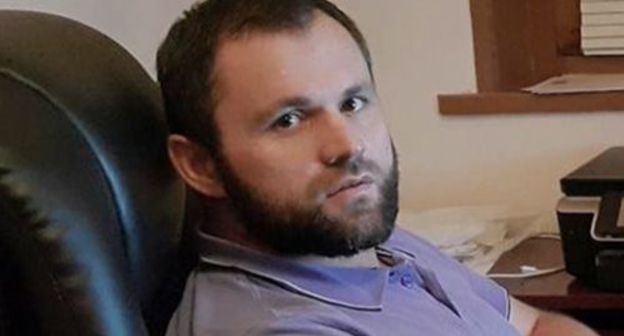
![Tumso Abdurakhmanov. Screenshot from video posted by Abu-Saddam Shishani [LIVE] http://www.youtube.com/watch?v=mIR3s7AB0Uw](/system/uploads/article_image/image/0001/18460/main_image_Tumso.jpg "Tumso Abdurakhmanov. Screenshot from video posted by Abu-Saddam Shishani [LIVE] http://www.youtube.com/watch?v=mIR3s7AB0Uw")