


Anapa lost about a billion in tourism revenue due to a fuel oil spill.
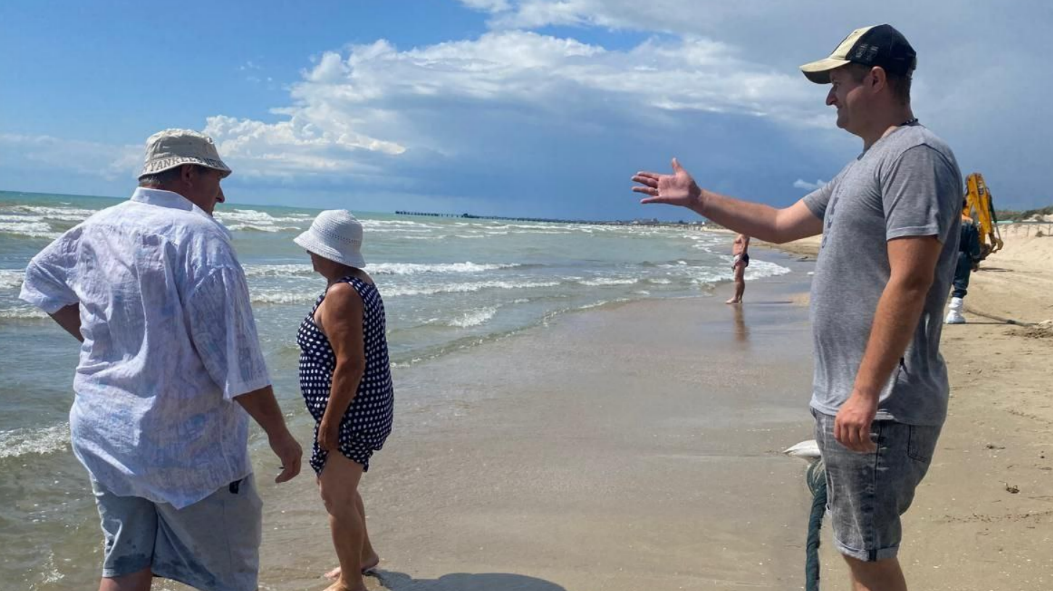
By the end of the season, tourist traffic to Anapa had fallen by 60%, amounting to approximately one billion rubles. Anapa's sanatoriums and children's camps are teetering on the brink of closure due to a record drop in revenue.
As reported by "Caucasian Knot," from the beginning of the year to the end of September, Anapa was visited by 1.5 million tourists, which is almost three million fewer than during the same period last year. Some tourists went to Anapa only because hotels and other accommodations were forced to offer significant discounts due to the fuel oil spill. Only 18,000 children attended Anapa's children's camps this year; in previous years, the city hosted 120,000-130,000 children. Anapa will still have several years to restore its reputation for children's recreation after the fuel oil spill.
Rospotrebnadzor has declared 141 beaches in Anapa and nine beaches in the Temryuk district unsuitable for recreation. Signs informing people not to swim have been installed there, and announcements about the ban are also being displayed on video screens in various areas of Anapa.
Tourist traffic to Anapa has fallen 60% this year, representing a revenue loss of approximately 1 billion rubles, according to Sergei Romashkin, Vice President of the Association of Tour Operators of Russia.
"In terms of revenue, this amounts to approximately one billion rubles. And so far, no statements have been heard from the disaster response team. It's important for us to understand when this issue will be resolved—this year, next year, at the beginning of the season, or at the end," the Russian Union of Travel Industry quoted him as saying.
A representative of the Anapa sanatorium called the situation catastrophic.
"The number of vacationers has fallen critically. Municipal and state contracts have effectively fallen through. The occupancy rate of sanatoriums and children's camps in 2025 was only 30-40% — this led to a record drop in revenue, making operations unprofitable even during the so-called high season (which basically didn't exist). At the same time, our industry can't simply cut costs. I can tell you from our company's example: we have a high proportion of fixed costs, primarily staff salaries, loan obligations for modernization and development, and the need to maintain medical and hotel infrastructure even when the buildings are empty," said Oleg Mazur, Deputy General Director of the Anapa sanatorium complex "DiLuch."
This season The DiLuch sanatorium was unable to open two buildings due to low occupancy rates—for the first time in 100 years of operation. The threat of closure means the loss of unique specialists, the loss of equipment and methods, the revocation of medical licenses, and the bankruptcy of related organizations. "That is, the very existence of the Anapa spa and resort industry is essentially in question," Profi.Travel quoted him as saying at a convention of tour operators. Mazur recalled that hotel and sanatorium owners have been granted a tax deferral until the end of 2025. However, if revenue falls by more than half by that date, companies will not have the resources to pay off their accumulated liabilities.
"Considering this, I believe it is necessary to petition for an extension of the granted deferment until January 1, 2027, to give companies a real chance to survive and plan their financial activities," he said.
In his opinion, if the necessary steps are not taken promptly, there is a risk of sanatoriums being closed and converted into housing. "The resort town of Anapa will be transformed into simply a seaside town, like many others. Preserving Anapa's sanatorium and resort industry is a matter not only of the region's economy but also of the nation's health," the expert concluded.
In December 2024, two tankers carrying fuel oil sank in the Kerch Strait, leading to catastrophic environmental consequences. Details can be found in the "Caucasian Knot" report "Fuel Oil Spill in the Kerch Strait." Materials on the consequences of the fuel oil spill have been collected by the "Caucasian Knot" on the thematic page "Eco-disaster in Kuban".
Fuel oil pollution in the Black Sea continues; satellite images showed leaks from sunken tankers in August. Most of the fuel oil settled to the seabed, including in the area of Taman, Anapa, and the Bugay Spit, according to scientists from the Institute of Oceanology of the Russian Academy of Sciences.
Translated automatically via OpenAI from https://www.kavkaz-uzel.eu/articles/417452



![Tumso Abdurakhmanov. Screenshot from video posted by Abu-Saddam Shishani [LIVE] http://www.youtube.com/watch?v=mIR3s7AB0Uw](/system/uploads/article_image/image/0001/18460/main_image_Tumso.jpg "Tumso Abdurakhmanov. Screenshot from video posted by Abu-Saddam Shishani [LIVE] http://www.youtube.com/watch?v=mIR3s7AB0Uw")