


An ethnic Ossetian has been living in a no-man's land on the border with Georgia for five months.
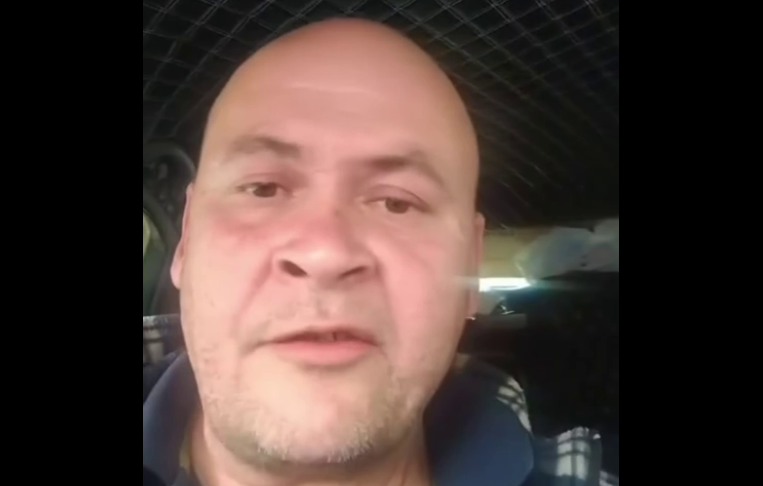
Tajik citizen Alan Gatsoev was denied entry to Russia, where his entire family is located in Vladikavkaz. He has been living in his car in the neutral zone near Verkhniy Lars since the summer. The North Ossetian Ministry of Internal Affairs explained that Gatsoev was barred from entry due to immigration violations, and the court upheld this decision.
Ossetian and Tajik citizen Alan Gatsoev has been living in the neutral zone between Lars and Georgia for six months—in his car, without shelter, heat, or medical care. He is not allowed into either Russia or Georgia, and he literally finds himself in a legal and humanitarian vacuum, the Telegram channel "Ossetia" reported on November 16.
In a video attached to the publication, Gatsoev said that his entire family lives in North Ossetia, and his parents are buried there.
"I've been living in these conditions for five months now. I have diabetes. After a massive heart attack, I had stents installed in my heart. It was bearable in the summer, but now the cold is setting in, and I don't know what to do next," he says.
He says he sleeps in the backseat of his car, where he also cooks. He claims he has received repeated fines for violating immigration laws, and in 2024, he was "barred from entering for five years." The man said he was traveling to Georgia to cross the border to have his documents stamped, but was not allowed back into Russia.
The North Ossetian Ministry of Internal Affairs explained that the citizen of the Republic of Tajikistan "has been repeatedly subject to administrative penalties in both the Moscow Region and the Republic of North Ossetia-Alania for violating immigration laws." "Starting in 2021, the Main Directorate of the Ministry of Internal Affairs of Russia for the Moscow Region and the Ministry of Internal Affairs for the Republic of North Ossetia-Alania have repeatedly denied entry to the Russian Federation to a foreign citizen. However, despite this, the Tajik citizen has failed to take any action to regulate his legal status and has continued to illegally work in Russia," the department said on its Telegram channel.
Considering the decision to deny entry to be unfounded, in July 2025, the Tajik citizen attempted to appeal it in court. However, the court dismissed the claim and upheld the decision to deny entry, the department stated, concluding that he "has no intention of legalizing his legal status," as he has not submitted any requests to migration departments for legalization in Russia.
"The decision to deny entry to the Russian Federation is temporary and "does not hinder further family reunification," the North Ossetian Ministry of Internal Affairs concluded.
As "Caucasian Knot" reported previously, it has been repeatedly reported that Ukrainian citizens are forced to remain in the neutral zone for months. For example, in June, 57 people were at the Russian-Georgian border undergoing identity checks.
As a reminder, in December 2023, a group of Ukrainian citizens, mostly former prisoners, waited a long time for permission to enter Georgia from Russia. Some of them spent about a month at the checkpoint. According to them, only volunteers provided assistance.
In October 2023, seven Ukrainian citizens were forced to spend more than two weeks in the buffer zone on the Russian-Georgian border. They had previously served sentences in Kherson penal colonies; after their release, they were taken to a deportation center in Volgograd and issued orders banning them from entering Russia. While Georgian authorities refused to allow them into the country, volunteers supplied the Ukrainians with food and essential items.
At the end of November of that year, it became known that Georgian authorities had again refused to allow former Ukrainian prisoners into the country. Volunteers managed to secure passage for eight Ukrainians, but another eight people, who by that time had already spent more than two weeks at the checkpoint, remained waiting at the border.
Translated automatically via OpenAI from https://www.kavkaz-uzel.eu/articles/417247
![Tumso Abdurakhmanov. Screenshot from video posted by Abu-Saddam Shishani [LIVE] http://www.youtube.com/watch?v=mIR3s7AB0Uw](/system/uploads/article_image/image/0001/18460/main_image_Tumso.jpg "Tumso Abdurakhmanov. Screenshot from video posted by Abu-Saddam Shishani [LIVE] http://www.youtube.com/watch?v=mIR3s7AB0Uw")