

Analysts assessed the practice of public apologies in Kuban.
In the public apologies of Krasnodar residents, which are regularly published by local law enforcement, there is evidence of extrajudicial influence, humiliation, and violations of the presumption of innocence, indicated by political scientists, human rights activists, and a lawyer interviewed by "Caucasian Knot."
As reported by "Caucasian Knot", the police of Krasnodar regularly publish videos with public apologies from residents. For instance, on August 28, the department published a video with apologies from six participants in a road conflict, on August 17 – a clip with an apology from a Krasnodar resident for displaying a toy gun from a car window, and on July 10 – a video with apologies from a suspect in bicycle theft.
The practice of public apologies initiated by Ramzan Kadyrov has gone beyond Chechnya and spread to other regions of Russia. More about this practice can be read in the reference from "Caucasian Knot" "The Fashion for Apologies: From Chechnya to the Outskirts". "Caucasian Knot" also maintains "Chronicle of Public Apologies in the Caucasus".
A political scientist criticized the actions of law enforcement
The regular publication of apology videos reflects the transformation of Russian society in the context of the Special Military Operation (SMO), believes political scientist Mikhail Savva*.
Society is changing towards the law of force
"Law enforcement considers this model of extrajudicial influence as a means of additional crime prevention, resorting to demonstrative humiliation of citizens. Russian society is changing during the [SMO] towards the law of force. For the police, Kadyrov's practice of apologies appears as a method of additional crime prevention. They perceive these videos as public humiliations, which, in their view, should prevent further unlawful behavior," he told a correspondent of "Caucasian Knot.".
In Krasnodar Krai, crime is decreasing against the backdrop of law enforcement activity in the media field. Savva* pointed out that the positive dynamics in statistics is not related to police work, but to the reduction of the most aggressive part of the population due to the SMO.
"Crime reduction is recorded in many regions of Russia, and this is the result of the disposal of the most crime-prone and aggressive part of the population during the [SMO]. The fact that the police in Kuban adopted Kadyrov's practice of apologies indicates their desire to further reduce the crime rate in such a peculiar, but absolutely organic manner for them. That is, this is the Ministry of Internal Affairs' desire to implement such practices and adapt to new realities," the political scientist stated.
Speaking about who determines the necessity of apologies and for what actions, he emphasized that this process is not regulated in any way and is completely unlawful.
"Russian legislation regulates the procedure for apologies only in specific judicial cases, for example, in defamation cases. Police videos have nothing to do with the law; they are arbitrary, and law enforcement should not have the right to such actions," Savva* concluded.
Public apologies of Krasnodar residents carry media function
Public apologies have become operational media reports for law enforcement, noted political scientist Andrey Gusy.
Law enforcement shows civil society: there is a reaction to the incident, the guilty are identified and repent
"For the police, such videos are a quick informational result. Law enforcement shows civil society: there is a reaction to the incident, the guilty are identified and repent, and order is restored here and now. Thus, the Ministry of Internal Affairs solves the task of quickly demonstrating the inevitability of punishment and preventing offenses without lengthy bureaucratic procedures," he told a correspondent of "Caucasian Knot.".
Commenting on the decrease in crime levels in Krasnodar Krai, the analyst pointed out that public apologies work not instead of legal measures, but as their visual supplement.
"Statistics reflect the real work of law enforcement agencies, while video apologies serve as a visual prevention for the social media audience. For potential offenders, this is a signal that hiding in the shadows is not possible and public exposure is guaranteed. The main function of the videos is media-preventive," Gusy concluded.
He is confident that the decision to publish apologies is made by law enforcement based on the resonance of the topic in social media.
"The police respond primarily to those cases that trigger public outrage and indignation in society. The boundary is determined by the public significance of the incident: if the topic resonates with people, law enforcement provides a public response to it," the analyst summarized.
Krasnodar law enforcement borrowed the practice from Chechen authorities
The public apologies of Krasnodar residents are a direct borrowing of the Chechen model of extrajudicial influence, believes Chechen human rights activist.
"Camera apologies have become a convenient tool for quick reports for the police of Kuban. Instead of painstaking investigations and court proceedings, law enforcement receives an instant media effect, demoralizing a person even before the court's decision," he explained to a correspondent of "Caucasian Knot" on condition of anonymity.
In Krasnodar Krai, traditional institutions of clan condemnation and reputation, on which this practice initially relied in Chechnya, are absent, noted the human rights activist.
"In Chechnya, public condemnation involves mechanisms of fear and pressure on the entire clan, while in Krasnodar Krai this model is completely stripped of traditional context. In Kuban, it does not provide a preventive effect, turning into banal public humiliation that substitutes justice and destroys legality," the analyst stated.
A lawyer pointed out the violation of the presumption of innocence
The voluntariness of filming in law enforcement always raises doubts, noted lawyer Patimat Abdulaeva.
A person's presence in a police station or in handcuffs directly indicates the absence of free will
"Consent obtained from a person in handcuffs or in isolation cannot be considered lawful, as it is in a zone of actual dependence on police officers. Overall, a person's presence in a police station or in handcuffs directly indicates the absence of free will. In such a situation, it is difficult for detainees to refuse video recording," she told a correspondent of "Caucasian Knot.".
In her opinion, the publication of operational video recordings with confessions and apologies before a judicial act is a direct violation of key procedural norms.
"Such practices by law enforcement ignore the fundamental principle of the presumption of innocence. This violates Article 49 of the Constitution of the Russian Federation and Article 14 of the Criminal Procedure Code of the Russian Federation regarding the presumption of innocence, according to which a person is considered innocent until proven guilty by a court," she emphasized.
A critic of the Chechen authorities pointed out the difference between forced and voluntary apologies
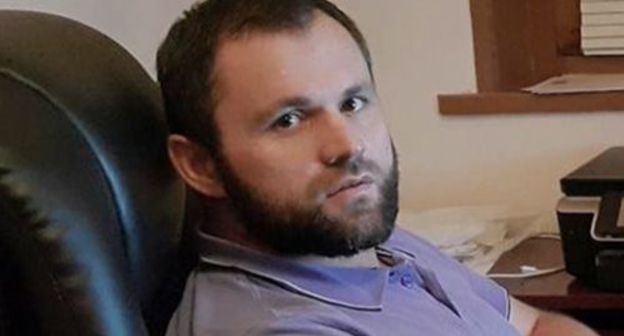
Chechen blogger Tumso Abdurakhmanov* believes that there is nothing wrong with apologies if they are voluntary.
"First, it is worth determining what exactly we are talking about when we use the expression 'public apologies.' There is nothing wrong in repentance – whether public or personal. On the contrary, a sincere acknowledgment of one's mistake and offering apologies can be a healthy and beneficial practice that promotes reconciliation and harmony in society. But such apologies have a fundamental condition: they must be voluntary and come from the person who has realized their wrongdoing. If a person is forced to publicly repent and apologize under pressure or threat of punishment, this is no longer repentance. This is an act of public humiliation. This is the very practice that Kadyrov introduced in Chechnya, turning public 'apologies' into a tool of pressure and humiliation for those who are undesirable to the authorities," Abdurakhmanov* told a correspondent of "Caucasian Knot.".
According to him, this practice was later adopted in other regions of Russia.
"It is obvious that they decided that public humiliation could be an effective way to intimidate and discipline society. Therefore, it is important not to confuse concepts: voluntary repentance is one thing, while forced public humiliation under the guise of apologies is quite another. And, apparently, in Krasnodar Krai, they also decided that such a measure is quite effective," he noted.
Commenting on the publication of police videos with apologies in Krasnodar Krai, Chechen human rights activist Roza Dunaeva stated that this is not about copying Chechen traditions, but about the use of a universal tool of pressure by law enforcement. In her assessment, in Kuban, law enforcement adopted this model because they saw it as an effective way to demonstrate the power of authority and publicly humiliate a person without resorting to complex legal procedures.
What is happening is the spread of a system of violence, which has only manifested itself most vividly in Chechnya
"If a person in Krasnodar Krai is forced to publicly apologize in front of the camera, this does not mean a conscious reproduction of Chechen traditions. Law enforcement simply saw a working tool: a person can be publicly humiliated, forced to admit guilt, show their helplessness, and simultaneously demonstrate to others the power of authority. What is happening today is not 'Chechenization' of the regions, but the spread of a general repressive system of violence, which has only manifested itself most vividly in Chechnya," she told a correspondent of "Caucasian Knot.".
In her opinion, in Chechnya, law enforcement has to overcome a strong historical predisposition of the population towards dignity and defiance through harsh pressure, while in Kuban, the absence of such experience allows for the implementation of public apologies much faster, turning them exclusively into a tool for demonstrating power.
"In Chechnya, to keep people in fear, much stronger pressure has to be applied due to the historical memory of resistance. In other regions, the situation is different: there is no such experience, so it is easier to accustom people to the idea that public humiliation is the norm. In Krasnodar Krai, this practice serves a completely different function: not to restore justice or achieve sincere repentance, but to show a person and those around who is stronger here," the analyst stated.
She is confident that this practice destroys basic moral concepts of honor and responsibility, turning them into a tool of manipulation.
"Public apologies under pressure from law enforcement are always a demonstration of power and fear. The most frightening thing in this process is the habituation, when people begin to consider normal what was perceived as unacceptable humiliation just yesterday. However, forcing a person to publicly apologize does not mean forcing them to internally accept this humiliation and abandon their dignity, which is why this entire system has to rely on constant pressure," Dunaeva concluded.
We have updated the applications on Android and IOS! We would appreciate feedback, ideas for development both in Google Play/App Store and on the pages of the Caucasian Knot in social networks. Without installing a VPN, you can read us on Telegram (in Dagestan, Chechnya, and Ingushetia – with VPN). Through VPN, you can continue to read "Caucasian Knot" on the website, as usual, and on social networks Facebook**, Instagram**, "VKontakte", "Odnoklassniki" and X. You can watch videos from "Caucasian Knot" on YouTube.
* included by the Ministry of Justice of Russia in the register of foreign agents.
** the activities of the Meta company (owner of Facebook, Instagram, and WhatsApp) are banned in Russia.
Translated automatically via OpenAI from https://www.kavkaz-uzel.eu/articles/426234
![Tumso Abdurakhmanov. Screenshot from video posted by Abu-Saddam Shishani [LIVE] http://www.youtube.com/watch?v=mIR3s7AB0Uw](/system/uploads/article_image/image/0001/18460/main_image_Tumso.jpg "Tumso Abdurakhmanov. Screenshot from video posted by Abu-Saddam Shishani [LIVE] http://www.youtube.com/watch?v=mIR3s7AB0Uw")