

Karabakh activists condemned Pashinyan for refusing to discuss the rights of refugees.
Insisting on the refusal to discuss the right of Armenians of Nagorno-Karabakh to return, Armenian Prime Minister Nikol Pashinyan ignores internationally recognized rights of refugees, said Karabakh public figures.
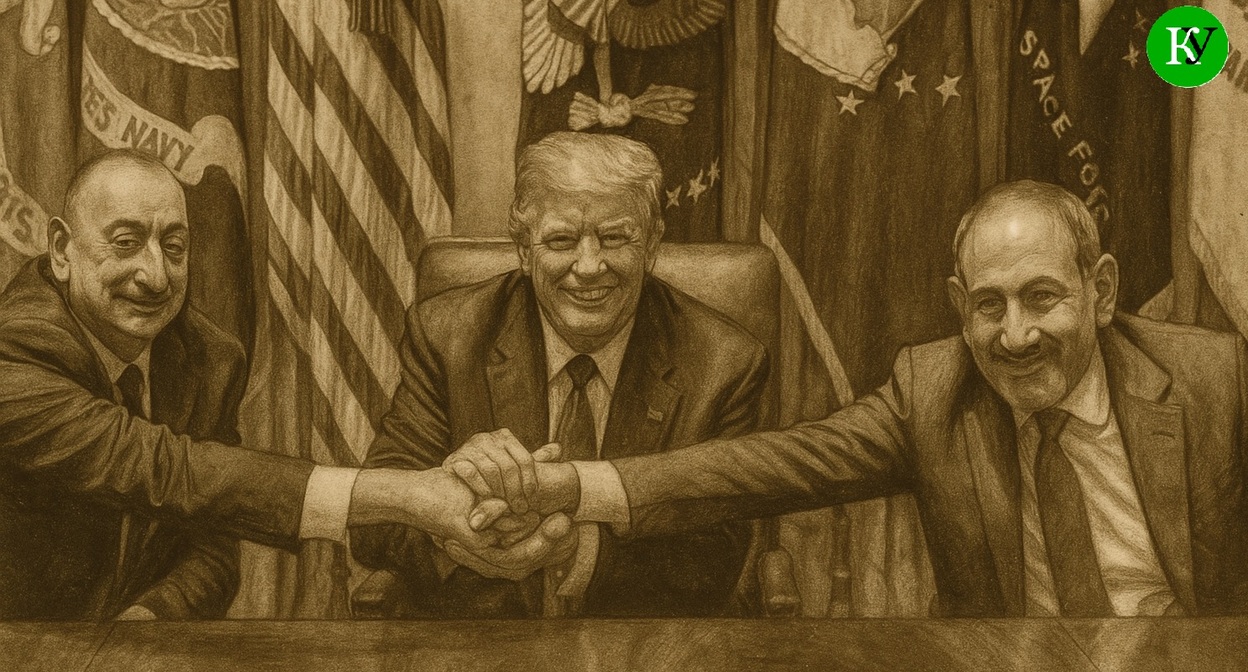
As reported by "Caucasian Knot", on August 8, 2025, Azerbaijani President Ilham Aliyev and Armenian Prime Minister Nikol Pashinyan signed a declaration on the cessation of hostilities during a meeting in Washington. Aliyev and Pashinyan have not yet signed a peace agreement, but only initialed it, while most points of the declaration contain vague formulations, analysts noted. The Washington agreements do not address the issue of the return of the Armenian population to Karabakh, but refugees can independently defend their rights to return with guarantees at the international level through the international court, participants of the discussion in Yerevan stated in November.
On September 19-20, 2023, Azerbaijan conducted large-scale military operations and took control of the territory of Nagorno-Karabakh, after which an agreement was reached on the disarmament of the Karabakh army. By October 7, 2023, 100,632 displaced persons from Nagorno-Karabakh arrived in Armenia. "Caucasian Knot" has prepared a report titled "The Beginning and End of the Unrecognized Republic of Artsakh".
Discussions about the return of Armenians of Nagorno-Karabakh, Armenian refugees from Azerbaijan, and "Western Azerbaijanis" should be stopped "to ensure the irreversibility of peace between Armenia and Azerbaijan," Nikol Pashinyan stated on the anniversary of the signing of the declaration on the cessation of hostilities in Washington.
In his post on Facebook*, Pashinyan noted that "it is extremely easy to destroy any peace and nullify it," but "the question is whether it will be possible to establish peace again in 35 years."
From the Prime Minister's words, it follows that "the main culprit of all political failures of Armenia is the Artsakh people," noted activist from Nagorno-Karabakh Artur Osipyan, commenting on this statement.
"It turns out that the main and harshest condition for peace between Armenia and Azerbaijan is the complete renunciation of their homeland, shrines, and property by the Artsakh people. 150,000 people lost their property, receiving not a penny in compensation from Azerbaijan, and only crumbs from Armenia - in the form of reduced benefits. But what is even more painful is the endless humiliating accusations from the official authorities," wrote the public figure on his social media page.
Osipyan reminded that "under the declaration of independence of 1990, which enshrined the reunification with Artsakh, all citizens of Armenia signed."
"The Artsakh people unequivocally welcomed this decision, but it was the citizens of the Republic of Armenia who voluntarily took on this legal and moral responsibility before history. Now it turns out that peace is being built at the cost of betrayal of the Artsakh people, and at the same time, the Artsakh people are being made the 'scapegoats' and the main culprits of all of Armenia's failures," Osipyan noted.
The conditions necessary for sustainable and long-term peace are completely ignored in the initialed agreement between Armenia and Azerbaijan and the Washington declaration, stated the head of the public organization "Union of Artsakh," human rights activist Artak Beglaryan.
Among such conditions, Beglaryan named "the safe and dignified return of Armenians of Artsakh and their life in their homeland, the release of all Armenian hostages from Azerbaijani captivity, and the clarification of the fate of the missing persons." In addition, he mentioned the need to protect cultural heritage, the rights of private and public property, as well as "the destruction of the system of Armenophobia in Azerbaijan."
"All of the above directly follows from the orders of the International Court of the UN as measures that are mandatory for implementation by both Azerbaijan and the entire international community, including the authorities of Armenia," the human rights activist noted, adding that the Karabakh people, like the entire Armenian nation, want "sustainable and dignified peace."
The right of the Karabakh people to return is enshrined in the decisions of international courts, and it also implies that Armenians of Karabakh must have the opportunity to realize and preserve their cultural heritage, noted the head of the public organization "Agency for the Development of Tourism and Culture of Artsakh" Sergey Shahverdyan, commenting on the statement of the Prime Minister of Armenia.
"By renouncing the right to return, (the authorities of Armenia) are actually renouncing the right to preserve and realize cultural heritage. At the same time, with the renunciation of the right to return, the enormous cultural heritage that was formed, created, and preserved in Artsakh by its indigenous people is forgotten," Shahverdyan noted.
Translated automatically via OpenAI from https://www.kavkaz-uzel.eu/articles/425659


![Tumso Abdurakhmanov. Screenshot from video posted by Abu-Saddam Shishani [LIVE] http://www.youtube.com/watch?v=mIR3s7AB0Uw](/system/uploads/article_image/image/0001/18460/main_image_Tumso.jpg "Tumso Abdurakhmanov. Screenshot from video posted by Abu-Saddam Shishani [LIVE] http://www.youtube.com/watch?v=mIR3s7AB0Uw")