

Eyewitnesses from South Ossetia shared their memories on the 18th anniversary of the start of the "Five-Day War".
Residents of South Ossetia took shelter from shelling in basements and forests. They had to dig graves for the dead during the fighting, and when the sound of a flying shell was heard, people hid in the dug pit and then continued to dig it, eyewitnesses of the "Five-Day War" reported.
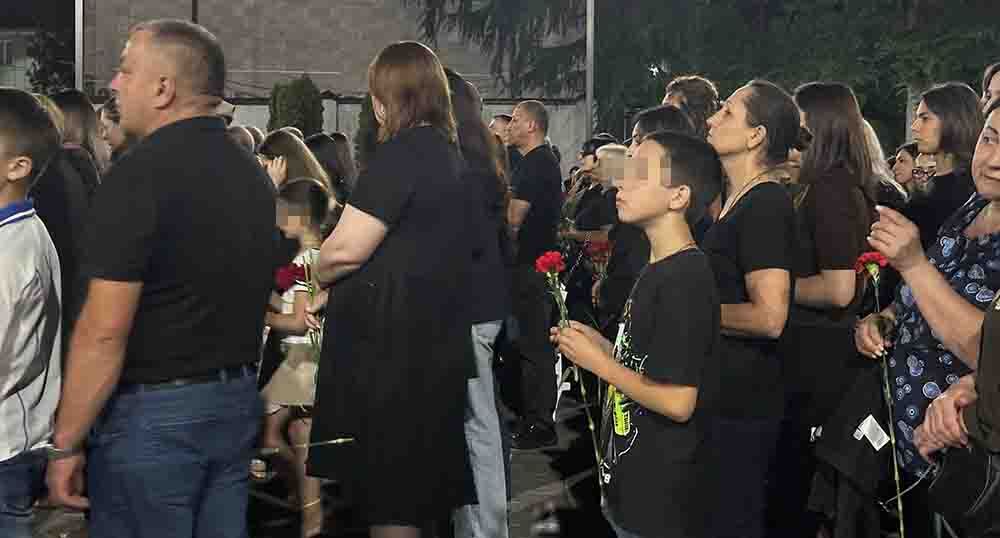
As reported by "Caucasian Knot", more than four thousand people participated in the mourning event in Tskhinval, dedicated to the 18th anniversary of the start of the "Five-Day War".
The Russian military operation "to enforce peace" was conducted from August 8 to 12, 2008, on the territory of Georgia, Abkhazia, and South Ossetia and is known in history as the "Five-Day War". After the "Five-Day War", Russia and some other countries recognized the independence of Abkhazia and South Ossetia. Since then, Georgia has considered Abkhazia and South Ossetia as territories occupied by Russia and has severed diplomatic relations with Russia, according to the "Caucasian Knot" report on the "Five-Day War" of 2008.
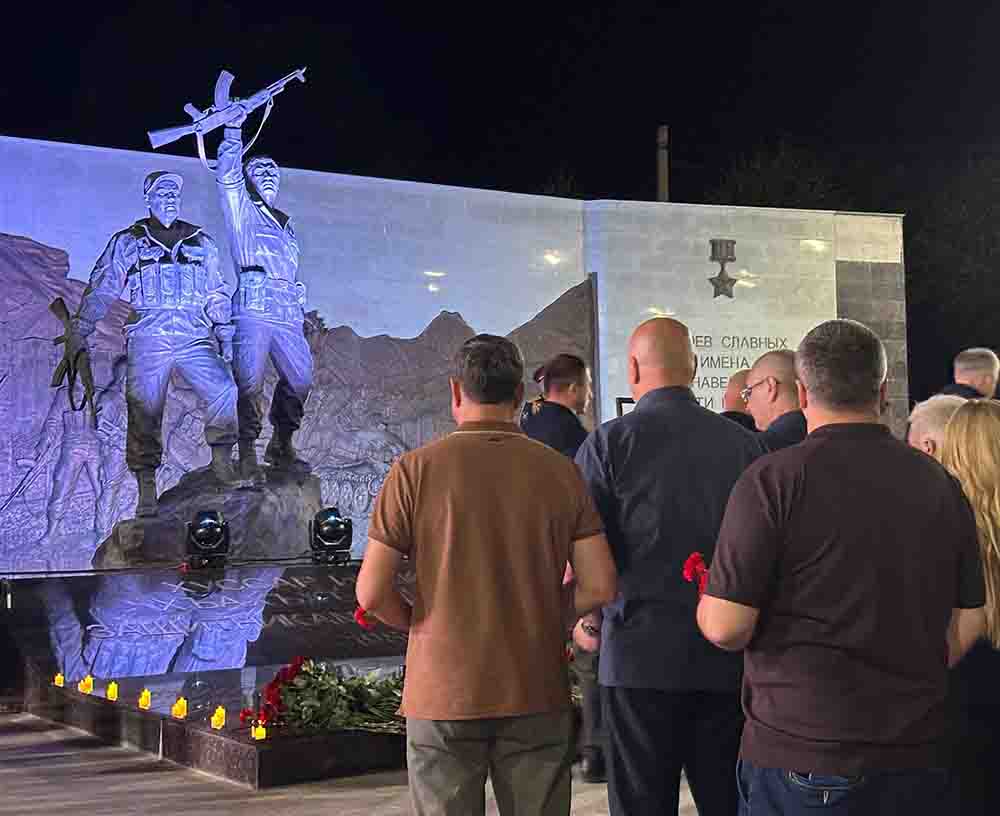 Traditionally, mourning events dedicated to the events of August 2008 began on the evening of August 7, when Georgia began a massive shelling of Tskhinval, reported the correspondent of "Caucasian Knot".
Zaida Slanova said that she lives in an old area of Tskhinval. She recounted that when the shelling began, she ran to her brother, who had a small café nearby.
"There was a small cellar, and we all crammed in there with the neighbors. Not everyone had basements. Very soon, the psychiatric hospital nearby caught fire. All the patients and nurses also ran to our basement," Slanova told the correspondent of "Caucasian Knot".
The cellar was gradually cleared to make more space for people, but the greatest concern was, of course, for the safety of loved ones. Zaida's son was in the militia and was at the front lines.
"Once he ran to me, urging me to leave so he wouldn't worry about me. But I didn't even think: how could I leave? So we sat in the cellar all those days," she said.
Elbrus, another resident of Tskhinval, noted that at the time the shelling began, he was on duty. His parents lived in the village of Prisi, not far from Tskhinval. It was also under heavy shelling. Residents from there also fled to Tskhinval. Elbrus's parents also moved to Tskhinval to his father's sister's house. There, near the house, Elbrus's father was killed by shrapnel from a shell.
"I came there on the second day and only then learned what had happened. My brother and I started digging a grave right in the garden. Back then, everyone buried their dead in gardens. We dug under heavy shelling. We kept jumping into the grave and hiding when we heard a shell coming. Then we would climb out and continue digging..." Elbrus told the correspondent of "Caucasian Knot".
Elbrus's father, like many other dead who were buried in gardens, was reburied in a cemetery after the war.
Dina lives in the village of Metekh in the Znaur district of the republic. There were no hostilities there.
"On the night of August 7, when we heard that Georgia had attacked us, we ran into the forests and hid there. The men separated immediately; they were in the militia, while we, the women and children, spent 2 nights in the forest. Only 3 people remained in the village – very old people who couldn't walk. We didn't know what would happen; we all remembered the war of the early 90s and were afraid that our villages would simply be burned. We spent another night in a house in the village of Vakhtana: they took us in and fed us. Only then did we return home," Dina told the correspondent of "Caucasian Knot".
She complained that she couldn't forget that fear for a long time. A few days later, her brother came to check on her. Dina recounted that when she heard a car approaching the house, she jumped from the second floor towards the garden, thinking that Georgian soldiers had come to the village.
"Now I believe that there will be no more wars. May our children not see what we saw," Dina said.
The hostilities brought suffering to many residents of both South Ossetia and Georgia, wrote journalists and human rights defenders who witnessed those events. Women and children "trembled in basements for two days while the capital of South Ossetia, Tskhinval, was pounded by "Grad" rockets, while artillery was pounding the city," said Tatiana Lokshina, program director ("Caucasian Knot" can provide the name of the organization upon request) for Russia.
Let us remind you that the European Court of Human Rights on January 21, 2021, recognized that Russia was involved in human rights violations in South Ossetia and Abkhazia, but is not responsible for the hostilities in August 2008. The ECHR's decision did not affect the status of South Ossetia and Abkhazia, southern Ossetian political scientists pointed out at that time. The ECHR considered Georgia's complaint but has so far ignored more than 1,500 complaints from residents of South Ossetia against the authorities of that country, they noted.
On September 16, 2022, Russia ceased to be a participant in the European Convention on Human Rights. However, the ECHR stated that it retains the competence to consider complaints directed against the Russian Federation, provided that they occurred before that day. Earlier, on March 16, 2022, it became known that due to Russia's exit from the Council of Europe, the ECHR suspended the consideration of complaints from Russia.
Translated automatically via OpenAI from https://www.kavkaz-uzel.eu/articles/425588

![Tumso Abdurakhmanov. Screenshot from video posted by Abu-Saddam Shishani [LIVE] http://www.youtube.com/watch?v=mIR3s7AB0Uw](/system/uploads/article_image/image/0001/18460/main_image_Tumso.jpg "Tumso Abdurakhmanov. Screenshot from video posted by Abu-Saddam Shishani [LIVE] http://www.youtube.com/watch?v=mIR3s7AB0Uw")