

Analysts drew parallels between the case of Skrepetsky and the murder of Khangoshvili.
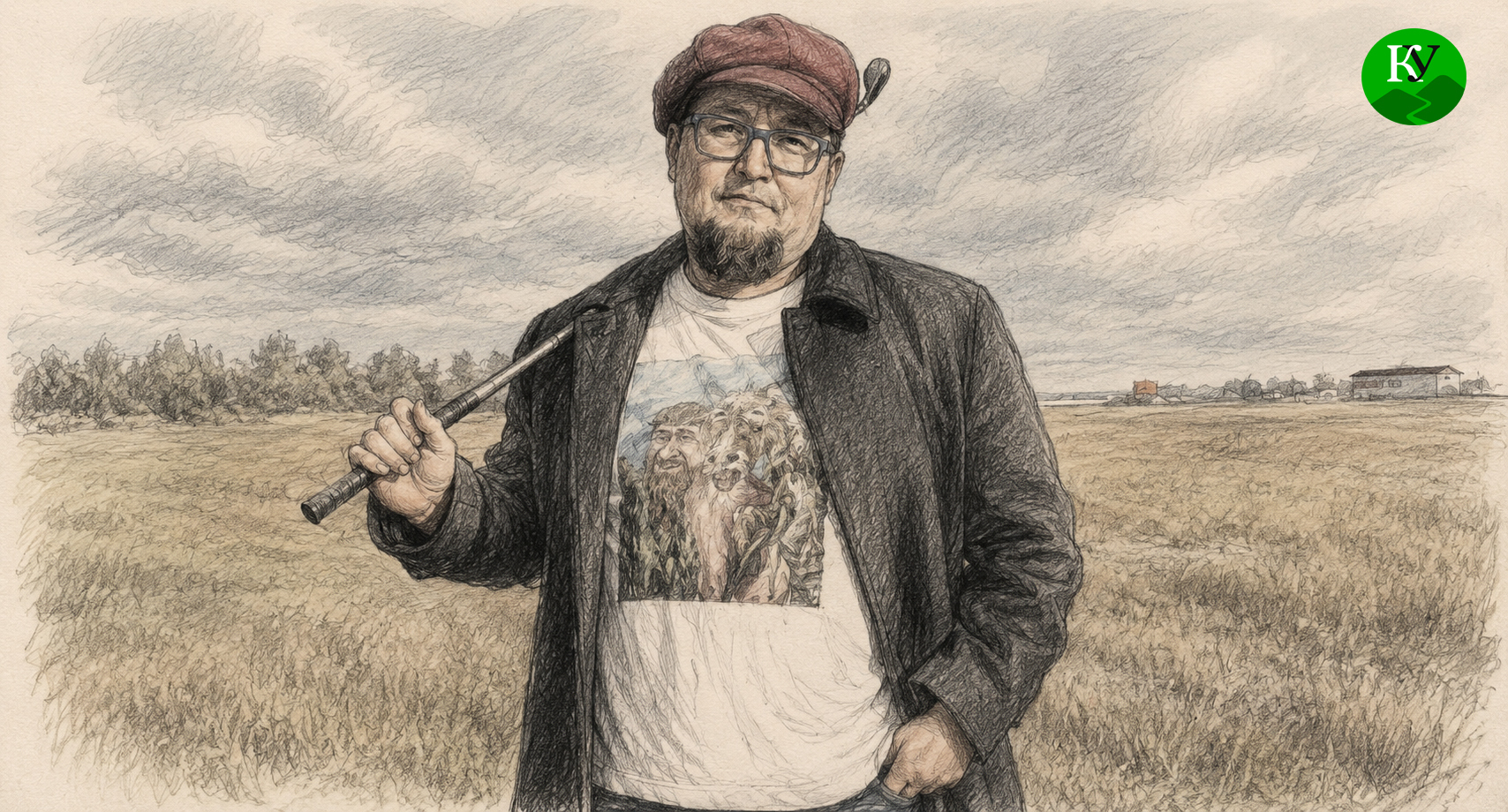
The mechanics of the murder of artist Semen Skrepetsky resemble the murder of former Chechen field commander Zelimkhan Khangoshvili, whose executor, according to the investigation, acted on behalf of state structures of the central government of Russia, noted analysts interviewed by "Caucasian Knot."
As reported by "Caucasian Knot", 44-year-old Russian caricaturist Semen Skrepetsky (real name Robert Kuzovkov) was shot dead on June 15 in Biala Podlaska, Poland, 30 kilometers from the Belarusian border. The killer fired five shots at the artist. On June 18, it became known about the detention of a suspect. The man used a Georgian passport. His hostel neighbors reported that he spoke Russian and knew Azerbaijani.
Semen Skrepetsky had lived in Poland since 2021 and was known for his anti-war and satirical caricatures of Vladimir Putin, Joseph Stalin, Ramzan Kadyrov, Alexei Navalny, and Alexander Lukashenko. Three days before his murder, he held a picket in Berlin outside the Russian embassy with a painting depicting Stalin holding Putin. Shortly before his death, the artist reported threats.
The detention of the suspect in the murder of Semen Skrepetsky fits into the scheme of the long-term presence of Russian special services in EU countries and is a continuation of the practice of politically motivated murders abroad, believes the founder of the Gulagu.net project * Vladimir Osechkin*.
Shortly after the murder, a version emerged in the public space about the possible involvement of the head of Chechnya in Skrepetsky's death, but this, according to Osechkin*, diverted attention from the alleged organizers.
"I specifically published works by Semen Skrepetsky so that people who were not previously familiar with his work could see them. It is the caricatures of Putin and Skrepetsky's stance on the Kremlin's policies that, in my opinion, became the trigger for this bloody order," said Osechkin*.
The use of individuals from the North Caucasus as alleged executors of such murders corresponds to the well-known practice of special services. Law enforcement agencies involve representatives of ethnic criminal communities to carry out operations against political opponents and the interests of European states, Osechkin* continued.
"Sources told me that the special services are trying to recruit those who have moved to Europe from the Caucasian republics through their relatives, exerting pressure on them or, conversely, creating privileged conditions for assistance and help in finding executors," explained Osechkin*.
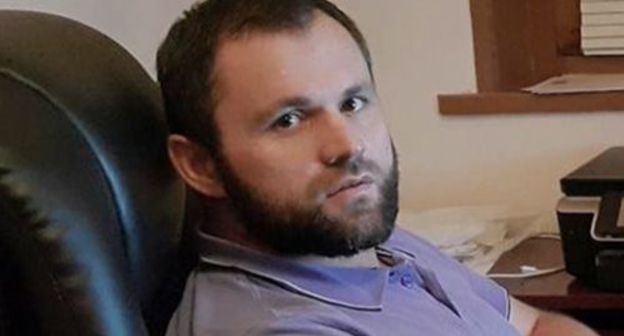
On August 23, 2019, Zelimkhan Khangoshvili was killed in Berlin. A citizen of Russia, Vadim Krasikov, was sentenced to life imprisonment for his murder. According to the German prosecutor's office, Krasikov "acted on behalf of state structures of the central government of Russia" and committed the murder either for a reward or because he shared the motives of the customer. Zelimkhan Khangoshvili is a native of the Pankisi Gorge, a Chechen Kist. During the second Chechen war, he fought on the side of Shamil Basayev and Abu Walid, later on Aslan Maskhadov, according to a biographical reference about Zelimkhan Khangoshvili prepared by "Caucasian Knot."
The murder of Semen Skrepetsky has more similarities with the murder of Zelimkhan Khangoshvili in Germany than with the persecution of critics by the Chechen authorities, noted a lawyer from Russia living in Belgium as a political refugee, on condition of anonymity.
"This is indicated by the very mechanism of the crime. Firstly, the Polish investigation claims that the suspect had been in the country for at least since 2022, used fake documents, and is simultaneously suspected of committing other crimes. If this information is confirmed, it will indicate not a one-time trip of the executor to commit the murder, but a long-term legalization in a European country. This model corresponds more to known operations of special services abroad than to spontaneous actions of individual executors," the lawyer told a correspondent of "Caucasian Knot."
He also noted the method of the murder. "The caricaturist was shot on the street by a person whom, as far as is known, he did not know personally, and after being wounded, he was finished off with control shots. This scheme – an attack by an unknown executor in a public place, shooting with the aim of guaranteed elimination of the victim, and the absence of the need to contact them – resembles a professionally prepared contract killing, as the German court recognized the murder of Khangoshvili," the lawyer noted.
He reminded that the murders of Chechen opposition figures in Europe had a different specificity. "In many investigations, the executors or intermediaries came from the same Chechen environment as the victims, used personal acquaintances, trusting relationships, or contacts within the diaspora to gain access to the victim. Although there were exceptions, this element was quite often found in such cases. For example, anti-Kadyrov blogger Imran Aliyev was killed in a hotel in Lille, France, and the alleged killer, according to French authorities, traveled with him from Belgium to France," he said.
In February 2020, the body of a Chechen native, Imran Aliyev (a blogger known as Mansur Stary), was found in a hotel in the French city of Lille. Aliyev was killed by a resident of the Gudermes district of Chechnya, who had already returned to the republic, reported Chechen blogger Tumso Abdurakhmanov* on February 2, 2020. Chechens living in France and Germany who assisted the alleged killer of Aliyev, according to Abdurakhmanov*, confessed to him that they did not know the purpose of their compatriot's visit to Europe.
The possible Chechen trace in the murder of Semen Skrepetsky does not allow for conclusions about the customer, the lawyer continued.
"To date, it has not been confirmed that the detained person is indeed a Chechen, and even if this is later confirmed, it does not automatically follow that the order came from Grozny. Russian special services have repeatedly used individuals from the North Caucasus and representatives of ethnic criminal groups in various operations abroad, so the nationality of the alleged executor alone does not allow to delineate the possible role of Moscow and Grozny," he concluded.
We have updated the applications on Android and IOS! We would appreciate feedback, ideas for development both in Google Play/App Store and on the pages of the Caucasian Knot in social networks. Without installing a VPN, you can read us on Telegram (in Dagestan, Chechnya, and Ingushetia – with a VPN). Through a VPN, you can continue to read "Caucasian Knot" on the website as usual and on social networks Facebook**, Instagram**, "VKontakte", "Odnoklassniki" and X. You can watch videos of the "Caucasian Knot" on YouTube.
* included in the register of foreign agents.
** the activities of the Meta company (owner of Facebook, Instagram, and WhatsApp) are banned in Russia.
Translated automatically via OpenAI from https://www.kavkaz-uzel.eu/articles/424524


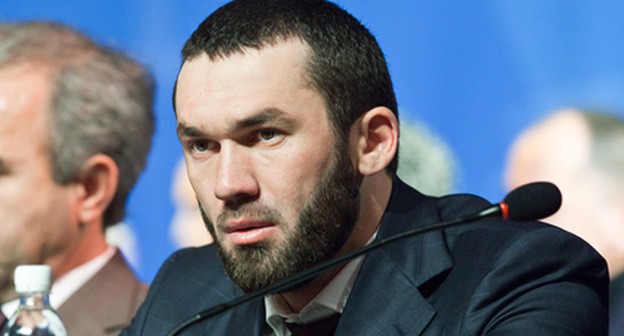
![Tumso Abdurakhmanov. Screenshot from video posted by Abu-Saddam Shishani [LIVE] http://www.youtube.com/watch?v=mIR3s7AB0Uw](/system/uploads/article_image/image/0001/18460/main_image_Tumso.jpg "Tumso Abdurakhmanov. Screenshot from video posted by Abu-Saddam Shishani [LIVE] http://www.youtube.com/watch?v=mIR3s7AB0Uw")