

Five schools in Dagestan have been declared unfit for classes following the flood.
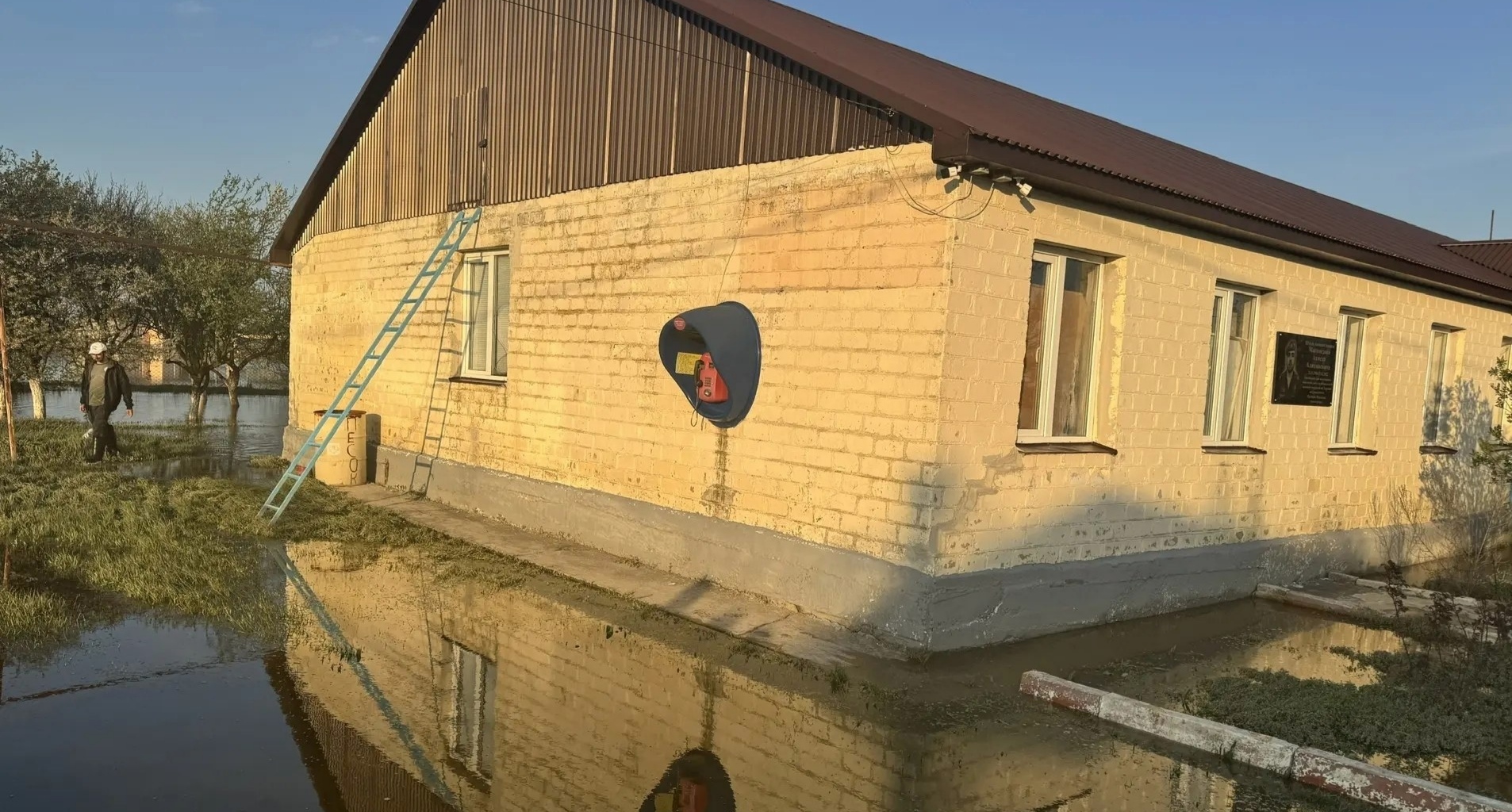
More than 1,200 children in Dagestani villages have been transferred to distance learning because five school buildings were deemed unfit for use following the flooding. Authorities have requested 1.5 billion rubles for modular school buildings.
As reported by the "Caucasian Knot," 93 educational institutions were damaged by the flooding in Dagestan. Of these, 90 can be restored with major repairs, while three more sustained critical damage and are deemed completely unfit for use, the republic's Ministry of Education and Science reported on April 10. The installation of modular schools in these villages is being considered. According to the department, these are fully-fledged educational complexes, including academic buildings, gyms, and food service facilities.
In Dagestan, five school buildings have been deemed unfit for schooling as a result of flooding, the head of the republic, Sergey Melikov, announced on his Telegram channel on April 24.
"We need to purchase and install prefabricated buildings for those schools that are beyond repair. We already have five of these," the publication stated.
Children have now been transferred to distance learning.
The regional Minister of Education and Science, Yakhya Buchaev, provided detailed information. "Five schools in our region, with 1,222 children enrolled, were completely out of service. Of course, the worst-hit school was in Adilyotar [Khasavyurt District], followed by the school in the village of Novotsilitli [Babayurt District], schools in the villages of Arablinskoye and Rukel [Derbent District], and the school in the village of Irib in the Charodinsky District. All children in these five schools have now been transferred to distance learning," TASS quoted Buchaev as saying.
The flood caught residents of the Khasavyurt District by surprise, forcing them to hastily evacuate, leaving their belongings behind, villagers told the "Caucasian Knot." According to them, in the first hours, it was mostly the villagers themselves who helped each other, and administration representatives only arrived the following day. Residents of the Adilyotar village council lost 400 head of cattle, 360 head of small cattle, and nearly 30,000 poultry as a result of the flood.
According to the minister, authorities are discussing the issue of allocating 1.5 billion rubles to Dagestan for the purchase and installation of five prefabricated structures to resume school education, the agency writes.
In addition to the five school buildings, the food service building of the Agachaul Secondary School also sustained critical damage as a result of the flood, the Dagestan Ministry of Education and Science reported on its Telegram channel.
"Buildings subject to restoration are scheduled for major repairs in order to prepare them for the start of the new school year. In settlements where irreparable damage has been recorded, a decision has been made to purchase and "installation of modern prefabricated structures," the publication states.
The modular structures include "equipped classrooms, computer rooms, libraries, and food service areas with dining halls," the ministry stated.
"Particular attention is being paid to the creation of universal transformable halls that combine the functions of sports and assembly spaces, equipped with showers and dressing rooms. The new buildings will be completely autonomous: they will have their own boiler rooms, backup power systems, local treatment facilities, and modern ventilation systems," the statement noted.
20 cultural centers damaged by flooding
As a result of the flood, 20 cultural centers in the Khasavyurt, Kulinsky, and Magaramkent districts were damaged, Zarema Butaeva, the Minister of Culture of the Republic, reported on her Telegram channel on April 24.
"Fundraising is currently underway for their restoration, as well as for assistance "To the workers of the region's cultural organizations who find themselves in a difficult situation," she wrote.
The charity event was organized by the Russian Ministry of Culture and the Russian Red Cross, the official noted. "Cultural institutions from across the country, industry employees, and creative unions are already participating in the event," the publication stated.
As a reminder, by April 24, authorities had received more than 218,000 applications for assistance from affected residents of Dagestan. However, only 5,293 people received payments—about 2.43% of applicants.
"Caucasian Knot" has prepared a detailed guide to help you understand who is eligible for payments, the amounts provided, the documents required, and what to do if some paperwork is missing.
Floods caused by torrential rains began in the North Caucasus at the end of March and were among the most devastating in recent years. Six residents of Dagestan, including three minors, died as a result of the flooding. Additionally, on April 13, a 19-year-old volunteer died in the hospital after suffering a severe head injury while helping residents of the Derbent district.
Dagestan and Chechnya suffered the most from the disaster, according to the "Caucasian Knot" report "Spring Flooding in the North Caucasus - 2026".
Translated automatically via OpenAI from https://www.kavkaz-uzel.eu/articles/422728



![Tumso Abdurakhmanov. Screenshot from video posted by Abu-Saddam Shishani [LIVE] http://www.youtube.com/watch?v=mIR3s7AB0Uw](/system/uploads/article_image/image/0001/18460/main_image_Tumso.jpg "Tumso Abdurakhmanov. Screenshot from video posted by Abu-Saddam Shishani [LIVE] http://www.youtube.com/watch?v=mIR3s7AB0Uw")