

Experts have ruled out any risks to Dagestan from strikes on the Iranian nuclear power plant.
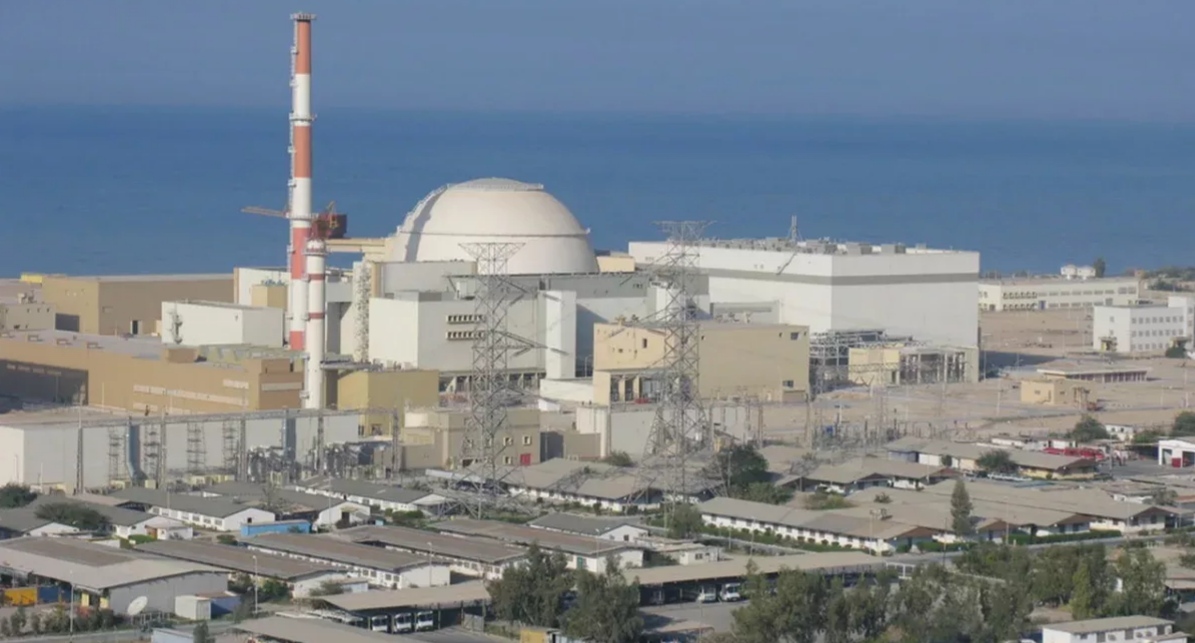
Dagestan is not at risk of radiation contamination from strikes on nuclear power plants or uranium enrichment centers in Iran, but monitoring radiation levels in the republic is important due to the proximity of other nuclear facilities.
As reported by the "Caucasian Knot," on March 20, Rospotrebnadzor head Anna Popova reported that specialists in Dagestan are measuring radiation levels three times a day in connection with the situation in Iran. Earlier, on March 18, it was reported that a shell had struck the Iranian Bushehr Nuclear Power Plant. According to Rosatom, the strike occurred near the first unit of the plant, damaging one of the facilities not related to the nuclear cycle. Rospotrebnadzor has not reported radiation levels in Dagestan.
Back in June 2025, the head of Rospotrebnadzor ordered round-the-clock monitoring of the radiation situation in southern Dagestan in response to reports of a radiation leak in Iran. The day before, Israel struck Iranian nuclear and military facilities across the country, prompting reports of an accident at the uranium enrichment center in Natanz, Iran.
The risks of radiation contamination in Dagestan in the event of a bombing of the Bushehr Nuclear Power Plant or uranium enrichment plants in Iran were assessed for the "Caucasian Knot" by Pavel Podvig, a Russian physicist who asked that his name and affiliation be kept confidential, and by the head of the "Nuclear Forces of Russia" project, and by orientalist Ruslan Suleimanov.
According to the general expert opinion, radioactive contamination from an accident at the Bushehr Nuclear Power Plant would not be able to penetrate the Caucasus Mountains. At the same time, a physicist, speaking on condition of anonymity, noted that the possibility of damage to the Bushehr Nuclear Power Plant exists, in part because the plants were not originally built with military action in mind.
The main problem is the operating reactor
"It has a VVER-1000 reactor, a Soviet design from the 1960s. According to official Rosatom data, the maximum the reactor's shielding can withstand is the impact of an aircraft weighing up to 5.7 tons. The main problem is the operating reactor." If it is damaged, the pressure and temperature difference with the surrounding environment will force radioactive iodine, cesium, strontium, and nearly two hundred other elements out," the specialist said.
He noted that in the worst-case scenario, only minimal amounts of cesium and strontium, which will not exceed permissible limits, will reach the southern regions of Russia, but the countries of the South Caucasus could be affected. "In quantities significant for agriculture, this could reach Armenia, Azerbaijan, and Georgia. It is unlikely that this cloud would be able to cross the Caucasus Mountains," the physicist said.
According to him, this scenario can be eliminated by shutting down the reactor, performing a so-called "cold shutdown." "In this case, the temperature and pressure will be practically equal to the temperature and pressure outside. And even if the reactor circuit is damaged, only an area within a few kilometers will be contaminated. The Bushehr Nuclear Power Plant produces only 2% of Iran's electricity, and therefore shutting it down won't lead to a catastrophe, but it will help contain a potential disaster," the expert emphasized.
If they bomb it all, the gas will gradually condense and settle.
As for the uranium enrichment plants in Fordow and Natanz, he said the likelihood of a major disaster there is significantly lower. "First, they're all located at significant depths underground. Furthermore, in centrifuges, uranium is enriched in the form of gaseous hexafluoride. And if they bomb it all, the gas will gradually condense and settle on the debris or the floor. This, of course, is also not very good – it will create an underground nuclear waste dump, and the hexafluoride could leak into groundwater. But again, in this case, problems will only arise among local residents, and it won't spread widely," the specialist noted.
At the same time, in his opinion, constant monitoring of radiation levels in Dagestan is necessary, since the Rostov Nuclear Power Plant and Armenian Nuclear Power Plant are located nearby. "And if something bad happens there, radionuclides could reach Dagestan," the physicist explained.
On February 28, Israel and the United States began striking Iran. Donald Trump announced the start of a large-scale military operation. In response, Iran began shelling Israel, American military facilities, and civilian targets in the Middle East, according to the Caucasian Knot report "The Main Impact of the Military Conflict with Iran on the Caucasus." On March 4, the IAEA stated that it had found no damage to facilities containing nuclear materials and that there was no risk of radiation contamination.
In turn, Pavel Podvig believes it is unlikely that strikes will directly target the Bushehr Nuclear Power Plant. "After all, both the United States and Israel understand that the nuclear power plant poses a high radiation hazard and A strike on it could result in a radioactive release. I think the possibility of a deliberate strike can be completely ruled out. There's certainly the possibility of an accidental hit, but in that case, causing a radiation accident is quite difficult. The reactor itself is protected, so accidentally disabling a vital system would be difficult. But, in principle, it's possible to imagine a chain of events that could lead to a radiation release. I think that, in a worst-case scenario, we could imagine an accident similar to the one that happened in Fukushima in 2011. But that's a very extreme case," he said.
The accident at the Fukushima Daiichi nuclear power plant in Japan occurred in March 2011 as a result of a tsunami triggered by an earthquake. Water flooded the plant's territory and disabled equipment. According to experts, the resulting release of radioactive materials did not exceed 20% of the Chernobyl level. In 2013, the World Health Organization stated that the radiation leak would not lead to a significant increase in cancer cases in the region. The first victim of radiation exposure was only reported in September 2018, when Japanese authorities confirmed the death of a plant worker from lung cancer developed due to radiation exposure, RBC reported on March 11, 2026.
This radioactivity, even if it reaches Dagestan, poses no immediate threat to health. There won't be
As for monitoring, if there is a release, the stations could register, in particular, the cesium-137 isotope, Pavel Podvig pointed out. "But it's important to keep in mind that the Caucasus is quite far from Bushehr, 1,500 kilometers. In 2011, the radioactive cloud didn't travel further than about a hundred kilometers. Moreover, everything depends, of course, on wind direction. One way or another, if the cloud moves toward the Caucasus, it will be known some time in advance [of its approach]. This radioactivity, even if it reaches Dagestan, will not pose an immediate health threat," he stated.
At the same time, Podvig supported the idea of monitoring. "But we must understand that even in the event of a strike or accident [in Iran], there is no cause for concern in Dagestan," the specialist emphasized.
So far, there is no talk of damage even to Iran itself.
Orientalist Ruslan Suleimanov noted that he does not currently see any radiation threats even to Iran itself. "The IAEA statement regarding the strike near the Bushehr Nuclear Power Plant does not mention any threats to the environmental situation... And, judging by this report, the strike occurred near the nuclear power plant. Yes, this violates the rules for operating nuclear power plants and everything else. But so far, there is no talk of damage even to Iran itself. There is no talk at all about Russia or other neighboring countries," - he stated.
The "Caucasian Knot" has compiled materials about the impact of military operations in Iran on the Caucasus on the thematic page "Iran: War is Near." The "Caucasian Knot" has also published a chronicle of the war in Iran.
Translated automatically via OpenAI from https://www.kavkaz-uzel.eu/articles/421806





![Tumso Abdurakhmanov. Screenshot from video posted by Abu-Saddam Shishani [LIVE] http://www.youtube.com/watch?v=mIR3s7AB0Uw](/system/uploads/article_image/image/0001/18460/main_image_Tumso.jpg "Tumso Abdurakhmanov. Screenshot from video posted by Abu-Saddam Shishani [LIVE] http://www.youtube.com/watch?v=mIR3s7AB0Uw")