

Marem responded to the verdict in the case of the death of a rehab patient in Dagestan.
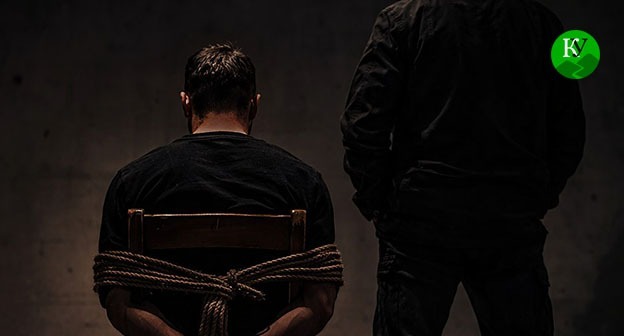
Patients in rehab centers are held against their will and are essentially held captive, where they can be tortured, human rights activists commented on the verdict in the case of the beating to death of one of the people placed in a rehabilitation center in Kaspiysk.
As reported by the "Caucasian Knot," on January 20, 2025, the Kaspiysk City Courtremanded into custody a rehabilitation center employee detained in connection with the death of a patient. The case was opened under articles on illegal deprivation of liberty (Part 3 of Article 127 of the Criminal Code of the Russian Federation) and causing grievous bodily harm resulting in the death of a patient through negligence (Part 4 of Article 111 of the Criminal Code of the Russian Federation), which carry prison sentences of up to eight years and up to 15 years, respectively. In September 2025, the case was submitted to court. The court sentenced him to seven years and four months in prison. A man identified by the United Press Service of the Courts of Dagestan as a rehab volunteer claimed he used force to stop a patient's aggression.
Calling the convicted man a volunteer is the rehabilitation center's attempt to justify itself, claiming he wasn't a regular employee, according to the human rights group "Marem."
All people placed in rehabilitation centers are held captive.
"In such institutions, there are no 'residents,' 'clients,' or 'patients,' nor are there 'nurses' or 'doctors.' All people placed in rehabilitation centers are held captive. Most are placed there against their will, forced to sign consent forms for 'treatment' (if such forms even exist), and there are simply no qualified doctors in the 'rehabs.'" In the publication.
Human rights activists recalled that treatment in rehabilitation centers or psychiatric hospitals is a common practice of suppressing willpower.
This is how Chechen woman Aminat Lorsanova was "treated" in a clinic.
Aminat Lorsanova claimed that in 2018, she was twice forcibly admitted to psychiatric hospitals in Grozny. She spent 25 days in one clinic and four months in the other. Several times during this time, an acquaintance of the girl's relatives visited her in the hospital, where he beat her with a stick while reading the Koran. Her relatives ignored her requests to stop the beating. In February 2020, Aminat Lorsanova told the Caucasian Knot that only her third attempt to escape "treatment" in Chechnya, which she made in 2019, was successful. Lorsanova filed a complaint with the Investigative Committee alleging violence at the hands of close relatives and a specialist they hired to "exorcise djinns." But the Investigative Committee forwarded Lorsanova's complaint to Chechen police, who refused to open a criminal case.

A 16-year-old teenager from Ingushetia was also hospitalized after telling human rights activists about domestic violence. His family was investigated, and the only option they could find was to send him to a mental health facility, human rights activists note.

"You could say she was lucky because she ended up in a clinic, not a 'rehab,' where there's no oversight and they can do anything they want—even kill. We're glad that people are talking more often about torture, the monstrous harm, and the illegal work of 'rehabs.' It's a shame this happened after another death," Marem noted.
Torture in rehabs is possible due to the lack of oversight.
Recall that residents of Dagestan have previously reported torture in rehabs. For example, Magomed Askhabov, who fled from his family after they sent him to a drug rehab center for "treatment" for homosexuality, reported that physical and psychological torture was used on the people held there. Askhabov filed a complaint with the Investigative Committee and the Russian Prosecutor's Office against the rehabilitation center. In his complaint to the Investigative Committee and the Russian Prosecutor's Office, Askhabov stated that he and other residents of the center were forced to carry heavy objects, remain silent for three to four days, were suspended by their hands from bars, and were subjected to other violent practices, all under the guise of treatment. Askhabov left Russia, having failed to secure an investigation.
Elina Ukhmanova, who was placed in a rehabilitation center in Makhachkala at the request of her relatives, complained to the police about the illegal restriction of her freedom and the torture she suffered there. In a police report, Elina Ukhmanova complained that she was forcibly held in a rehabilitation center for four months at the request of her parents, who paid to have their daughter "cured" of atheism and corrected for her sexual orientation. She alleged that physical violence was used against patients at the rehab. After learning of her family's plans to place her for treatment again, this time at a Chechen Islamic medical center, she managed to escape from home.
The activities of rehab centers are practically unregulated; such institutions are not required to have licenses. Private rehabilitation centers are positioned as social institutions and are popular amid Dagestan residents' distrust of doctors at licensed medical institutions. However, lawyers and human rights activists point out that rehabilitators risk facing substandard services and staff abuse.
Translated automatically via OpenAI from https://www.kavkaz-uzel.eu/articles/421664



![Tumso Abdurakhmanov. Screenshot from video posted by Abu-Saddam Shishani [LIVE] http://www.youtube.com/watch?v=mIR3s7AB0Uw](/system/uploads/article_image/image/0001/18460/main_image_Tumso.jpg "Tumso Abdurakhmanov. Screenshot from video posted by Abu-Saddam Shishani [LIVE] http://www.youtube.com/watch?v=mIR3s7AB0Uw")