


Azerbaijani social media users responded to calls for the extradition of convicted NKR leaders to Armenia.
The sentences handed down by the Baku court to the military-political leadership of Karabakh are fair, according to the majority of Azerbaijani commentators on the "Caucasian Knot" social media page. Some are confident that the transfer of the convicted to the Armenian side is impossible, while others outlined the conditions under which Baku might agree to release them.
As "Caucasian Knot" reported, ahead of US Vice President J.D. Vance's visit to Yerevan, activists and clergy of Nagorno-Karabakh requested assistance in securing the release of Armenian prisoners in Azerbaijan. During Vance's visit to Yerevan, a protest was held, asking for assistance in securing the release of former Nagorno-Karabakh leaders imprisoned in Azerbaijan and in the search for those missing during the Karabakh wars.
On February 5, former Nagorno-Karabakh President Arayik Harutyunyan, Foreign Minister Davit Babayan, former Defense Army Commander Levon Mnatsakanyan and his deputy David Manukyan, and former Parliament Speaker Davit Ishkhanyan were sentenced to life imprisonment by a military court in Baku. Another 10 people were sentenced to terms ranging from 15 to 20 years in prison. Opposition representatives believe that life sentences and long prison terms for members of the Karabakh military-political leadership were made possible by the inaction of the Armenian authorities. The harsh sentence for the Karabakh military-political leadership is due not only to accusations of war crimes, but also to Baku's intentions to use it in negotiations with Armenia, some social media users noted. Some believe that Azerbaijan, on the contrary, could release the convicted to demonstrate its commitment to peace.
A post on the Caucasian Knot Facebook page* about an appeal from Nagorno-Karabakh activists and clergy in Armenia to the US Vice President on the eve of his visit to Azerbaijan had garnered 218 comments by 3:51 a.m. Moscow time today. The messages exchanged by users often include insults and threats, including the use of obscene language.
Most Azerbaijani users agree with the sentences handed down to representatives of the military-political leadership of Nagorno-Karabakh, expressing confidence that the convicted received deserved punishment for the crimes they committed. Some users believe the death penalty would have been a fairer punishment.
“The people who made key military and political decisions must bear full responsibility for them. Such sentences show that crimes do not go without consequences, even after time,” noted Aynur Mammedova. “Everyone saw on the internet how Arayik Harutyunyan said that he gave the order to bomb Ganja. We know how many people died there. This fact alone is enough for Arayik to sit in prison for life,” stated Natiq İsmayilov.
“The ‘miatsum’ campaign, positioned as a strategic breakthrough and a ‘historical necessity,’ in reality became a textbook example of political self-deception: its architects found themselves in a trap they dug with their own hands. (...) Besides the conceptual failure, this campaign had a high human cost. Thousands of young Armenians fell victim to a poorly conceived ideological project that promised national ‘revival’ but led to social disorientation, losses, and long-term instability,” concluded Sanuber Nazarova.
Some users insist that the convicted Karabakh leaders cannot be called "prisoners" or "hostages," and the prevailing opinion in the comments is that Azerbaijan does not hold Armenian prisoners of war on its territory. "These are not prisoners, they are captured on the battlefield, they are hostages!" declared Andranik Mkhitaryan. "Most of the defendants at Nuremberg also did not participate in the fighting. But they were hanged...," countered Elkhan Akhundov.
“Prisoners are those who were captured during military operations. During the investigation, these same individuals were accused in criminal cases; pretrial detention was chosen against them. After the court verdict, they are considered convicted, not prisoners, and are held in correctional facilities. The current Armenian leadership has nothing to do with this; these people committed their crimes on the territory of the Republic of Azerbaijan, where they were detained by law enforcement officers, not the military,” argues Chingiz M-z.
“These are not prisoners. They are criminals. The prisoners were released long ago,” stated Shahin G. “We don’t have prisoners, we only have war criminals,” added Samir Azaqov. "We exchanged prisoners immediately; in war, prisoners are treated according to international conventions. And criminals are treated as criminals," noted Ramiz Ceferov.
"There are no humanitarian problems between us. All Armenians left for Armenia of their own free will; no one forced or coerced them. Only those who committed terrible crimes remain and are now answering for their actions," said Qabil Əliyev.
Commentators cite the following reasons why the government will not grant amnesty or exchange convicted "separatists": the memory of those killed in the conflict, which would be betrayed, and the creation of a precedent that could provoke the intensification of separatist and terrorist tendencies among Azerbaijan's ethnic minorities. "This will create a dangerous precedent: terrorists and separatists are not detained for long in Azerbaijan. This means that we can repeat it...," wrote, in particular, Elkhan Akhundov.
One commentator expressed the opinion that after the adoption of a new constitution in Armenia, probably taking into account Azerbaijan's demands, the release of prisoners will become possible as a gesture of goodwill. He also allows for the exchange of convicts for other citizens of Armenia - the second and third presidents, whom he calls the main culprits of the suffering of both peoples. "In my opinion, two options can be considered: either the prisoners will be released as a gesture of goodwill after the adoption of a new constitution in Armenia, or an exchange will take place for the real executioners of the Azerbaijani and Armenian peoples, Sargsyan and Kocharyan, whose hands are stained with blood up to the elbows," argues Ilham Karimov.
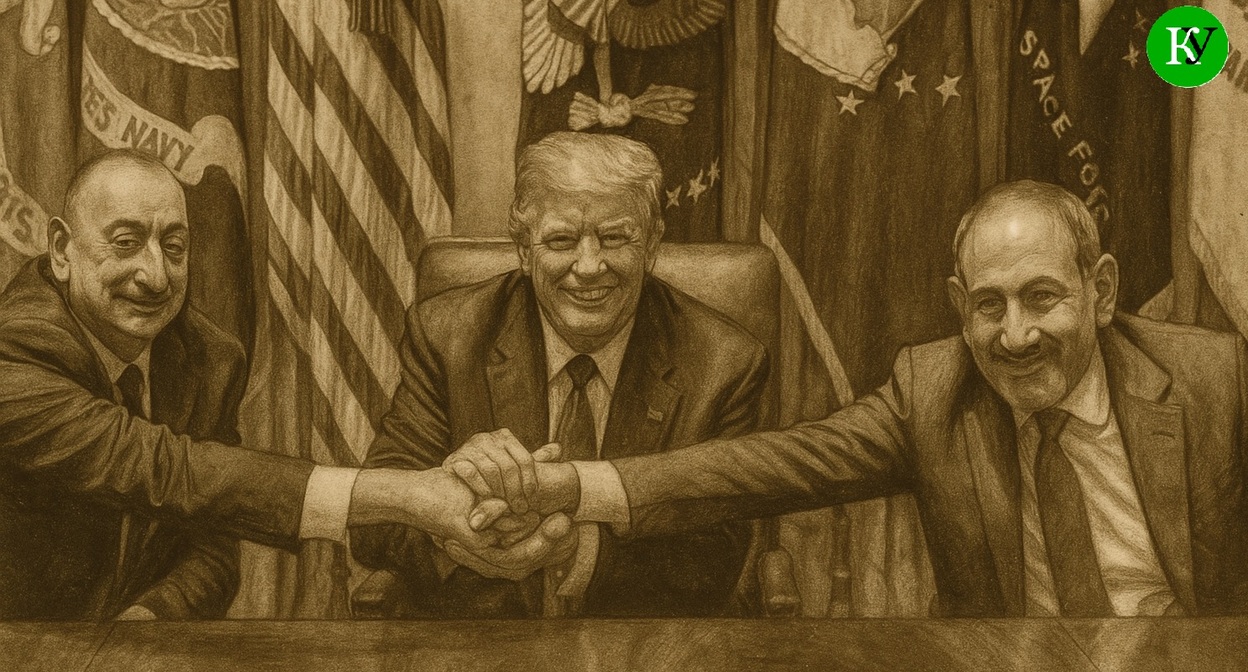
Regarding the prospects of American involvement in the fate of Karabakh prisoners and POWs, Azerbaijani commentators have expressed the opinion that the US would prefer to focus on domestic issues. "I don't think Azerbaijan is asking the US to release prisoners of another country. Under what article should the US order Azerbaijan to release criminals?" asked Arm Muslim.
"The US will not interfere in matters of justice, especially for serious crimes against humanity. There are crimes and there are corresponding punishments! Although the punishments for these thugs, who have committed countless crimes, are quite humane," said Aynura Mahammadova.
Translated automatically via OpenAI from https://www.kavkaz-uzel.eu/articles/420699


![Tumso Abdurakhmanov. Screenshot from video posted by Abu-Saddam Shishani [LIVE] http://www.youtube.com/watch?v=mIR3s7AB0Uw](/system/uploads/article_image/image/0001/18460/main_image_Tumso.jpg "Tumso Abdurakhmanov. Screenshot from video posted by Abu-Saddam Shishani [LIVE] http://www.youtube.com/watch?v=mIR3s7AB0Uw")