

Authorities have officially acknowledged that more than 8,550 fighters from southern Russia were killed in the military operation.
At least 4,213 fighters from the North Caucasus Federal District and 4,344 from the Southern Federal District have been acknowledged by authorities and security forces to have been killed during the military operation in Ukraine.
As reported by the Caucasian Knot, by January 19, authorities and security forces had officially acknowledged that at least 8,504 fighters from southern Russia had been killed in the military operation: 4,194 from the North Caucasus Federal District and 4,310 from the Southern Federal District.

"Caucasian Knot" maintains a list of names of natives of the North Caucasus and Southern Federal Districts killed in the military operation. The list was compiled within the framework of current laws and based on data provided by officials—from the governor to the head of a village, as well as representatives of security agencies.
According to the "Caucasian Knot," by January 30, government and security officials had officially recognized at least 8,557 fighters from southern Russia as killed in the military operation: 4,213 from the North Caucasus Federal District and 4,344 from the Southern Federal District.
Dagestan continues to bear the brunt of the death toll—1,787. The deaths of 905 fighters from Stavropol Krai, 540 from North Ossetia, 363 from Kabardino-Balkaria, and 258 from Chechnya have also been confirmed. id="#wk_ft2" contenteditable="false"> , 180 from Karachay-Cherkessia and 180 from Ingushetia.
Among the regions of the Southern Federal District, the Volgograd Region suffered the largest number of deaths (1,648). Also confirmed dead were 840 fighters from the Rostov region, 828 from the Krasnodar region, 683 from the Astrakhan region, 209 from Kalmykia, and 136 from Adygea.

On September 21, 2022, Vladimir Putin announced a "partial mobilization." On October 28 of that year, the Minister of Defense reported its completion to the president, but no corresponding decree followed. Following the announcement of mobilization in southern Russia, attempts were recorded to mobilize people who, due to age or health, should not be sent to the combat zone. [The text appears to be incomplete and likely omitted.]
It should be noted that actual casualties among combatants from the North Caucasus may be significantly higher than officially acknowledged. This situation is common throughout the North Caucasus Federal District, but is particularly acute in Chechnya. In February 2023, Ramzan Kadyrov called on regional leaders not to disclose the number of those killed. "I don't understand when regional leaders trumpet the death toll in the SVO zone. My question is: why? Don't manipulate the topic of our heroes, writing that this many died in this region, and that many in another," he said.
The first official to report the death of a Russian soldier in the SVO zone was Dagestan's head, Sergey Melikov. On February 26, 2022, he said that officer Nurmagomed Gadzimagomedov had been killed in Ukraine.
State awards, memorial plaques, and appearances on Channel One do not guarantee state support for the families of those killed, according to the Caucasian Knot article "Three Comrades Served: How the Authorities Are Depriving the Families of Killed Volunteers of Benefits," which describes the stories of slain soldiers, including those from the Krasnodar Territory.
We have updated the apps for Android and IOS! We would be grateful for criticism and ideas for development both in Google Play/App Store and on KU pages in social networks. Without installing a VPN, you can read us on Telegram (in Dagestan, Chechnya and Ingushetia - with VPN). Using a VPN, you can continue reading "Caucasian Knot" on the website as usual, and on social networks: Facebook*, Instagram*, "VKontakte", "Odnoklassniki" and X. You can watch the "Caucasian Knot" video on YouTube. Send messages to +49 157 72317856 on WhatsApp*, to the same number on Telegram, or write to @Caucasian_Knot.
* Meta (owner of Facebook, Instagram, and WhatsApp) is banned in Russia.
Translated automatically via OpenAI from https://www.kavkaz-uzel.eu/articles/420370


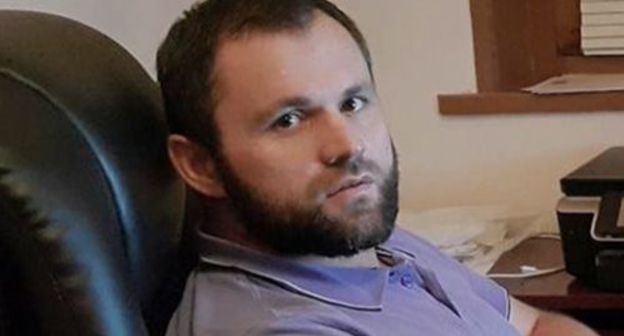
![Tumso Abdurakhmanov. Screenshot from video posted by Abu-Saddam Shishani [LIVE] http://www.youtube.com/watch?v=mIR3s7AB0Uw](/system/uploads/article_image/image/0001/18460/main_image_Tumso.jpg "Tumso Abdurakhmanov. Screenshot from video posted by Abu-Saddam Shishani [LIVE] http://www.youtube.com/watch?v=mIR3s7AB0Uw")