


The mayor's office's idea to replace trolleybuses with electric buses has sparked skepticism among Makhachkala residents.
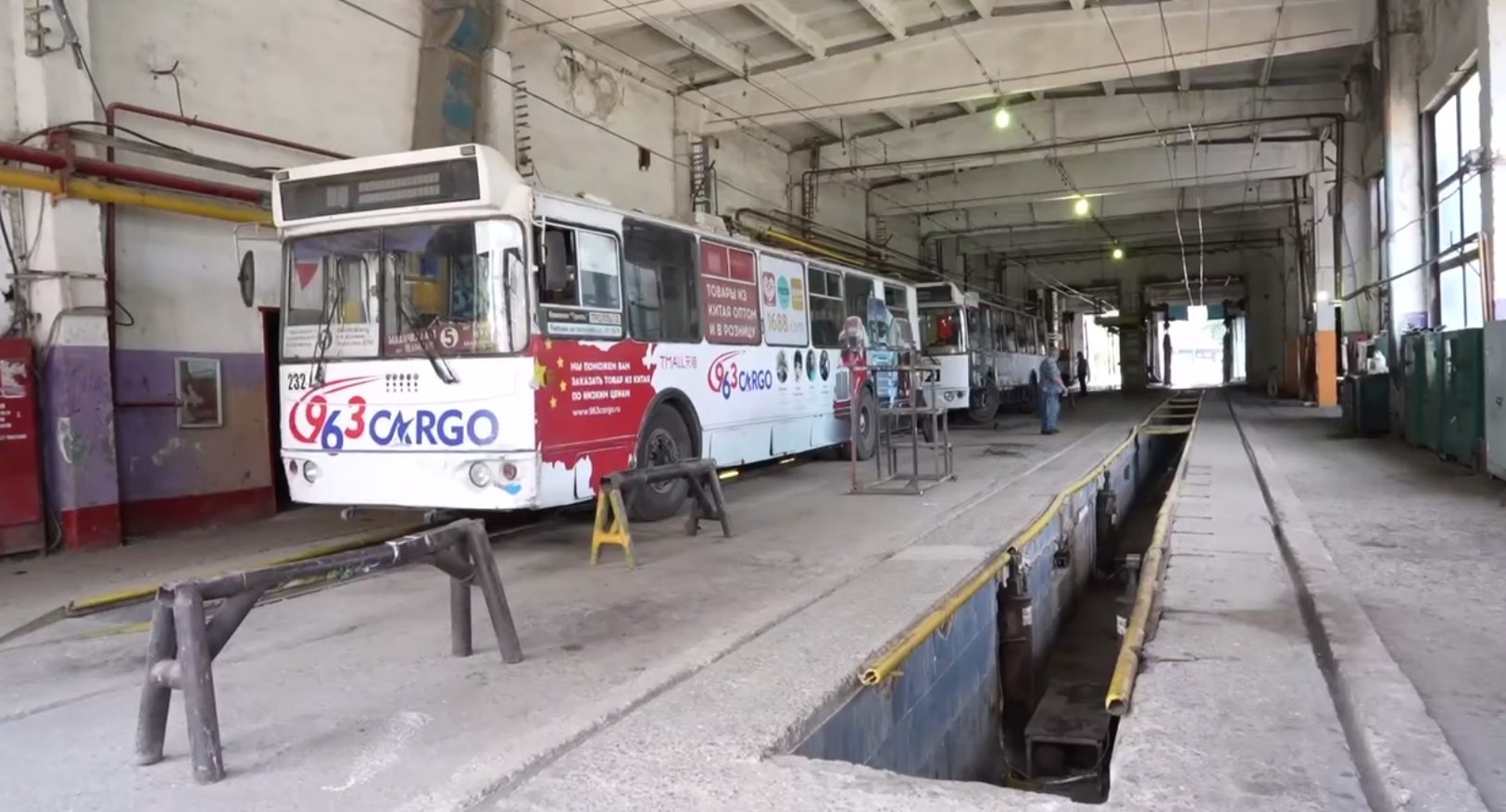
The Makhachkala mayor's office announced plans to put the trolleybus department up for auction and use the proceeds to purchase electric buses, each costing 50 million rubles. Residents criticized the idea and recommended purchasing cheaper trolleybuses and buses.
As reported by "Caucasian Knot," residents of Makhachkala noted in December 2025 that the decision to liquidate the trolleybus depot contradicts the mayor's office's promises to preserve this popular and environmentally friendly form of public transportation. A journalist and a former employee of the trolleybus company, which owns attractive land, were deliberately driven into a dire financial situation.
In December 2025, the Makhachkala administration ordered the liquidation of the Makhachkala Trolleybus Company due to its unsatisfactory financial situation. City authorities managed to reduce the company's total debt (over 265 million rubles) by only 38 million. Telegram users questioned the feasibility of replacing trolleybuses with buses.
Makhachkala Mayor Dzhambulat Salavov announced that the trolleybus department is included in the 2026 privatization plan, RIA Dagestan reports today.
Salavov noted that "evaluation activities" are planned for the beginning of the year, after which the enterprise will be put up for auction. "That is, we'll attract an investor. And with the money we receive, we'll purchase electric buses," he is quoted as saying in the publication.
According to Salavov, the authorities "found and paid 236 million rubles in debt" of the company and plan to "close the remaining debt" in the near future, RBC reports.
We don't see the point in keeping these nine trolleybuses. The future belongs to electric buses.
"We have nine trolleybuses that are 30-50 years old. The organization has 166 employees, and we are currently transferring them to other transport departments so as not to leave them without work. But there is no economic growth there right now, and we need development. Today, we see no point in maintaining these nine trolleybuses. The future belongs to electric buses. Yes, they are expensive—one costs around 50 million—but we will acquire them. And we don't need to maintain a municipal trolleybus department for this. We have already included it in the privatization plan," the publication quoted the mayor of Makhachkala as saying.
Back in July 2025, Makhachkala's mayor's office announced that the city was participating in the federal "Clean Air" project, which plans to modernize the trolleybus network and purchase "environmentally friendly public transport." "We are developing a phased schedule of measures to improve the trolleybus service. [...] If we manage to obtain about 40 new trolleybuses, we must ensure the full and uninterrupted operation of the rolling stock on city routes," the mayor's office press service quoted Deputy Head of Administration Gadzhimurad Murtuzaliev as saying.
Plans to acquire electric buses for the city were called "unrealistic" by Rashid Magomedov, a resident of Makhachkala and an economics professor at one of the universities.
A new trolleybus can be purchased several times cheaper.
"Paying 50 million rubles for one vehicle is ineffective: it will never pay for itself, considering that the city needs several dozen vehicles. New "A trolleybus can be bought several times cheaper. Even if you buy 20 electric buses, it's a billion rubles. Where does the budget come from? Besides, charging stations need to be built, which is also a significant amount of money," Magomedov told a "Caucasian Knot" correspondent.
Entrepreneur Isa believes that public transportation is essential in Makhachkala, but he called on the authorities "not to engage in populist promises to buy electric buses."
What's the point of buying electric buses for 50 million rubles?
"Modern, comfortable trolleybuses are being produced now; a new one costs 15-20 million rubles, while a used one can be purchased for 10 million. The price of new NefAZ buses, which the mayor's office is purchasing for public transportation, ranges from 10 million rubles and up. What's the point of buying electric buses for 50 million rubles? "With regular power outages, charging stations will fail, making this mode of transport extremely ineffective," the entrepreneur told a Caucasian Knot correspondent.
At least buy more regular buses
Makhachkala resident Raisat was also skeptical of the authorities' plans. "Why fantasize? Okay, so they shut down the trolleybus company supposedly due to debts. Then at least buy more regular buses. Given the extreme shortage of public transport in the city, people are willing to accept any options," she told a Caucasian Knot correspondent.
As a reminder, Makhachkala residents have repeatedly complained about the problem with the city's public transport. They pointed out that minibuses and buses are constantly overcrowded, and drivers don't adhere to schedules and frequently drive past stops.
In the fall of 2025, a mass picket was held in Rostov-on-Don for the revival of trolleybus transport. Participants called on officials to purchase new trolleybuses and repair the overhead contact system.
The advantage of trolleybuses over buses is electric traction, which simplifies the design and increases the vehicle's reliability, Rostov urbanist Igor Glushak pointed out in October. "The simpler the mechanism, the cheaper it is, and the less likely it is to break down, which reduces the cost and extends the service life of this type of transport: thanks to the absence of vibration from the internal combustion engine, trolleybus bodies are designed to last from 10 years for low-floor vehicles to 14-15 years for high-floor vehicles. In addition to the absence of harmful emissions, trolleybuses are the quietest form of transport – they are especially indispensable in resort areas, where air pollution and excess urban noise are extremely undesirable," he told the "Caucasian Knot."
Translated automatically via OpenAI from https://www.kavkaz-uzel.eu/articles/419786




![Tumso Abdurakhmanov. Screenshot from video posted by Abu-Saddam Shishani [LIVE] http://www.youtube.com/watch?v=mIR3s7AB0Uw](/system/uploads/article_image/image/0001/18460/main_image_Tumso.jpg "Tumso Abdurakhmanov. Screenshot from video posted by Abu-Saddam Shishani [LIVE] http://www.youtube.com/watch?v=mIR3s7AB0Uw")