


Obodenko's defense secured a transfer to a penal colony in Adygea.
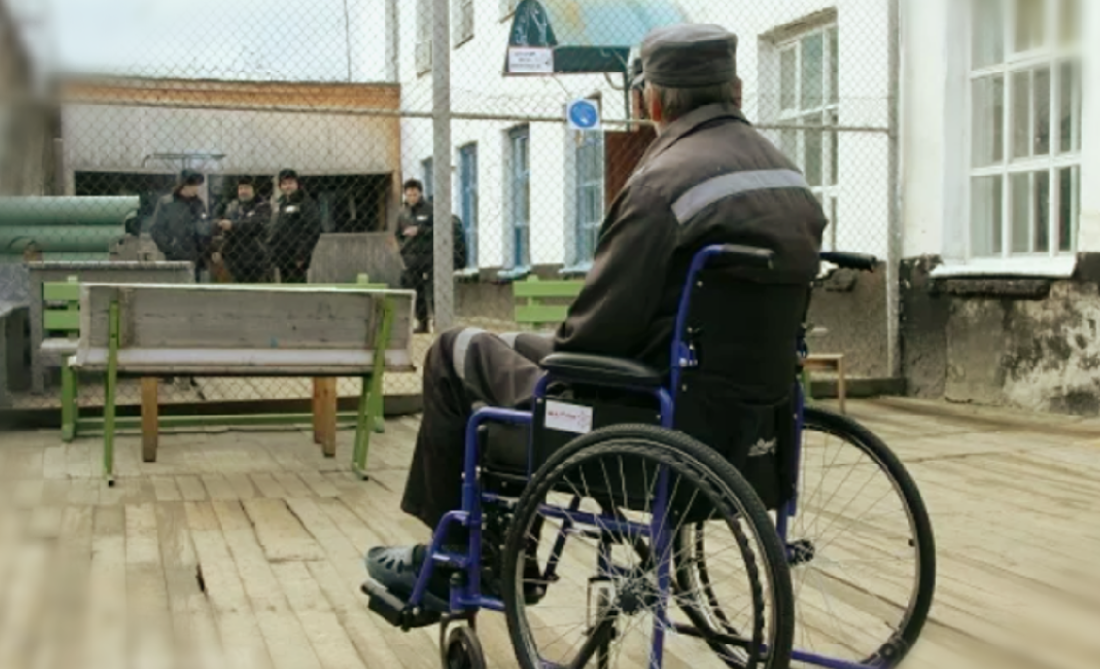
Sergey Obodenko, who suffers from multiple sclerosis, has been transferred to a penal colony in Adygea, which offers more suitable conditions for the disabled. His defense filed a motion to release him due to his illness, and the Federal Penitentiary Service (FSIN) stated that a medical examination is required.
As reported by "Caucasian Knot," Sergei Obodenko, a disabled man who suffers from multiple sclerosis, was denied release from a penal colony in the Volgograd region. The court ignored a medical report stating that Obodenko's condition precludes his continued detention. The convict waited more than two months for a key examination that could confirm the progressive nature of his illness, but the examination was never arranged without explanation. In late July, Sergei Obodenko's wife met with him and stated that his condition had seriously worsened. Supervisory authorities ignored the defense's complaints.
After two years in prison, Obodenko stopped walking and can only get around in a wheelchair. "He's lost the ability to even hold a spoon. To eat or drink water, he has to hold a spoon or mug with both hands, which he does with great difficulty. However, even this vital function is gradually atrophying. The decline in his health and vital functions is occurring because Sergei is not receiving the daily medication injections required for his illness," Obodenko's wife said earlier.
Seriously ill and disabled Sergei Obodenko has been transferred, at the request of his wife, lawyer, and himself, to a correctional facility in Adygea, where they believe conditions are more suitable for the disabled. However, a response received that same day from the Federal Penitentiary Service's medical service once again exposed the problem of contradictory and protracted procedures for releasing prisoners for health reasons, stated his lawyer, Sergey Yanovsky.
Sergey Obodenko, a Group II disabled person, has suffered from multiple sclerosis since 2010. According to his wife, Svetlana Obodenko, who is hearing impaired, her husband's health has significantly deteriorated during his years in prison. "He continues to suffer for an act he did not commit and is tormented by being held in closed institutions unsuitable for the disabled," she told a "Caucasian Knot" correspondent.
Sergey Obodenko was found guilty of murdering his mother-in-law and attempting to murder his brother-in-law (clause "z" of Article 105 of the Criminal Code of the Russian Federation and Part 3 of Article 30 - subclauses "a" and "z" of Part 2 of Article 105 of the Criminal Code of the Russian Federation). In February 2021, the Volgograd Regional Court sentenced him to 19 years in prison; the appellate court upheld the sentence.
Obodenko was previously held in a penal colony in the Volgograd Region, However, according to his wife, his physical condition became incompatible with further detention there without specialized medical care. In this regard, the defense petitioned for the convict's transfer to Adygea, where, it was believed, more qualified care for the disabled would be available. Recently, Obodenko was transferred to Federal Penitentiary Institution IK-2 of the Federal Penitentiary Service of Russia for the Republic of Adygea.
Simultaneously, lawyer Sergey Yanovsky filed a petition with the Takhtamukaysky District Court to release Obodenko from his sentence due to illness. It states that the convict has been diagnosed with secondary progressive multiple sclerosis with severe tetraparesis, gait impairment, pelvic floor function impairment, and impaired self-care. According to the EDSS scale, the degree of disability is 6.5 points.
According to the specialists' conclusion of October 20, 2025, the disease is progressing, and the negative trend is confirmed by a comparison of medical data for 2022, 2024, and 2025. Doctors concluded that keeping Sergei Obodenko in a penal colony or pretrial detention center poses a threat to his life and health, as it is impossible to provide the necessary specialized medical care within the Federal Penitentiary Service. The disease is included in the list of illnesses that prevent a person from serving a sentence, approved by Russian Government Resolution No. 54.
However, on December 29, the lawyer received a response from the Federal Penitentiary Service's Medical-Sanitary Unit No. 23, which stated that a convict is referred for a medical examination either upon the convict's own request to the court or upon the recommendation of the head of the correctional facility. In this case, the lawyer was advised to contact the head of the colony.
According to Sergey Yanovsky, this response does not cancel or contradict the petition already filed with the court. "The law provides for two parallel mechanisms: either the initiative comes from the facility's administration, or from the convict themselves through the court. We used the second, completely legal route. "The court has the right to request medical documents and, if necessary, compel the Federal Penitentiary Service to conduct an official medical examination," the lawyer explained. He also explained why, given the availability of medical reports, the question of an additional examination may be raised. "The specialist reports we presented to the court confirm the diagnosis, its progression, and the impossibility of detention in the penal colony. At the same time, formal release due to illness in Russian practice is often linked to the so-called departmental medical commission of the Federal Penitentiary Service. "The court can either accept existing medical evidence or order the Federal Penitentiary Service to conduct an additional examination—but this does not mean that the previous examinations are invalid," Yanovsky noted.
Every day of delay for him means new torment and the brink between life and death.
According to the defense, shifting the issue of a medical examination solely to the prison administration creates another risk of delaying the procedure and effectively continuing to detain a seriously ill person in life-threatening conditions.
Sergei Obodenko's wife hopes that a transfer to Adygea and consideration of the petition in court will lead to a real solution to the problem. "He doesn't need prison, but treatment and care. “Every day of delay for him means new torment and the line between life and death,” she emphasized.
Translated automatically via OpenAI from https://www.kavkaz-uzel.eu/articles/419522

![Tumso Abdurakhmanov. Screenshot from video posted by Abu-Saddam Shishani [LIVE] http://www.youtube.com/watch?v=mIR3s7AB0Uw](/system/uploads/article_image/image/0001/18460/main_image_Tumso.jpg "Tumso Abdurakhmanov. Screenshot from video posted by Abu-Saddam Shishani [LIVE] http://www.youtube.com/watch?v=mIR3s7AB0Uw")