


The subsidy from Moscow became insignificant support for public sector workers in Chechnya.
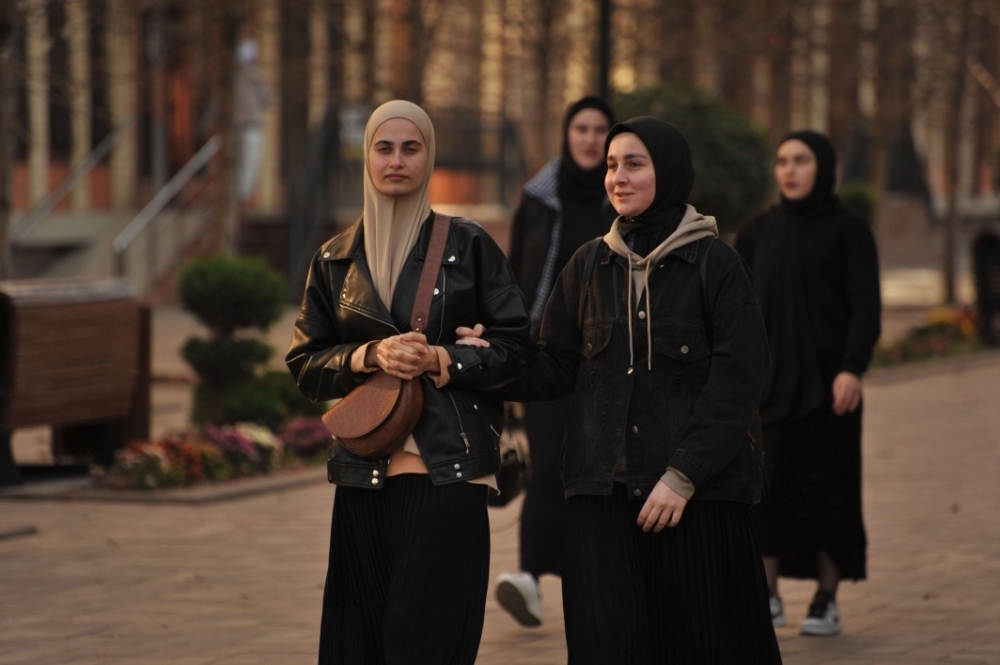
A federal subsidy of 308 million rubles will only provide a modest increase in the salaries of public sector workers in Chechnya, an economist noted. Low salaries are forcing teachers and doctors to seek part-time work or change jobs, residents of the republic reported.
As reported by the "Caucasian Knot," on December 23, the Russian government allocated 608 million rubles to Chechnya: 308 million to increase public sector salaries and 300 million for economic development. Other recipients of this support include the Kemerovo Region, the Saratov Region, and Karelia.
In 2021, Dagestan and Chechnya were among the largest recipients of budget transfers in Russia. In 2024, Chechnya received 121 billion rubles from the federal budget, economist Natalya Zubarevich indicated. "In 2024, the total volume of transfers to Chechnya amounted to 121.6 billion rubles, and all consolidated budget revenues amounted to 158.8 billion," she told the "Caucasian Knot."
Economist considers the impact of the subsidy on public sector salaries insignificant
The 308 million rubles allocated for public sector salaries seems like a significant sum, but when calculated against the size of the republic's labor market, their effect is extremely limited, a Chechen economist and associate professor in the Department of Economic Theory at Chechen State University, who asked not to publish his name "due to repressive Russian legislation regarding media outlets deemed foreign agents," told a "Caucasian Knot" correspondent.

"According to Rosstat, approximately 220,000-230,000 people are formally employed in Chechnya, while the number of employees in organizations not classified as small businesses exceeded 190,000 as recently as 2023. Rosstat does not publish more updated data for the Chechen Republic. Even if we assume that only a portion of this group—public sector employees—will receive additional payments, we are still talking about tens, and more likely, hundreds of thousands of people. In this context, 308 million rubles represents only a one-time increase of several thousand rubles per person or a symbolic increase in monthly payments when the amount is distributed over the year. This is not a systemic increase in income, but a targeted measure. This amount does not address the scale of the problem of low public sector incomes in the republic," the economist said.
According to data on the Rosstat website, the total number of employees in Chechnya in September 2025 was 228,900. In 2023, according to Rosstat, the number of employees in organizations not classified as small businesses was 191,800, of which just under half (90,200) were in Grozny.
He explained that Chechnya is among the regions with some of the lowest teacher salaries in Russia – “approximately 30-40 thousand rubles per month and lower, depending on the school and category.”
“In Chechnya, the average accrued salary for 2025, according to official Rosstat data, fluctuated between approximately 43,400 and 51,900 rubles per month in certain months. "Wages for certain categories of public sector employees, such as teachers and medical workers, are typically below the regional average and significantly below the national average. Minimum benchmarks in the public sector are close to the established minimum wage. Against this backdrop, one-time federal injections appear more like a tool for maintaining current budget stability than a mechanism for increasing real incomes," the specialist explained.
The Center addresses the most pressing budgetary problems of individual regions and sectors.
At the same time, he noted that the allocation of funds to Chechnya is not unique. "In recent months, the Russian government has made several decisions simultaneously on regional compensation for public sector wages, as well as on salary increases for certain categories of federal employees. This suggests that this isn't targeted 'support for Chechnya,' but rather a fragmented federal policy, in which the center addresses the most pressing budgetary problems of individual regions and industries without changing the basic funding and salary model. Earlier, in November, the government allocated approximately 14 billion rubles for the same purposes and distributed it among other regions. Among the southern regions of Russia, as far as I recall, Adygea, Stavropol, and Astrakhan Oblast were included in this tranche," the expert said.
On November 24, the Russian government reported allocating 14 billion rubles to 33 regions to partially offset additional costs associated with salary increases for public sector employees. Adygea, Buryatia, Mordovia, Tuva, Khakassia, the Altai, Transbaikal, and Stavropol Krais, and the Astrakhan, Kostroma, Oryol, Pskov, Tomsk, and Ulyanovsk Oblasts were named as recipients of the subsidies.
The allocation of 308 million rubles should be viewed "not as an indicator of an improvement in the situation of public sector employees, but as a symptom of the chronic dependence of regional budgets on federal subsidies," the Chechen economist believes.
"Such funds help ease social tensions in the short term, but do not create a long-term effect on either the labor market or income levels," he said.
Chechnya essentially lives off subsidies, Ramzan Kadyrov previously acknowledged. In January 2022, he stated that the Russian government allocates 300 billion rubles annually to support Chechnya, which would not be able to survive "even a month" without federal support. Kadyrov noted that 375 billion rubles were allocated to Chechnya in 2021, but only 140 billion belonged to the consolidated budget of Chechnya, while the remaining funds were used to support the republican branches of federal government agencies, the Pension Fund, and the Mandatory Medical Insurance Fund. Kadyrov only correctly stated the volume of interbudget transfers, while data on the extent to which Chechnya's budget expenditures are covered by its own tax revenues is effectively classified, economists noted.
Chechnya Residents Complain About Low Salaries of Teachers and Doctors
A math teacher from Grozny, Aishat, shared her opinion that "they'll be adding a purely symbolic 2-3 thousand rubles to their salaries again." "No one will report to us how much money the federal center has allocated and where it will go," she told a "Caucasian Knot" correspondent.
The woman said she lives with her elderly mother, who "also worked as a school teacher her entire life." According to Aishat, the family budget consists of her salary of 22,000 rubles (for one and a half full-time jobs) and her mother's pension of 14,000.
"It comes out to 36,000, but to be honest, I also need to add the money I charge for tutoring. But that only happens in March-April, when I start preparing for the Unified State Exam. Then I add another 15-20,000. That's the income, but expenses can be even higher. First, utilities and food prices are rising. But the biggest expense is my mother's medication. She suffers from hypertension and suffered a heart attack during the second [Chechen] war. Thanks to social services, my mother receives a free trip to a sanatorium in Yessentuki almost every year," the Grozny resident said.
I work one and a half full-time jobs, so that comes out to 22,000 rubles. Seda, a Chechen resident who works as a Russian language and literature teacher in a rural school, also complained about her low salary. "The teacher's salary was 15,545 rubles, they recently added another 2,000, and then there's some extra money for class leadership. I work one and a half shifts, which comes out to 22,000. I have three children. Two are still in school, and the eldest went to college after ninth grade," she told a "Caucasian Knot" correspondent.
According to Seda, she has to work one and a half shifts because it's difficult for the family to survive on 17,000 rubles. Seda's husband, an agronomist by profession, is forced to take any job, including laboring on a private construction site and working as a loader. "It's financially tough; a lot of money goes on utilities," she said. Seda admitted that the biggest expense is the children. "They're growing, and I have to buy new shoes twice a year. They're outgrowing their clothes, so I have to sit at the sewing machine myself to get my son's pants and my daughter's dress ready for school... I don't pay much attention to the children. Firstly, I work part-time, and I'm also the class teacher, and secondly, we keep a cow and four sheep. Another expense is buying feed. "But the cow is our breadwinner; I don't know what we'd do without her," said a Chechen resident.
She added that every teacher and cleaning lady's salary is donated to a charity fund. "It's been this way for a long time," she explained.
Every month, all public sector employees in Chechnya are required to donate approximately 10% of their income to charity. The donations are formally documented, although they are made voluntarily, according to a "Caucasian Knot" report, "Kadyrov's Foundation: How They Spend 'Money from Allah'". Public sector employees and entrepreneurs in Chechnya are required to donate to the fund, social media users confirmed in September 2019.
Was it worth studying for six years at medical school to earn 30,000 rubles after those difficult years?
Neurologist Tamara worked at a hospital in Grozny for 30,000 rubles. "Was it worth studying for six years at medical school to earn 30,000 rubles after those difficult years, when girls working in a fashion boutique after school earn 60,000-70,000 rubles? How can I live on that salary, plus pensions (a paltry 42,000 rubles for two pensioners), plus my sister's disability pension? I have to maintain the house, make some repairs, replace the heating boiler, pay ever-increasing utility bills. And then there's medication and food," she told a "Caucasian Knot" correspondent.
The list of expenses "in no way corresponded to the list of income," which is why Tamara left for a private clinic. She declined to specify her current salary, but described it as "enough to take care of all household chores" and even save some for a wheelchair for her sister.
At the same time, the doctor emphasized that if she were earning the same salary at the hospital as she would at a private clinic, she would return to work there. "There's a team of doctors there with a variety of specialties, including veteran doctors with extensive experience who are ready to help if a diagnosis needs clarification. The medical facility has a long history—and that means a lot. And the most important thing for me is the opportunity to do research at the hospital," the Chechen resident explained.
Translated automatically via OpenAI from https://www.kavkaz-uzel.eu/articles/419507


![Tumso Abdurakhmanov. Screenshot from video posted by Abu-Saddam Shishani [LIVE] http://www.youtube.com/watch?v=mIR3s7AB0Uw](/system/uploads/article_image/image/0001/18460/main_image_Tumso.jpg "Tumso Abdurakhmanov. Screenshot from video posted by Abu-Saddam Shishani [LIVE] http://www.youtube.com/watch?v=mIR3s7AB0Uw")