


Chechen officials chose to handle Taisumova's case secretly
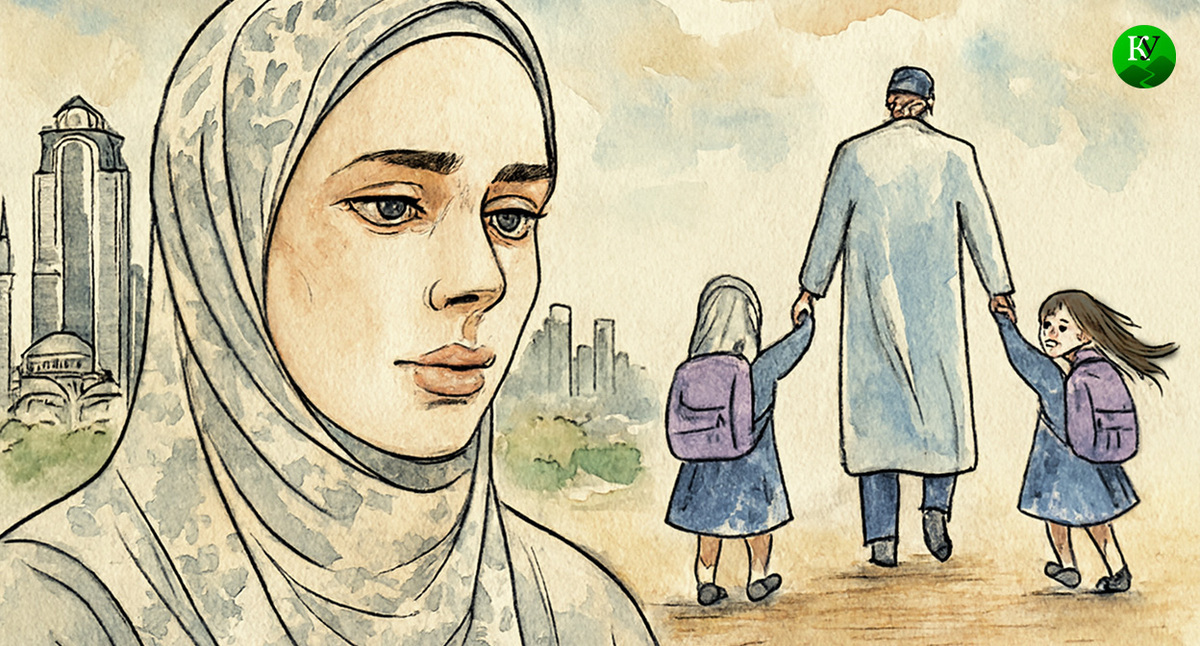
Austrian resident Indira Taisumova's appeal to Ramzan Kadyrov to help her return her daughters attracted the attention of Chechen authorities and Mansur Soltayev personally, but they only contacted the woman informally and privately.
As reported by the " Caucasian Knot ," Austrian resident Indira Taisumova recorded a video message to the head of Chechnya asking for help in reclaiming her two daughters, who are being held by her ex-husband. She claims she faced violence and threats while attempting to retrieve the children.
Indira Taisumova was married to a Grozny resident from 2017 to 2022. After the divorce, Indira left with her two young daughters, born in 2018 and 2019. She returned with them to Austria, where she had grown up, but brought them to their father for summer vacations. The father visited the children, spent time with them, and then brought them back, where they would then return with their mother to Europe. In 2025, the man initially wanted to transfer child support payments to himself, then requested another visit with the children and never returned.
The "Motherless Caucasus" project always receives threats after publishing cases related to Chechnya, and Indira Taisumova's case is no exception, project founder Lidiya Mikhalchenko told the "Caucasian Knot."
"If something like this happens in Chechnya, we receive threats through our public page. We get mass complaints from bots and non-bots: some anonymous person with no photos, no followers, no content comes in and says, 'We're going to start filing complaints against you.' And they themselves write us dirty, insult us with obscenities, and then go and complain to Instagram* so the algorithms will punish us for the obscenities they're writing in our comments. This happens every time we post something unflattering about the Chechen leadership, and that's what happened this time. Specifically, Mansur Soltayev came to our comments and told us how bad we are," she said.
According to the interviewee, the goal of such attacks is to shut down the movement's social media platform. "To prevent women from sharing our content, to prevent people who need help from finding out about us, to prevent women who were forcibly separated from their children from writing to us, to prevent people from seeking protection from us, to prevent them from passing on our contact information. But even negative PR, where we're labeled as horrible monsters, attracts people to us. They contact us about our project, even with long-standing problems. So, in principle, we're not against this; we even like this particular type of 'counteraction,'" Mikhalchenko stated.
She noted that Indira Taisumova's appeal was published on December 12 and that it was unlikely to have received an official response in the past few days. "I don't know if she could have gotten anything quickly from officials, but they certainly contacted her informally. Perhaps they promised something," Mikhalchenko suggested.
Caucasian Knot was unable to contact Indira Taisumova. Her last post on her account was a video message to Chechen leader Ramzan Kadyrov; there have been no further public posts.
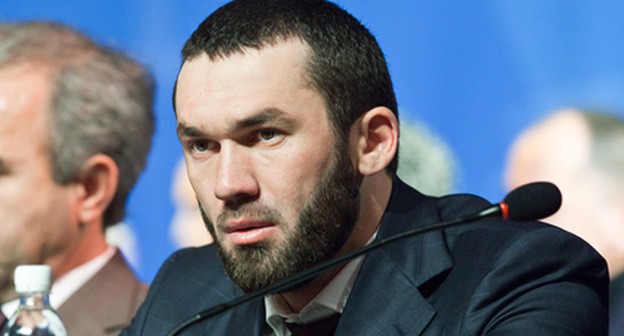
Human Rights Commissioner Mansur Soltayev declined to comment, but stated that the situation had been resolved. "We've resolved everything; there's no need to spread this," he said.
If children travel abroad with one parent, there is a presumption that both parents consent to the trip, so special permission to take the children abroad from the other parent is not required, even if the spouses are divorced, said lawyer Timofey Shirokov.
"In some countries, there really is a presumption of disagreement and a power of attorney is required, particularly in a number of European countries. But in Russia, a power of attorney isn't required; both parents are assumed to consent. However, you can file a statement of disagreement and send it to the border service, and then they'll impede the child's passage. Perhaps the ex-husband filed such a statement," he suggested, commenting on Taisumova's case.
According to the lawyer, without a power of attorney, problems can also arise in the host countries. "When leaving for Russia from another country, they may ask for a power of attorney from the other parent, since they don't know their physical location," Shirokov explained.
We've updated our Android and iOS apps ! We welcome your feedback and development ideas both on Google Play/App Store and on KU's social media pages. You can read us on Telegram without a VPN (with a VPN in Dagestan, Chechnya, and Ingushetia). Using a VPN, you can continue reading "Caucasian Knot" on the website as usual and on social media: Facebook *, Instagram *, VKontakte , Odnoklassniki , and X. You can watch "Caucasian Knot" videos on YouTube . Send messages to +49 157 72317856 on WhatsApp*, to the same number on Telegram, or write to @Caucasian_Knot.
* Meta (which owns Facebook, Instagram, and WhatsApp) is banned in Russia.
Source: https://www.kavkaz-uzel.eu/articles/419143
![Tumso Abdurakhmanov. Screenshot from video posted by Abu-Saddam Shishani [LIVE] http://www.youtube.com/watch?v=mIR3s7AB0Uw](/system/uploads/article_image/image/0001/18460/main_image_Tumso.jpg "Tumso Abdurakhmanov. Screenshot from video posted by Abu-Saddam Shishani [LIVE] http://www.youtube.com/watch?v=mIR3s7AB0Uw")