


Activists in five countries honored the memory of Aishat Baimuradova
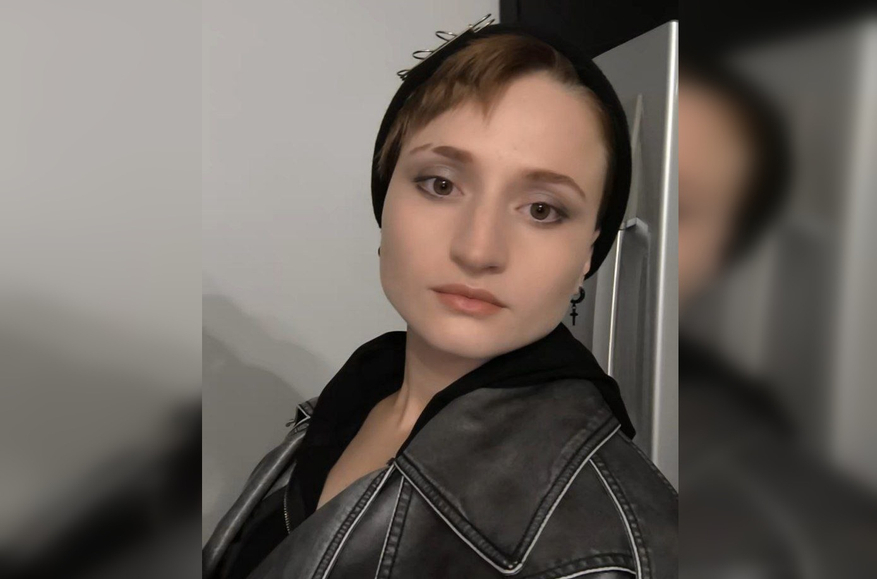
In memory of Aishat Baimuradova, a native of Chechnya who was murdered in Yerevan, rallies were held in Vilnius, Helsinki, Paris, Madrid, and Buenos Aires.
As reported by the " Caucasian Knot ," 23-year-old Aishat Baimuradova, a native of Chechnya, was found dead in a rented apartment in Yerevan on October 19. She fled domestic violence to Armenia, but publicly criticized Kadyrov's regime. Karina Iminova, who had summoned Aishat to a meeting, and 30-year-old Chechen native Said-Khamzat Baisarov were seen near the house where Baimuradova's body was found. The official cause of Aishat's death has not been announced. Baimuradova suffered a long and painful death, and her killers waited for her to die, David Isteyev, director of the SOS* Crisis Group, said on December 8. Investigators sent a request to Russia to find Aishat's relatives willing to claim her body, but no one has come forward to bury her in their homeland .
Women fleeing the Caucasus find themselves in a vulnerable position in a foreign land due to intense nostalgia, which drives them to seek contact with people from the North Caucasus Federal District and creates the risk of their asylum being exposed. Human rights activists stated that the Armenian government must take decisive steps to investigate the murder . At a picket in Yerevan, activists called on the Armenian authorities to provide state protection to women who fled Chechnya and other North Caucasus regions.
Memorial events for Aishat Baimuradova took place in various countries today, as December 15 marks two months since her murder, the SOS* Crisis Group reported.
Activists laid flowers and candles at photos of Aishat displayed outside the Armenian and Russian embassies in at least five countries: Argentina, France, Spain, Finland, and Lithuania. "You can also bring flowers, candles, or a portrait of Aishat to the Armenian or Russian embassies," the group's Telegram channel stated.
Human rights activists preparing Aishat Baimuradova's funeral in Armenia are not ruling out the possibility that they may not be able to retrieve her body from the morgue, despite her relatives refusing to claim it, according to a report in Paper Kartuli.
Svetlana Anokhina, founder of the human rights group Marem, notes that human rights activists warned Baimuradova about the dangers of being too open on social media, but anonymity was "the hardest thing" for her.
"She maintained social media accounts, using her own name and geotagging. Clearly, this was very unsafe. Many are outraged in the comments: 'Why didn't you follow her further?' Because she was running for freedom and independence, not for a transition from one addiction to another. We can help, we can advise, we can warn, but we can't command a living person. If someone hides and lives like a mouse, they're unlikely to be found quickly. But it's very difficult to live like a mouse when you're 20 and have lived like one your whole life. It's enough and you just want a normal human life," the publication quotes Anokhina as saying.
We've updated our Android and iOS apps ! We welcome your feedback and development ideas, both on Google Play/App Store and on KU's social media pages. You can read us on Telegram without a VPN (with a VPN in Dagestan, Chechnya, and Ingushetia). Using a VPN, you can continue reading "Caucasian Knot" on the website as usual and on social media: Facebook **, Instagram **, VKontakte , Odnoklassniki , and X. You can watch "Caucasian Knot" videos on YouTube . Send messages to +49 157 72317856 on WhatsApp**, to the same number on Telegram, or write to @Caucasian_Knot.
* listed as a foreign agent.
** Meta (which owns Facebook, Instagram, and WhatsApp) is banned in Russia.
Source: https://www.kavkaz-uzel.eu/articles/419118

![Tumso Abdurakhmanov. Screenshot from video posted by Abu-Saddam Shishani [LIVE] http://www.youtube.com/watch?v=mIR3s7AB0Uw](/system/uploads/article_image/image/0001/18460/main_image_Tumso.jpg "Tumso Abdurakhmanov. Screenshot from video posted by Abu-Saddam Shishani [LIVE] http://www.youtube.com/watch?v=mIR3s7AB0Uw")