


The operation of the Bird Rehabilitation Center in Anapa is under threat due to a 1.6 million ruble debt.
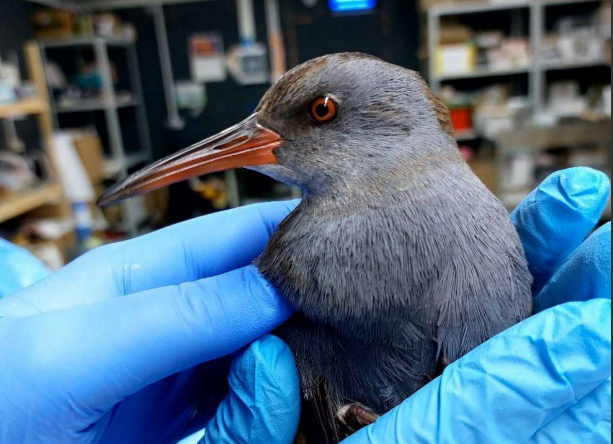
The government is providing no assistance to the Zhemchuzhnaya Wildlife Rehabilitation Center, which houses more than 100 birds affected by the oil spill near Anapa.
As reported by the "Caucasian Knot," on December 1, volunteers reported discovering two dead dolphins while cleaning up the aftermath of a fuel oil spill on the coast in the Krasnodar Territory. On October 11, volunteers and bloggers reported fuel oil emissions after a storm in Anapa and the Temryuk District. Birds covered in fuel oil have reappeared on the shore.
On November 22, authorities reported that diving inspections of the sunken fragments of the Volgoneft-212 and Volgoneft-239 tankers revealed no oil leaks. Also, no new oil spills were detected on the coast of Anapa and the Temryuk district over the past week, and no fuel oil spills were found between November 22 and 27.
The number of birds brought for treatment to the Bird Rehabilitation Center on Zhemchuzhnaya Street in Vityazevo has decreased, said Anastasia Dedok, an employee of the center.
"Now we can talk about a few, sometimes several dozen, birds being brought in each day. The last time many birds were brought in at once was when fuel oil leaked from tankers on October 2nd—about 100 birds were brought in, but that number has since dropped significantly. This has led to an increase in survival rates. "If in the spring it was approximately 16%, it has now increased, since it became possible to work individually with each bird," Dedok told a "Caucasian Knot" correspondent.
According to her, the state is not supporting the center, which currently employs three people – an ornithologist and two volunteers.
"The only assistance from the authorities is that representatives of the Ministry of Natural Resources are fairly prompt in signing the necessary paperwork for the care of the birds and their release into the wild. So far, we've only received support from foundations like Wildlife and others. Currently, the funds raised don't cover our expenses. The center needs approximately 460,000 rubles a month to function properly, and in November, for example, only 200,000 were collected. The money is needed for bird food: insects, cottage cheese, chickens, as well as for medical procedures at veterinary clinics. Although the clinic in Krasnodar offers discounts, bills still run 40,000-50,000 rubles. Funds are also needed for equipment, bird feeders, protective clothing, and respirators for staff," Dedok said.
It's worth noting that the Bird Rehabilitation Center receives not only birds affected by the oil spill but also wild birds from Sochi, Krasnodar, and Crimea. "There are no hospitals for wild birds there, and the doctors at veterinary clinics are more accustomed to working with parrots than, say, crows or seagulls," concluded Anastasia Dedok.
"Unfortunately, in a year we were unable to fully pay off all the debts for those terrible winter months, when we rushed to help without looking back. Will the center, which currently houses 135 birds, collapse?" reads a post on the organization's official Telegram channel on December 2. It is specified that the total debt for 2025 amounted to 1.6 million rubles.
It should be noted that as of 7:45 a.m. Moscow time, the amount collected in December for the center's needs through the "Charitable Donation" service amounted to 67,400 rubles.
Only two volunteer headquarters remain on the entire coast of the Temryuk District, which are trying to clean up the large fuel oil deposits. However, without government support and an influx of new people, the task is becoming overwhelming, the "Dolphins" headquarters reported.
Materials on the consequences of the fuel oil spill have been collected by the "Caucasian Knot" on the page "Eco-disaster in Kuban".
"Caucasian Knot" also reported that, over the next two years, Kuban authorities planned to transfer more than 439 million rubles to the budgets of Anapa and the Temryuk District for the restoration of beaches after the fuel oil spill.
Translated automatically via OpenAI from https://www.kavkaz-uzel.eu/articles/417776

![Tumso Abdurakhmanov. Screenshot from video posted by Abu-Saddam Shishani [LIVE] http://www.youtube.com/watch?v=mIR3s7AB0Uw](/system/uploads/article_image/image/0001/18460/main_image_Tumso.jpg "Tumso Abdurakhmanov. Screenshot from video posted by Abu-Saddam Shishani [LIVE] http://www.youtube.com/watch?v=mIR3s7AB0Uw")