


The defense of disabled man Ediev secured his release from the pretrial detention center in Khasavyurt.
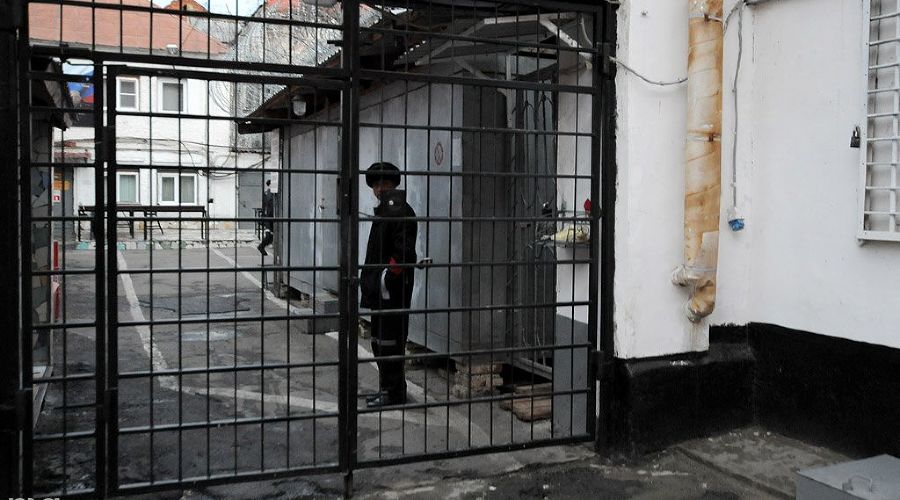
The Khasavyurt court refused to extend the pretrial detention of disabled Muslim Ediev and released him under house arrest. Insisting on the arrest of a defendant with a medical condition that prevents him from being held in a pretrial detention facility is unlawful, but the investigator cannot be held accountable for this, lawyers pointed out.
As reported by "Caucasian Knot," Khasavyurt resident Muslim Ediev was held in pretrial detention despite a medical condition that prevents him from being held in custody. The court agreed with the defense's position, but the investigation did not prepare materials to mitigate the preventive measure, and the prosecutor's office, in turn, appealed the court's decision, demanding that Ediev be kept in custody. Ediev's health deteriorated during his arrest.
45-year-old Muslim Ediev worked as a security guard at a military commissariat before his arrest and was in good standing. He was charged with drug possession, but Ediev pleads not guilty. Since 2015, he has suffered from the rare disease Still's disease and is a second-degree disabled person. The disease is on the list of serious illnesses that preclude detention.
At today's hearing, a court in Khasavyurt considered the investigator's motion to extend Muslim Ediev's pretrial detention, reported his lawyer, Aydemir Ismailov.
"The court disagreed and ordered house arrest, finally. Ediev was released in the courtroom. Now the prosecutor's office has three days to appeal the court's ruling," the lawyer said.
According to Ismailov, his client has no complaints at this time. "The investigator's motion was considered in court, then we presented the medical documents. The court then retired to its deliberation room and announced its ruling about two hours later. Ediev, of course, was delighted, and the investigator reacted calmly. We waited for the ruling, and after Ediev received it, he went home. Today, he will finally hug his wife and children. All of this happened, in part, with your help," Ismailov told a "Caucasian Knot" correspondent.
The investigator himself could have released the defendant with a medical condition from the government-approved list on bail or on his own recognizance, noted attorney Abusupyan Gaitayev, who is not involved with Ediev's case. "But the investigator himself doesn't have the right to impose house arrest. A court order is still required," he said.
The actions or inactions of an investigator who refuses to release a person with a medical condition that prevents them from being held in a pretrial detention facility usually go unpunished, the lawyer noted. "The investigator doesn't make the decision on his own; he has superiors. If you do something wrong, the prosecutor's office will immediately ask, 'What if he took money for releasing you?' And superiors will only cover for obedient subordinates," Gaitayev explained.
Only a court can decide on a preventive measure involving a restriction of liberty, but the investigator should not have petitioned for a knowingly illegal measure, noted Maria Nemova, a lawyer for OVD-Info (listed as foreign agents by the Russian Ministry of Justice).
"It is the court that imposes pretrial detention, house arrest, or even prohibitions on certain activities that limit the ability to leave the house, for example. Although the investigator petitions the court to apply a particular pretrial detention measure, the decision itself is the court's responsibility, not the investigator's," she told the "Caucasian Knot."
The Criminal Procedure Code contains a provision prohibiting the detention of a person with a serious illness, she noted. "When choosing a pretrial detention measure, it is possible to conduct a medical examination to establish this fact. The investigator also has the opportunity to initiate a change to the pretrial detention measure, but I don't see any way to punish the investigator for an unlawful decision to place someone in pretrial detention, because such a decision is made by the court," Nemova concluded.
Translated automatically via OpenAI from https://www.kavkaz-uzel.eu/articles/417373
![Tumso Abdurakhmanov. Screenshot from video posted by Abu-Saddam Shishani [LIVE] http://www.youtube.com/watch?v=mIR3s7AB0Uw](/system/uploads/article_image/image/0001/18460/main_image_Tumso.jpg "Tumso Abdurakhmanov. Screenshot from video posted by Abu-Saddam Shishani [LIVE] http://www.youtube.com/watch?v=mIR3s7AB0Uw")