

Protesters in Tbilisi demanded that the ban on Levan Khabeishvili's visits be lifted.
Restrictions on communication, including with family and children, have been imposed on Levan Khabeishvili, the chairman of the political council of the United National Movement, according to protesters at the Georgian Prosecutor General's Office, who called these restrictions pressure.
As reported by the "Caucasian Knot," one of the leaders of the United National Movement, Levan Khabeishvili, was detained on charges of bribery, the reason being a reward he promised to security forces who refused to carry out government orders. Khabeishvili was sentenced to custody. In addition to the bribery charge, the politician was also charged with inciting the overthrow of the government.
Protesters outside the Georgian Prosecutor General's Office demanded that restrictions on visits, correspondence, and telephone conversations be lifted for Levan Khabeishvili, chairman of the United National Movement's political council, so that the imprisoned politician could communicate with his family members and young children. They also submitted a statement to the office with this request. Family members, friends, and supporters of Levan Khabeishvili gathered outside the prosecutor's office, Interpressnews reports.
"It is unclear what the basis and purpose of the ban on communication or meetings with children is, other than that this restriction is used exclusively as a political tool, political terror against a political prisoner. "We demand that Levan Khabeishvili be granted access to his minor children, including phone calls, video calls, and written correspondence, as well as that all short-term and long-term meetings, typically granted to prisoners, be recorded and carried out. Following Levan Khabeishvili's example, this right should be granted to all political prisoners," Publika quoted protester Teona Chalidze as saying.
Participants in daily protests in Georgia since November 28, 2024, have been demanding new parliamentary elections and the release of political prisoners.
Security forces violently dispersed the protests, using tear gas and water cannons, and detained protesters. Over a thousand people have been subjected to administrative prosecution during the protests. The "Caucasian Knot" has prepared a report entitled "The Main Thing About the Persecution of Protesters in Georgia".
Since November 6, security forces have prevented pro-European protesters from blocking traffic on Rustaveli Avenue, setting up a human wall of police officers along the roadway near the Georgian Parliament. Until November 6, 2025, demonstrators blocked traffic on Rustaveli Avenue for 343 consecutive days. Since security forces have prevented protesters from entering the roadway, activists have been holding daily marches.
We've updated our apps for Android and IOS! We appreciate your feedback and development ideas both on Google Play/App Store and on KU's social media pages. Without installing a VPN, you can read us on Telegram (in Dagestan, Chechnya, and Ingushetia, with a VPN). Using a VPN, you can continue reading "Caucasian Knot" on the website as usual, and on social networks: Facebook*, Instagram*, "VKontakte", "Odnoklassniki" and X. You can watch the "Caucasian Knot" video on YouTube. Send messages to +49 157 72317856 on WhatsApp*, to the same number on Telegram, or write to @Caucasian_Knot.
* Meta (owner of Facebook, Instagram, and WhatsApp) is banned in Russia.
Translated automatically via OpenAI from https://www.kavkaz-uzel.eu/articles/417359
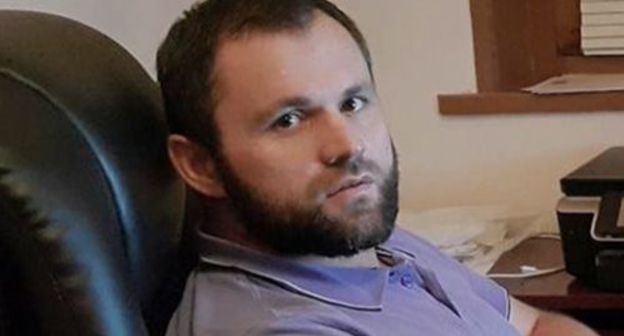
![Tumso Abdurakhmanov. Screenshot from video posted by Abu-Saddam Shishani [LIVE] http://www.youtube.com/watch?v=mIR3s7AB0Uw](/system/uploads/article_image/image/0001/18460/main_image_Tumso.jpg "Tumso Abdurakhmanov. Screenshot from video posted by Abu-Saddam Shishani [LIVE] http://www.youtube.com/watch?v=mIR3s7AB0Uw")