


Those convicted in the Pyatigorsk rehab case are demanding a reduced sentence.
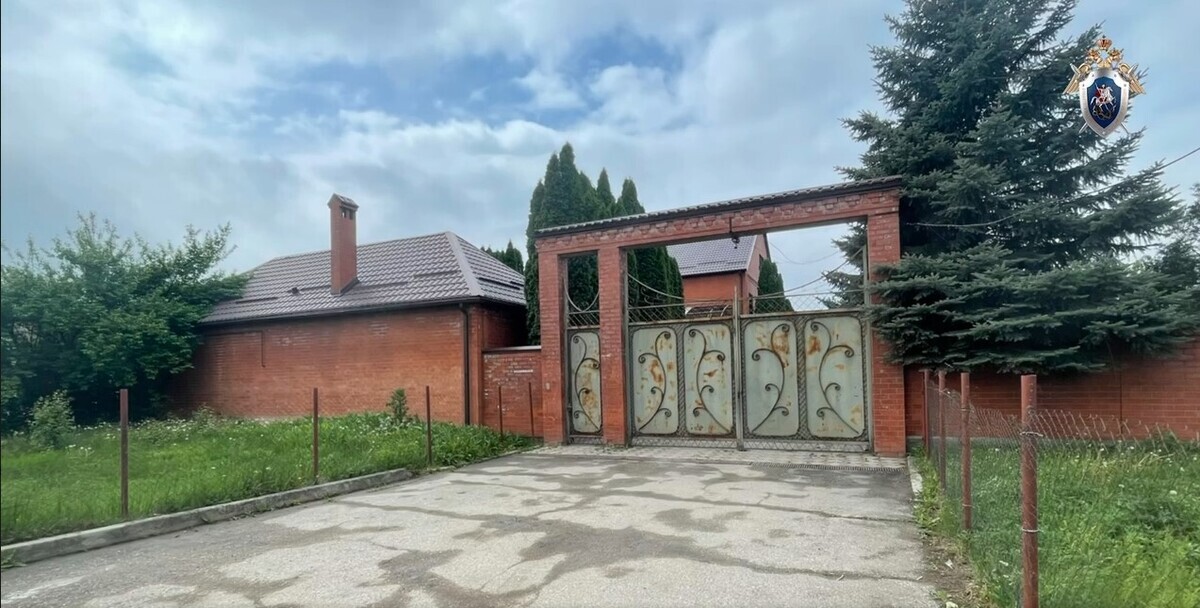
The defense of three employees and one patient of a rehabilitation center convicted of torture in Pyatigorsk is appealing the verdict, demanding a lenient sentence for the defendants. The convicted rehab patient, even under threat of punishment, tried to help Artem Khomenko, who died after being tortured, the lawyer claims.
As reported by "Caucasian Knot," at the end of October, a court in Pyatigorsk verified the director of a local rehabilitation center, as well as two employees and a patient, finding them guilty of torturing rehab patients. Nine people were recognized as victims in the case. One of the rehabilitation center patients, 29-year-old Artem Khomenko, died in the spring of 2024. Clients reported being forced to spend several hours in icy water, handcuffed, and beaten.
The center's director, Svetlana Ochkan, received three and a half years in a general regime penal colony, consultants Vardan Vardazaryan and Raisat Bagammadayev received three years each, and Orist Samardzhiev was sentenced to two years. The defendants disagree with the verdict and will appeal it, lawyer Arman Arutyunyan told the "Caucasian Knot."
"We will appeal the court's verdict. There are, of course, questions regarding the investigation of the case, but overall, the court did not allow any significant violations of the law during the trial." "I believe that each party was given the opportunity to present their evidence, which was assessed in the verdict," he said.
Arutyunyan noted that the severity of the sentence will ultimately be assessed by the appellate court, but he believes the investigation—both preliminary and trial—was conducted under duress. "I believe that individual victims, namely representatives of the deceased Khomenko, from the very first days of the investigation until now, have attempted to influence both the investigation and the trial through various media outlets. I believe their primary goal is to obtain disproportionate monetary compensation—500,000 rubles from each defendant for both victims. They also attempted to file a claim for similar amounts against the deceased's children, not for the consequences that resulted from the crime, but for consequences they themselves invented," the lawyer added.
According to him, forensic examinations showed that the death was not due to the actions of the rehab staff. "Despite the charges—and the defendants were accused of torture, as proven by the case materials and the results of forensic examinations, including commission examinations—they (the victims) still insist that Khomenko was murdered. Bezborodov, the specialist they brought in for questioning during the court hearing, was unable to clearly answer the questions of the trial participants or refute the results of the forensic examinations conducted in the case, which established that Khomenko's death was not causally related to the actions committed against him," Arutyunyan emphasized.
Mikhail Minasov, the lawyer for Orist Samardzhiev, a patient at a rehab center in Pyatigorsk, who was sentenced to two years in prison, believes the sentence is excessively harsh.
"In our opinion, this is a harsh punishment." From the very beginning, even during the investigation, Samardzhiev was the only suspect to admit guilt to the crime he was charged with and was under a travel restriction. He confessed, including incriminating other participants in the crime. He never violated his travel restriction, always appearing at the first request of the investigative body, and subsequently in court. During the trial, he also admitted his guilt. Unfortunately, he was sentenced to two years in prison," although the court could have imposed a punishment other than actual imprisonment, he told the "Caucasian Knot."
According to his lawyer, Samardzhiev is the only one of the defendants who tried to help Khomenko in any way.
"I dare say that he was the only one who tried to help him in any way: bringing him water, comforting him, and providing him with every possible assistance." Although, given that he was not a rehabilitation center consultant, but merely a rehabilitant, he feared the same penalties imposed on him as the deceased. In other words, under threat of punishment, he still tried to somehow help the victim in the case. And, in fact, if you look at the hierarchy at this rehabilitation center, the rehabilitants were at the very bottom. A person comes to the rehabilitation center to receive help related to liberation from some kind of addiction, and according to the center's rules, they are obliged to strictly comply with the demands of everyone above them in the hierarchical chain, be they consultants or the center's director. Any disobedience by the rehabilitants was punishable by punishment. Accordingly, Samardzhiev committed the crime under threat for his life," Minasov said.
Considering all these circumstances, the defense requested a sentence not involving imprisonment. "But the court sentenced him to imprisonment, which is an excessively harsh punishment for my client. We intend to file an appeal," the lawyer assured.
Representatives of the injured party, including Artem Khomenko's mother, declined to comment.
Rehabilitation centers, for exorcising djinn, and other similar institutions are not legal medical facilities, noted Sergei Babinets, head of the "Team Against Torture" (included in the register of foreign agents by the Russian Ministry of Justice). "Most often, they do not have licenses from the Ministry of Health, operate there without the proper permits, and the quality of services raises serious concerns. This is confirmed by regular complaints of bullying, abuse, inhumane conditions, and humiliation. Despite this, such places are popular in Russia, including in the Caucasus," he told the Caucasian Knot.
According to him, similar actions by staff at a state medical facility could have led to a criminal case also under the article on abuse of office.
"The actions of the staff in this particular case were classified under the article on torture (Article 117 of the Criminal Code of the Russian Federation), which carries a sentence of up to seven years in prison. If something similar had occurred at a state medical facility, the actions could have been classified under the same general civil law articles—or, if the doctor had supervisory and administrative functions over patients, then perhaps under the article on abuse of office," Babinets noted. In his assessment, the sentence imposed in the Pyatigorsk case can be considered average.
Rehabilitation centers are a fairly common business in the Stavropol Krai, notes a local journalist. "There are many rehabilitation centers for alcohol and drug addiction in the Stavropol Krai. They operate and are registered in various forms: some are closed, some offer day care, and so on. Demand for their services is high, despite the occasional scandals. People truly believe their methods can help," she said.
According to her, Khomenko's death is the biggest scandal associated with rehab centers. "Such scandals are not uncommon in the region, although this one is the most high-profile in its brutality and outcome. There have been previous investigations into violence and abuse in rehabilitation centers in the Stavropol Krai, including criminal cases. "However, the fatal outcome is an unprecedented case, and it has affected people's opinions of these centers," she noted.
"Caucasian Knot" also reported that in October, the Sovietsky District Court of Makhachkala remanded in custody four employees of the commercial rehabilitation center "Vozrozhdenie" accused of kidnapping, torture, and illegal deprivation of liberty resulting in the victim's death. Private rehabilitation centers are positioned as social institutions and are popular amid Dagestan residents' distrust of doctors at licensed medical institutions. However, rehabilitators risk facing poor-quality services and staff abuse, lawyers, a human rights activist, and a journalist commented on the death of a rehab patient in Makhachkala.
Translated automatically via OpenAI from https://www.kavkaz-uzel.eu/articles/417311

![Tumso Abdurakhmanov. Screenshot from video posted by Abu-Saddam Shishani [LIVE] http://www.youtube.com/watch?v=mIR3s7AB0Uw](/system/uploads/article_image/image/0001/18460/main_image_Tumso.jpg "Tumso Abdurakhmanov. Screenshot from video posted by Abu-Saddam Shishani [LIVE] http://www.youtube.com/watch?v=mIR3s7AB0Uw")