

Shostak was fined for interfering with the work of the electoral commission.
THIS MATERIAL (INFORMATION) WAS PRODUCED AND DISTRIBUTED BY THE FOREIGN AGENT MEMO LLC, OR CONCERNING THE ACTIVITIES OF THE FOREIGN AGENT MEMO LLC.
The court fined Valentina Shostak, a candidate for the Goryachy Klyuch City Council, 2,000 rubles, finding her guilty of interfering with the work of the electoral commission during the September 12-14 elections. Shostak's case is typical of the pressure exerted on independent candidates and observers, the lawyer believes.
As reported by "Caucasian Knot," Goryachy Klyuch City Council candidate Tatyana Pleshakova, who was forcibly ejected from a polling station on election day, September 12, was charged with disobeying police, while her colleague, Valentina Shostak, was charged with obstructing the work of the election commission. On September 19, Pleshakova was fined two thousand rubles. Shostak said she tried to record the violations on video; she did not plan to publish the recordings. On November 7, Shostak was handed a copy of the administrative violation report.
Valentina Shostak On November 17, she was fined two thousand rubles under Article 5.69 of the Russian Code of Administrative Offenses for "interfering with the activities of an electoral commission" at a polling station.
According to Shostak, on September 12, she was at polling station No. 1038 in Goryachy Klyuch. She recorded video footage inside the commission premises, attempted to submit complaints, and documented violations. She claims that commission members interfered with her activities.
She told a "Caucasian Knot" correspondent that the police officer who drew up the administrative violation report was "waiting" for her outside the prosecutor's office on November 7 and handed her a copy of the report immediately after questioning her about other complaints. "On September 12, 2025, at 11:40 a.m., at polling station No. 1038, located at 193e Lenin Street, Goryachiy Klyuch, candidate for deputy in Electoral District No. 3, Valentina Shostak, interfered with the work of the electoral commission by filming video, thereby committing an administrative offense under Article 5.69 of the Code of Administrative Offenses of the Russian Federation. She has no previous administrative record," reads the report, a copy of which is in the possession of the "Caucasian Knot." Shostak stated that she disagreed with the wording of the report. She emphasized: "I did not avoid participating, did not obstruct the commission's work, but merely recorded violations and attempted to submit complaints." The first hearing in the case took place on November 14. The court questioned witnesses—the precinct chair, deputy chair, secretary, and other commission members, as well as police representatives. According to Shostak, the hearing lasted several hours but was then adjourned until November 17 because "inaccuracies in the case materials and violations of the Code of Administrative Offenses" were discovered. "The court questioned witnesses on Friday and then adjourned the hearing until Monday, November 17, to consider clarifications. The police officer who drafted and presented the report did not wait to speak and left. The court rendered a decision without his testimony," Shostak said, noting that she presented video evidence in her defense at the hearing.
"The judge told me, 'Go for a walk, we'll make a decision in an hour and a half.' Then they fined me. They promised to provide a written reasoned decision only on Wednesday evening," she added.
According to Shostak, she did not have lawyers at the hearing, but her interests will be represented by attorney Gudkov, who plans to appeal the decision. She also reported that she filed a counter-complaint with the police regarding her illegal eviction from the polling station, but has received no response.
Valentina Shostak's case is typical; it illustrates how administrative offenses can be used in the context of municipal elections to pressure independent candidates and observers, Elena Didenko, a lawyer specializing in electoral law, told a "Caucasian Knot" correspondent.
According to her, the fine could serve as a signal to other activists about the potential consequences of recording violations and civic activism. "At the same time, a possible appeal of the fine by a lawyer could set a precedent for protecting the rights of observers and candidates in municipal elections," Didenko added.
Translated automatically via OpenAI from https://www.kavkaz-uzel.eu/articles/417280
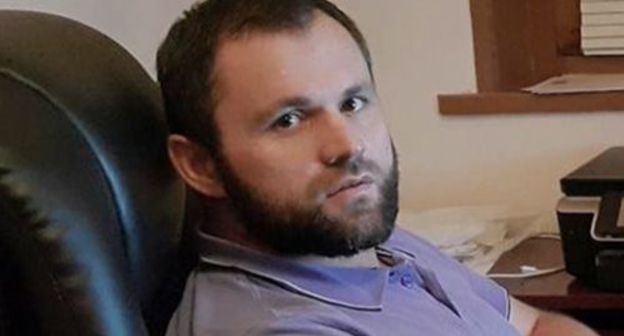
![Tumso Abdurakhmanov. Screenshot from video posted by Abu-Saddam Shishani [LIVE] http://www.youtube.com/watch?v=mIR3s7AB0Uw](/system/uploads/article_image/image/0001/18460/main_image_Tumso.jpg "Tumso Abdurakhmanov. Screenshot from video posted by Abu-Saddam Shishani [LIVE] http://www.youtube.com/watch?v=mIR3s7AB0Uw")