

A ban on publications about drone attacks has been introduced in Dagestan
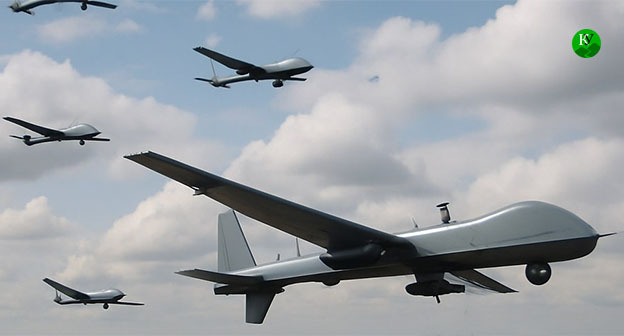
Dagestani authorities have banned media outlets and internet users from publishing information about the aftermath of terrorist attacks and sabotage, the arrival of Ukrainian drones, and the deployment of military facilities in the republic.
As the " Caucasian Knot " reported , in September, North Ossetian authorities imposed a ban on the publication of photographs and videos of drone attacks, air defense operations, and the aftermath of the attacks.
Similar bans are already in effect in other regions of southern Russia – the Astrakhan, Volgograd, and Rostov regions, Adygea, and Kalmykia. On August 28, it was reported that two people in the Rostov region were fined under administrative law for filming the aftermath of drone attacks.
A ban on publishing information about terrorist attacks, Ukrainian drone strikes, the deployment of Defense Ministry forces, and critical infrastructure has been introduced in Dagestan, the press service of the Dagestan administration and head of state reported today.
"A decree to this effect was signed by [Dagestan's head] Sergei Melikov. It prohibits the publication and dissemination of certain information within the region related to the safety of the republic's residents," the press service said in a post on its Telegram channel.
It is prohibited to disseminate information about the use of unmanned aerial vehicles of the Ukrainian Armed Forces in Dagestan.
According to the new regulations, publishing "photos, videos, and reports on the consequences of terrorist acts and sabotage" in the media and online is prohibited. "Furthermore, disseminating information about the use of Ukrainian Armed Forces unmanned aerial vehicles in Dagestan is prohibited, including information about their type, launch site, crash site, flight path, and any damage they cause. Restrictions also apply to information about the operation of the Ministry of Defense's air defense and electronic warfare forces," regional authorities stated.
The publication of data "on the deployment of military facilities, the locations of counter-drone systems, and the location of critical facilities such as bridges, fuel and energy complex facilities, communications, and industry" is also prohibited.
"It is important to note that the established prohibitions do not apply to the activities of Russian public authorities or to official information published by these authorities in the media and on the internet," the statement noted.
As a reminder, bans on filming drone attacks and their consequences, introduced by regional authorities, contradict the Constitution , which guarantees the inadmissibility of censorship and the freedom of dissemination of information, lawyers previously pointed out.
The constitutional right of citizens to access information is being violated
"This is concealing information from Russian citizens. And this is prohibited by the country's Constitution. It violates citizens' constitutional right to access information (Part 2 of Article 24), as well as the right to freely seek, receive, transmit, produce, and disseminate information by any legal means (Part 4 of Article 29). The media simply shut up and posted abstract photos. Those who need to see everything can see it perfectly well from space. These bans are questionable," said Volgograd lawyer and human rights activist Ivan Ivanov.
"Everyone has the right to freely seek, receive, transmit, produce, and disseminate information by any lawful means. The list of information constituting a state secret is determined by federal law," states Part 4 of Article 29 of the Russian Constitution .
In August 2023, following a series of Ukrainian drone attacks on Moscow, a group of senators drafted a package of amendments establishing penalties for publishing information about the location and operations of Russian military personnel, as well as any "arrivals" within Russian territory. Citizens found to be violating the law were to be punished with fines of up to 50,000 rubles, and repeat offenders with prison terms of up to three years. However, the matter was transferred from the federal to the regional level. The bans are in effect in 20 Russian regions, Kommersant reported on August 29.
Translated automatically via Google translate from https://www.kavkaz-uzel.eu/articles/416310

![Tumso Abdurakhmanov. Screenshot from video posted by Abu-Saddam Shishani [LIVE] http://www.youtube.com/watch?v=mIR3s7AB0Uw](/system/uploads/article_image/image/0001/18460/main_image_Tumso.jpg "Tumso Abdurakhmanov. Screenshot from video posted by Abu-Saddam Shishani [LIVE] http://www.youtube.com/watch?v=mIR3s7AB0Uw")