

The election campaign in southern Russia has shown the formal nature of the elections
The outcome of the gubernatorial elections in the south of Russia is a foregone conclusion, and the main intrigue in the municipal elections is how many seats the parties competing with United Russia will receive in the city councils. The military operation in Ukraine, despite regular drone attacks on the southern regions, was practically not touched upon by candidates for posts at various levels.
As "Caucasian Knot" wrote, gubernatorial and municipal elections are being held in Krasnodar Krai from September 12 to 14. On the first day of voting, the Communist Party of the Russian Federation recorded violations at polling stations in Krasnodar concerning the work of observers and the rules for organizing mobile voting. An observer at polling station #1039 in Goryachy Klyuch said that a representative of the administration tried to stay at the polling station after the candidates and observers had left to "work with documents." The police were called to the station.
You can read about which regions of the North Caucasus and Southern Federal Districts are holding the September elections in the "Caucasian Knot" reference "Single Voting Day 2025 in the South of Russia". The "Caucasian Knot" publishes materials about these elections on the page "Elections-2025: South of Russia".
Expert of the "Election Atlas" project Vadim Ternovoy reported that the project has prepared Index of (un)freedom of gubernatorial elections.
"Out of 10 possible points, Kuban received four, and Rostov Oblast received three. The main complaints are precisely the lack of competition. In general, there is nothing to discuss in these campaigns. In Krasnodar Krai, only four people put forward their candidacies - and all of them were candidates last time. If you do not count the current governor, then none of them received even 10% of the votes. In the region, there is no popular politician at all who could compete with the administrative candidate. In Rostov Oblast, the situation is similar, except that there is a new acting governor,
According to the expert, itis clear that over the past 24 years, both regions have been headed by only two people.
"InRostov Oblast has had only two heads of the region in the entire 34 years since the collapse of the USSR (Vladimir Chub from 1991 to 2010 and Vasily Golubev from 2010 to 2024, the current head of the region, Yuri Slyusar, is an acting head - note from "Caucasian Knot") - there has been no change of power. Accordingly, it is difficult to notice any violations during the campaign itself, without taking into account the voting days, except for the inequality of candidates in the information field", - Ternovoy noted.
As for the elections to the city councils, here too the competition is quite formal,he thinks.
"In many ways, perhaps, due to the fact that the overwhelming majority of deputies will be elected in single-mandate constituencies, and not on lists - this is always advantageous for the dominant party. In Rostov-on-Don and Krasnodar, at least there are party lists, even if very few deputies are elected on them (in Rostov - 10 out of 40, in Krasnodar - 13 out of 52, the rest are elected by constituencies). In Astrakhan, there are only majoritarian constituencies. And even there, on average, only 4.8 candidates per district - formal competition is lower only in Magadan (3.8), Kaluga (4.73) and Tomsk (4.77). And in Rostov-on-Don and Krasnodar the competition is not much higher (5 people per district and 5.13, respectively)", - Ternovoy explained..
Moreover, in his opinion, the parties’ collusion is clearly visible.
"For example, in Krasnodar, five winners of the United Russia primaries did not run for election in their districts. Apparently, they freed them up for others. Only Makhachkala stands apart - all deputies there will be elected from lists, but, given the reputation of the electoral system Dagestan, most likely the winners were determined in advance. There is no real struggle anywhere," Ternovoy believes.He also believes that the topic of the SVO in in general, it is hardly noticeable in the campaign across the country.
"Even events such as the mass arrival of drones in the Krasnodar region at the height of the campaign did not force the candidates to mention it in half a word. Of course, there may be differences in specific places and one of the candidates may talk about this topic, but, in general, this is an unpopular topic for politicians, even despite the proximity of these regions to the front," - Ternovoy pointed out..
As for Yabloko,but it doesn't participate in elections almost anywhere in the country,he also noted.
"They nominated their list in Rostov-on-Don, but were not registered. In total, a couple of hundred candidates were nominated by Yabloko throughout the country, and one hundred and fifty were registered. This is for approximately 40-50 thousand mandates, that is, we are talking about the fact that Yabloko tried to participate in only tenths of a percent of the elections. This party has had any noticeable participation only in two regions - and these are not the south, but the Pskov and Tomsk regions. Nowhere else "Yabloko" is simply not visible. Accordingly, their slogans are not in the public sphere," - Ternovoy explained.
And as for the candidates-participants of the SVO in other parties, there is more talk than real participation,he believes.
"According to the Central Election Commission, there are about 1.5 thousand such candidates - also a pittance from the total number. In total, almost 100 thousand candidates were nominated in the elections at all levels, that is, this is about 1.5%, and among them there are many who have already been officials or deputies, and there are also those who were nominated in impassable places. Even people with a criminal past will be on the ballots almost twice as many as veterans of military operations," - Ternovoy emphasized.Ternovoy emphasized..
Rostov political scientist Dmitry Abrosimov confirmed that there was virtually no activity by candidates for governor of the Rostov Region and Krasnodar Krai.
“The campaign for the gubernatorial elections was sluggish, to put it bluntly,” he noted.
According to the political scientist, there was no activity in the elections to the city Duma either. "There was no competition in Rostov-on-Don because there were party lists left. That is, a party simply gets 2-3% and gets one seat for the party. Polls have shown that no more than 35% of voters will come to the elections in Rostov-on-Don. In the region, turnout will be on average, at the level of 50%," - lang="ru-RU">said Abrasimov.
In his opinion, the influence of the SVO in the Rostov region on voters is felt.
“Our internet is cut off every night due to drone attacks. "It is impossible to leave this unnoticed," said Abrasimov.
He also confirmed that Yabloko candidates tried to become candidates, but were ultimately not allowed to run in the Rostov region.
"Yabloko put up three people in Rostov-on-Don. But they were not even registered. Of course, none of the candidates from other parties have a program like Yabloko's. The same situation is in Kuban,” Abrasimov explained.
A member of the Adam Smith Center, political scientist Sergey Boyko said that, in general, no big sensations should be expected on this day of the single vote.
"The entire political space has been deeply cleansed, civil society has been forced by repressions keep quiet. Competition is reduced to zero in the gubernatorial elections, where there is an incumbent governor or acting governor and all other candidates in the role of "clowns" dancing in the background. Therefore, no surprises should be expected in the gubernatorial elections, especially in the Krasnodar Territory and Rostov Oblast," he noted.
Regarding the elections to the city councils of Astrakhan, Makhachkala, Krasnodar and Rostov-on-Don, the political scientist is confident that the controlling stake (over 51%) will be taken by the United Russia party.
"The Communist Party of the Russian Federation will most likely receive its small factions, and the main intrigue will be whether the New People or the LDPR will be represented as a third faction in Rostov-on-Don and Krasnodar. In the Astrakhan City Duma, in addition to United Russia, several candidates from the LDPR and New People may pass. Due to the internal crisis in the regional branches, the likelihood of candidates from the Communist Party of the Russian Federation "A Just Russia - Patriots - For Truth" passing is not high, but the communists, thanks to their strong brand, still have some opportunity," Boyko explained.
According to him, the main intrigue in the Makhachkala City Assembly elections is whether the party will be able to "New People" will receive parliamentary seats, slightly pushing aside representatives of traditional candidates from United Russia, the Liberal Democratic Party of Russia and the Communist Party of the Russian Federation.
The political scientist believes that the role of the SVO is also greatly exaggerated in domestic politics.
"Formally, according to Pamfilova, more than 1,600 SVO veterans are participating in elections at various levels in the 2025 United Democratic Party. This is about 1.6% of the total number of candidates. Therefore, their role and significance are minimal and they are absent as a factor of influence in the elections. In general, the agenda of the "special operation" is a figure of silence, it is being conducted somewhere out there and the participants of which the candidates help as much as they can. And even the slogan of the Yabloko party "For Peace and Freedom! For a ceasefire agreement!" is treated as something unrealistic, not related to current reality. Russians understand perfectly well who ultimately determines the end of military action," Boyko summed up.
We have updated the applications on Android and IOS! We would appreciate criticism, ideas for development both in Google Play/App Store and on KU pages in social networks. Without installing a VPN, you can read us in Telegram (in Dagestan, Chechnya and Ingushetia - with VPN). Using a VPN, you can continue reading "Caucasian Knot" on the website as usual, and on social networks: Facebook*, Instagram*, "VKontakte", "Odnoklassniki" and X. You can watch the video of "Caucasian Knot" on YouTube. Send messages to WhatsApp* to +49 157 72317856, to Telegram - to the same number or write to @Caucasian_Knot.
* the activities of the Meta company (which owns Facebook, Instagram and WhatsApp) are prohibited in Russia.
Translated automatically via OpenAI from https://www.kavkaz-uzel.eu/articles/415376

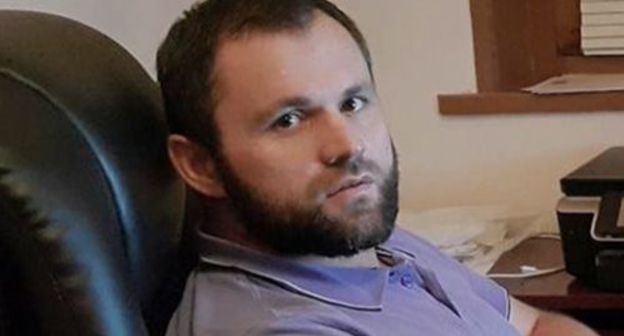
![Tumso Abdurakhmanov. Screenshot from video posted by Abu-Saddam Shishani [LIVE] http://www.youtube.com/watch?v=mIR3s7AB0Uw](/system/uploads/article_image/image/0001/18460/main_image_Tumso.jpg "Tumso Abdurakhmanov. Screenshot from video posted by Abu-Saddam Shishani [LIVE] http://www.youtube.com/watch?v=mIR3s7AB0Uw")