

Social media users debated Georgia's decision not to provide protection to Ukrainian citizens.
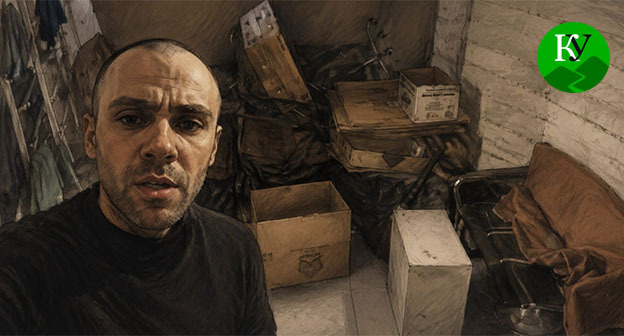
As reported by "Caucasian Knot", the Georgian authorities refused to provide international protection to Ukrainian citizens, who have been living in the basement of the border checkpoint "Upper Lars - Daryali" for almost a year. The migration service justified the refusal with a counterintelligence conclusion from the State Security Service, noting that they pose a threat to the country's security. They can be deported from Georgia at any moment. Some Ukrainians stated that they do not want to return home, as most of those who were previously sent from this checkpoint to Ukraine were immediately mobilized and could not even see their relatives.
The publication about the fate of 17 Ukrainian citizens who are in the neutral zone on the Georgian-Russian border received 825 comments on the "Caucasian Knot" Facebook page.
Users debated the responsibility of states for the fate of Ukrainians
Some commentators pointed out that people were forcibly taken to the border of Russia and Georgia.
"They did not escape. They were quietly serving their sentences in prisons. They were taken to the buffer zone and left with nothing. These people are not to blame for being here," believes Tanya Novosad.
"They were simply left in the buffer zone without documents. It’s good that volunteers are helping," wrote Marina Rozum.
Some commentators placed the responsibility for the situation on the Ukrainian authorities.
"Why doesn’t Ukraine accept them?" wrote Tamara Surguladze.
"If they are citizens of Ukraine, then Ukraine is obliged to accept them and issue documents if they do not have them," expressed Olga Mkheidze.
"Why doesn’t the Ukrainian government want to help? Transportation can be organized and documents can be processed," believes George Gabechava.
"Most of them have no documents. They cannot cross any border," wrote Marina Rozum.
"They have no documents, so the situation remains unresolved," noted Gocha Natsvlishvili.
"These citizens committed offenses and served long sentences in Russian prisons. Naturally, their Ukrainian passports disappeared, and they were not issued Russian documents," wrote Prokhorova Mospanenko.
"They served their sentences in Russia and were deported," noted Giorgi Marjanishvili.
Some participants in the discussion believe that the problem does not fall under Georgia's jurisdiction.
"What does Georgia have to do with it? They are in the neutral zone," wrote Vera Berova.
"What are we doing here, it’s unclear," noted Davit Tsirekidze.
A number of users saw risks for Georgia in allowing those in the neutral zone to enter the country.
Different people are coming, including criminals. Why does Georgia need all this?
"Georgia will not accept people with uncertain status," wrote Zaza Kobaliya.
"Different people are coming, including criminals. Why does Georgia need all this?" believes Bachi Valievi.
"Why would any country want criminal elements from other countries?" expressed Prokhorova Mospanenko.
Commentators pointed out the need to respect human rights
Some participants in the discussion call for assessing the situation primarily from the perspective of human rights.
"We need to help people who do not want to fight," believes Vladimir Kudryavtsev.
"A person has the right not to want to fight," wrote Larisa Dondua.
Why are they being kept in a basement? It’s inhumane.
Some users discuss the conditions in which people are located.
"Why are they being kept in a basement? It’s inhumane," wrote Natasha Kostenko.
"Why keep people in a basement for months? There are human rights. Even in such a situation, there should be humane conditions," commented Roman Galkin.
People remaining at the border are effectively deprived of assistance
On June 19, the APUS project published a video on its Telegram channel recorded by one of those at the border named Sergey.
The guys who were here, who were taken earlier, all ended up in the war. We fear forced removal.
He indicated that most people have been here for more than 10 months, receiving neither medications nor medical assistance, despite the fact that among them are those suffering from tuberculosis, hepatitis, and people with HIV.
"The guys who were here, who were taken earlier, all ended up in the war. We fear forced removal," he said.
Some of the 17 citizens have been there since May 2025, others since June, July, and August 2025. Sixteen of the 17 people who are in the basement were deported from Russia. Among them are Ukrainian citizens who served sentences in correctional facilities in Ukraine located in the Kherson region. They were forcibly taken to the territory of the Russian Federation and then served their sentences in Russian colonies. There are also those who lived in the Russian Federation before the full-scale invasion and served sentences in Russia for violating Russian legislation, as well as people who were deported from the Russian Federation due to the lack of Russian citizenship or residence permits. All of them were deported from the country by the Russian authorities with a ban on re-entry to the Russian Federation, writes the APUS project on July 29.
Food and medicines are delivered to the detainees by human rights defenders. Necessary treatment and medications cannot be prescribed to seriously ill people, as the Georgian authorities only allow "Emergency Medical Services" into the basement, access for specialized doctors, including paid ones, is not permitted. For the past year, all 17 people have been kept in unsanitary conditions in one room without minimal living conditions. Among them are people with serious chronic illnesses, including HIV, tuberculosis, liver cirrhosis, and one of the Ukrainian citizens held there lost an eye due to the lack of timely medical assistance, the publication states.
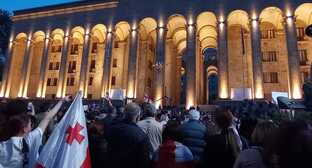
In 2025, due to changes in Georgian legislation, particularly the adoption of the law on foreign agents, many organizations that provided assistance to Ukrainian refugees closed. For example, in May 2025, the Choose to Help refugee assistance point for Ukrainians in Tbilisi ceased operations; in its last days, the point distributed medications, clothing, and food to refugees remaining in Georgia, reported Paper Kartuli on May 23, 2025.
There were several projects in Tbilisi that help Ukrainian refugees. Due to political changes in Georgia and the cessation of American funding, many of them closed or significantly limited their work. However, the Just Help project remains, which operates solely on donations. All its employees are volunteers; they do not receive salaries. Donations go only to rent an office ($600 a month) and to purchase assistance, wrote journalist Dmitry Kolezev in his Telegram channel.
The Just Help website states that the team primarily provides medications and organizes psychological support and does not mention support for former prisoners forced to remain at the border.
At the same time, none of these organizations reported that they provide assistance to Ukrainians remaining at the border. Previously, they were assisted by the Volunteers Tbilisi organization, but in January, the project team announced on its Facebook page that due to restrictions in Georgian legislation, they are considering relocating the project to Armenia. One of the last tasks indicated in the plans for January was to provide humanitarian assistance to former prisoners at Upper Lars. As of August 3, the project’s website is not operational, and the Facebook page has not been updated since January.
In July, Georgia refused to admit about 80 deported Ukrainian citizens from Russia who had previously committed serious crimes. The border police stated that these people "pose a significant risk." In addition, the Ukrainians did not have the necessary documents for lawful border crossing. In August 2025, Tbilisi accused Kyiv of delaying the return of Ukrainians to their homeland. Georgia is ready to pay for the transportation of 87 Ukrainians who are at the "Daryali" checkpoint, but Ukraine is delaying the process, the Georgian Ministry of Internal Affairs stated. The Ukrainian Foreign Ministry called on Russia to deliver former convicts directly to the border of the two countries.
Ukrainian citizens who had been at the Georgian checkpoint "Daryali" for a long time after being deported from Russia returned home on August 22, 2025. Several Ukrainian citizens remained in the neutral zone at the border.
At that time, Ukraine took 65 people from the Russian-Georgian border, including ten women. They were brought to one of the hospitals in Odesa on August 22, where they were examined by doctors. "They were told that they would be given some certificates and released so they could get home. But within a day, 11 people were released who, in fact, are not subject to conscription. All the others are in the TCC," RBC quoted lawyer Anna Skripka on August 25, 2025.
We have updated the applications on Android and IOS! We would appreciate feedback, ideas for development both in Google Play/App Store and on the KZ pages in social networks. Without installing a VPN, you can read us on Telegram (in Dagestan, Chechnya, and Ingushetia – with a VPN). Through a VPN, you can continue to read the "Caucasian Knot" on the website as usual and on social networks Facebook, Instagram, "VKontakte", "Odnoklassniki" and X. You can watch the "Caucasian Knot" videos on YouTube.
* included in the foreign agents registry.
** the activities of the Meta company (which owns Facebook, Instagram, and WhatsApp) are banned in Russia.
Translated automatically via OpenAI from https://www.kavkaz-uzel.eu/articles/425455

![Tumso Abdurakhmanov. Screenshot from video posted by Abu-Saddam Shishani [LIVE] http://www.youtube.com/watch?v=mIR3s7AB0Uw](/system/uploads/article_image/image/0001/18460/main_image_Tumso.jpg "Tumso Abdurakhmanov. Screenshot from video posted by Abu-Saddam Shishani [LIVE] http://www.youtube.com/watch?v=mIR3s7AB0Uw")